
A photoacoustic tomography method and system
a tomography and photoacoustic technology, applied in the field of photoacoustic tomography, can solve problems such as elusive proof, and achieve the effect of deep imaging
- Summary
- Abstract
- Description
- Claims
- Application Information
AI Technical Summary
Benefits of technology
Problems solved by technology
Method used
Image

Examples
Embodiment Construction
[0031]The invention will be more clearly understood from the following description of some embodiments thereof, given by way of example only with reference to the accompanying drawings in which:—
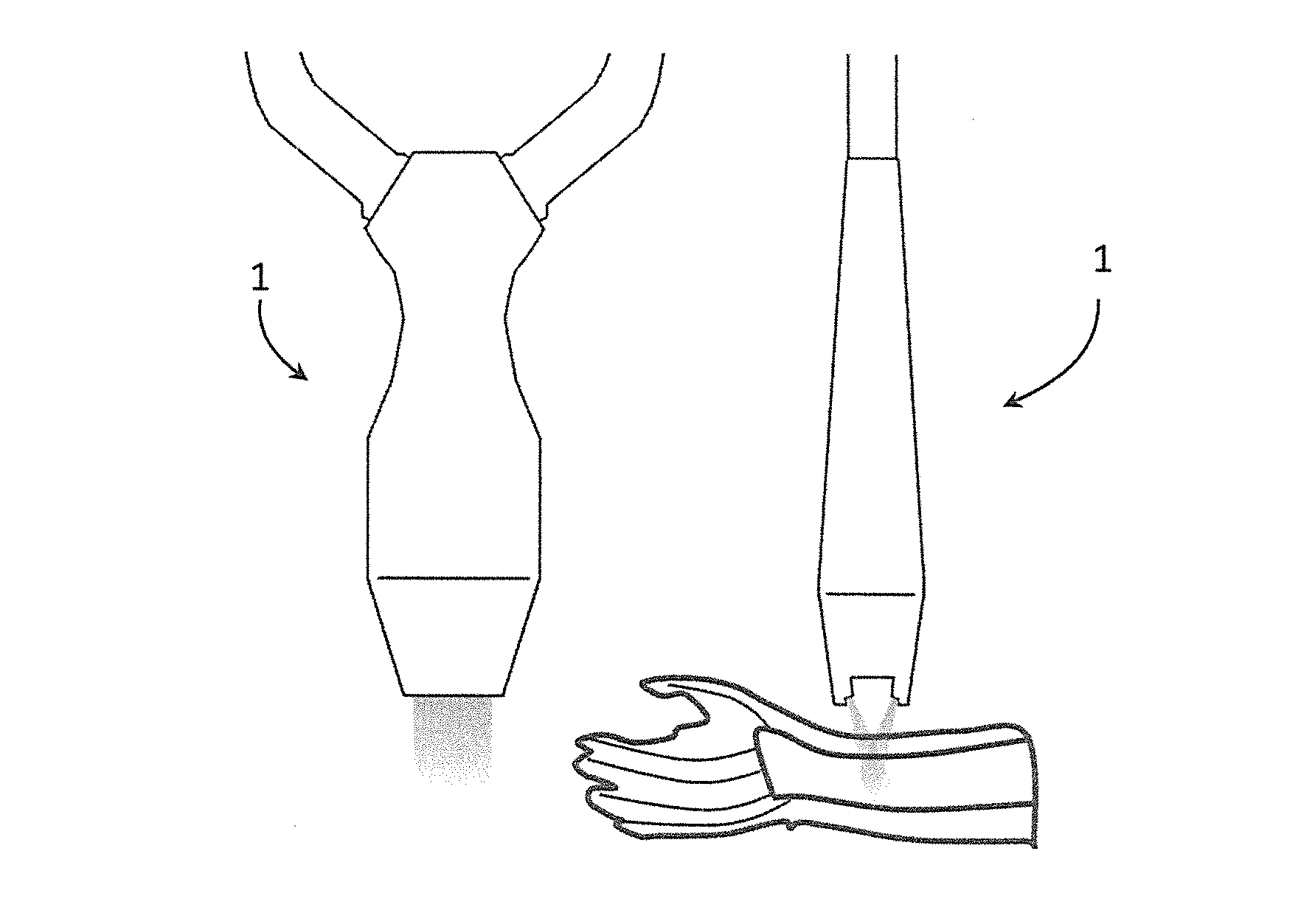
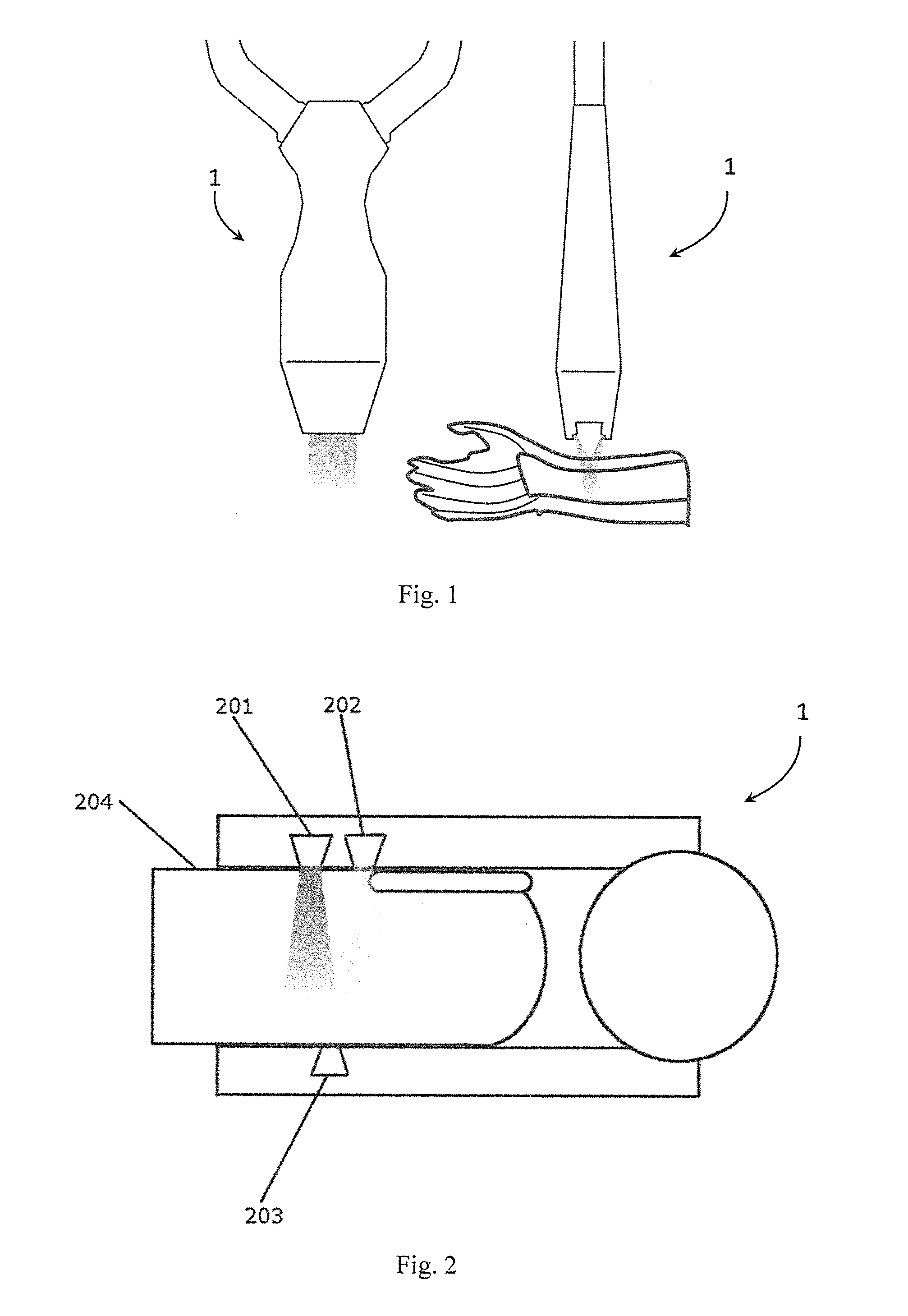
[0032]FIG. 1 shows an ultrasound probe in use;
[0033]FIG. 2 shows a system for determining arterial oxygen saturation SaO2;
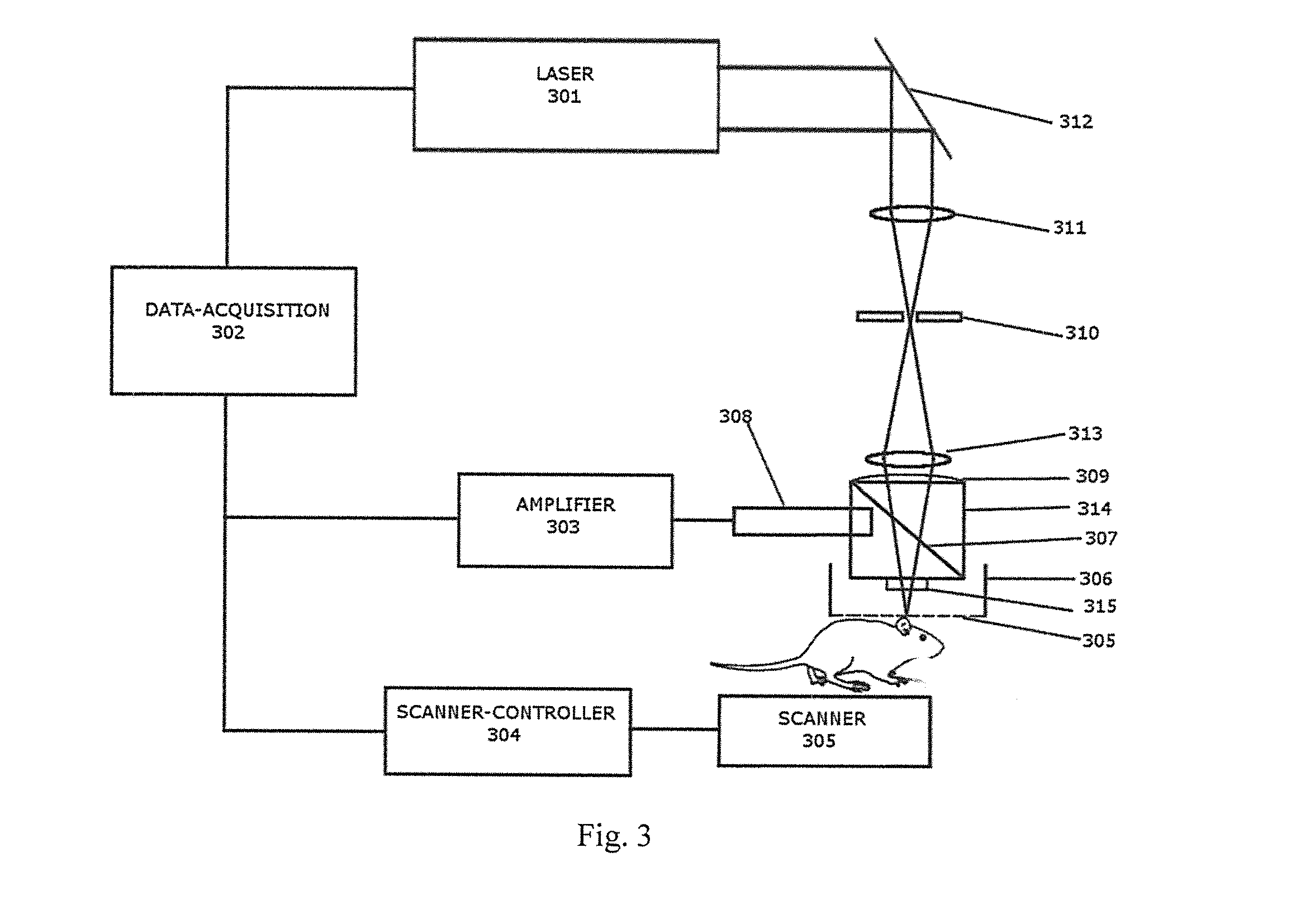
[0034]FIG. 3 shows a pre-clinical photoacoustic configuration; and
[0035]FIG. 4 shows a system for both pre-clinical and clinical use.
[0036]It is known that a pulse oximetry tool can be used to non-invasively determine arterial oxygen saturation (SaO2), and this is the same everywhere within the arterial side of the circulation system.
[0037]A tomographic system of the invention divides the tissue into volume elements (voxels) and measures the acoustic pressure generated at each voxel within the arteries in the field of view. From this, and knowledge that the SaO2 is the same at all of these locations, it can readily calculate the fluence at all voxels within the arteries. ...
PUM
 Login to View More
 Abstract
Description
Claims
Application Information
 Login to View More