
Catheter-stent device
a catheter and stent technology, applied in the field of vascular endoprosthesis, can solve problems such as the serious disability of survivors, and achieve the effects of greater ribbon width, lesser ribbon width, and greater ribbon width
- Summary
- Abstract
- Description
- Claims
- Application Information
AI Technical Summary
Benefits of technology
Problems solved by technology
Method used
Image

Examples
Embodiment Construction
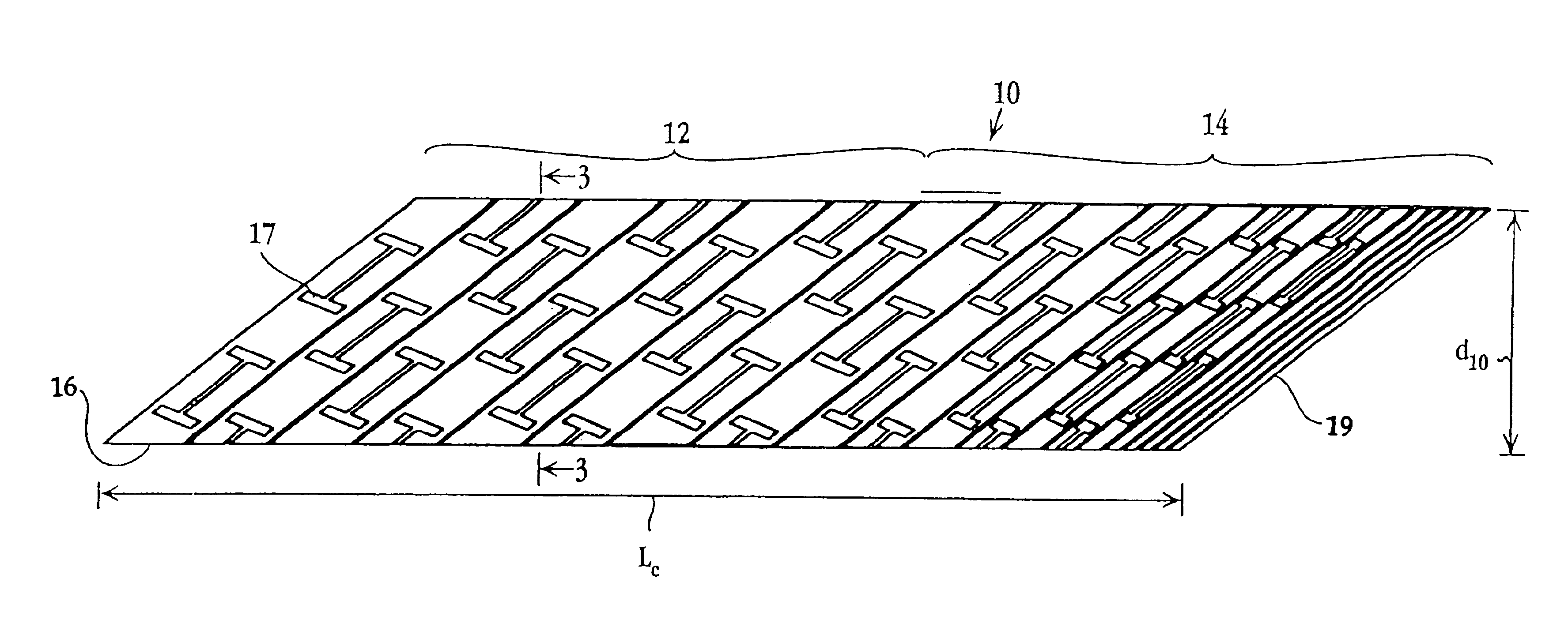
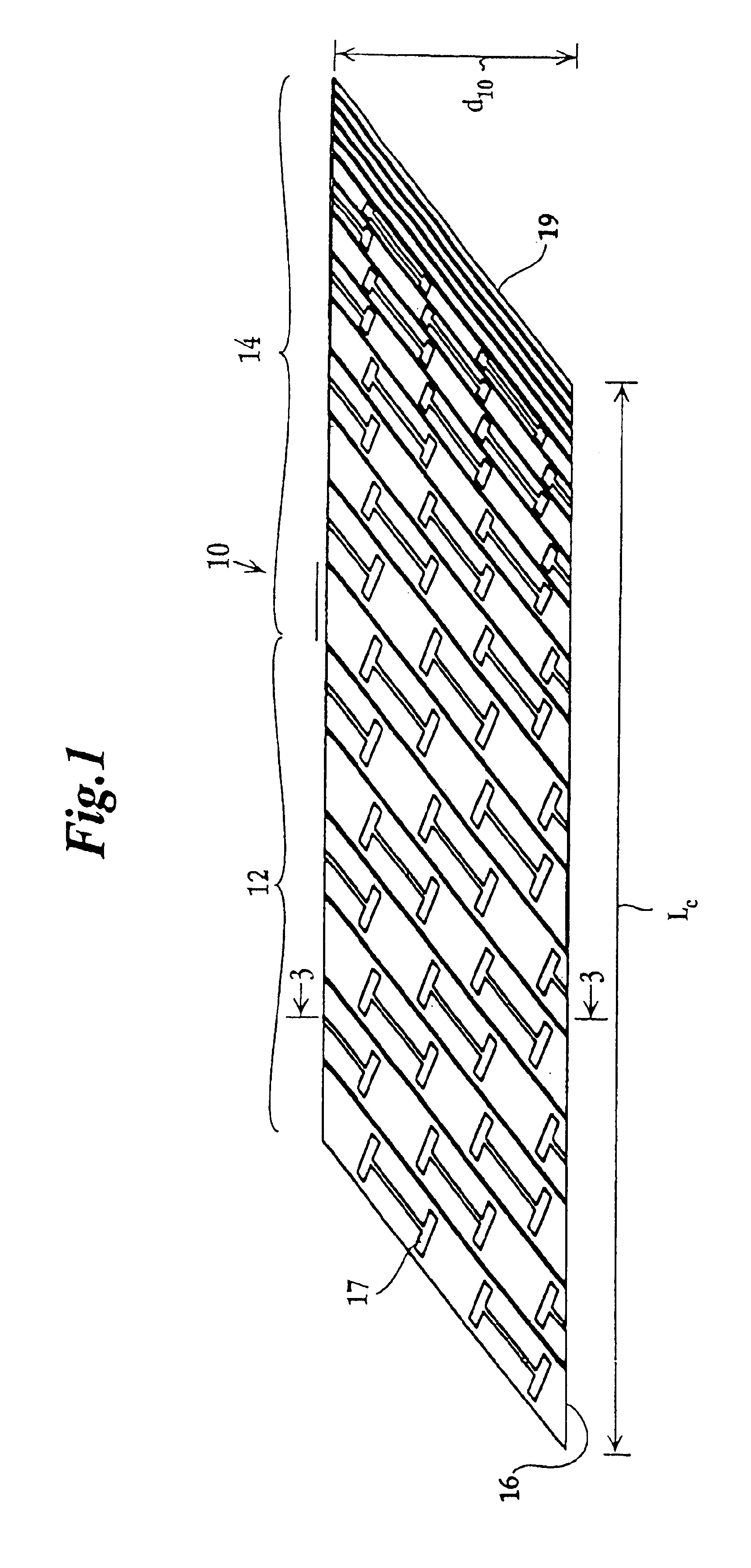
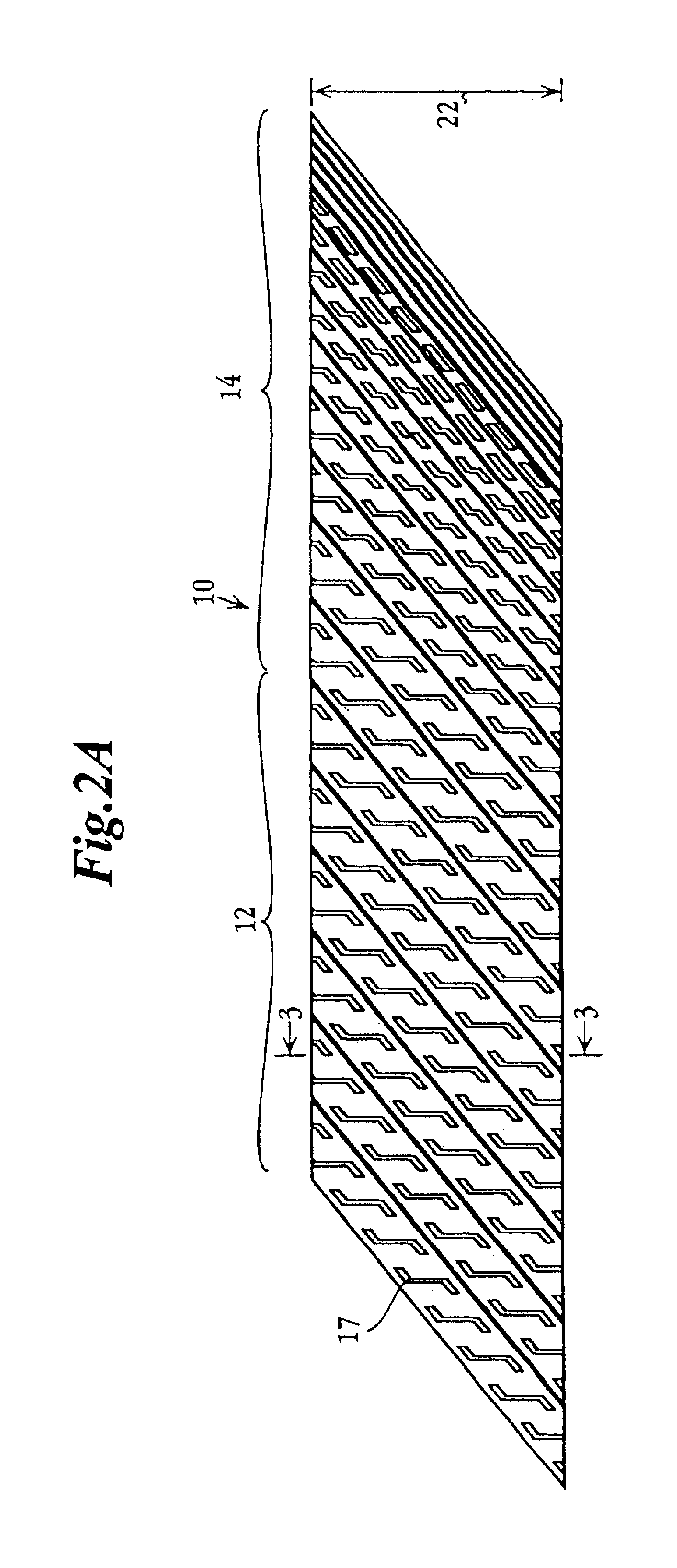
[0036]The present invention includes, in one aspect, a stent adapted for advancement through a catheter in a upstream to downstream direction to a target vessel site, in a contracted stent condition, and expulsion from the catheter, downstream end first, and radial expansion at the target site, to engage the walls of the vessel. The stent is formed of a continuous helical ribbon formed of a preferably shape-memory alloy, and has a bending-stiffness gradient along its length due to (i) a gradient of ribbon width, (ii) a gradient of ribbon thickness, and / or (iii) a gradient of size or number of openings formed in the stent ribbon. The stent is preferably graftless, i.e., it consists of a metal coil alone without a woven or film-like graft formed over the coil or between the coil windings, and is preferably formed of a shape-memory alloy, as discussed below.
[0037]By bending-stiffness gradient is meant a difference in bending stiffness, as measured by amount or degree of stent bending a...
PUM
 Login to View More
 Abstract
Description
Claims
Application Information
 Login to View More