
Magnetic materials, passive shims and magnetic resonance imaging systems
a passive shim and magnetic resonance imaging technology, applied in the field of magnetic materials, can solve the problems of weakening the magnetic field produced by the shim, affecting the image quality, and affecting the diagnostic recording/measuring, etc., and achieves the effects of increasing spontaneous magnetization, increasing temperature, and increasing spontaneous magnetization
- Summary
- Abstract
- Description
- Claims
- Application Information
AI Technical Summary
Benefits of technology
Problems solved by technology
Method used
Image

Examples
example
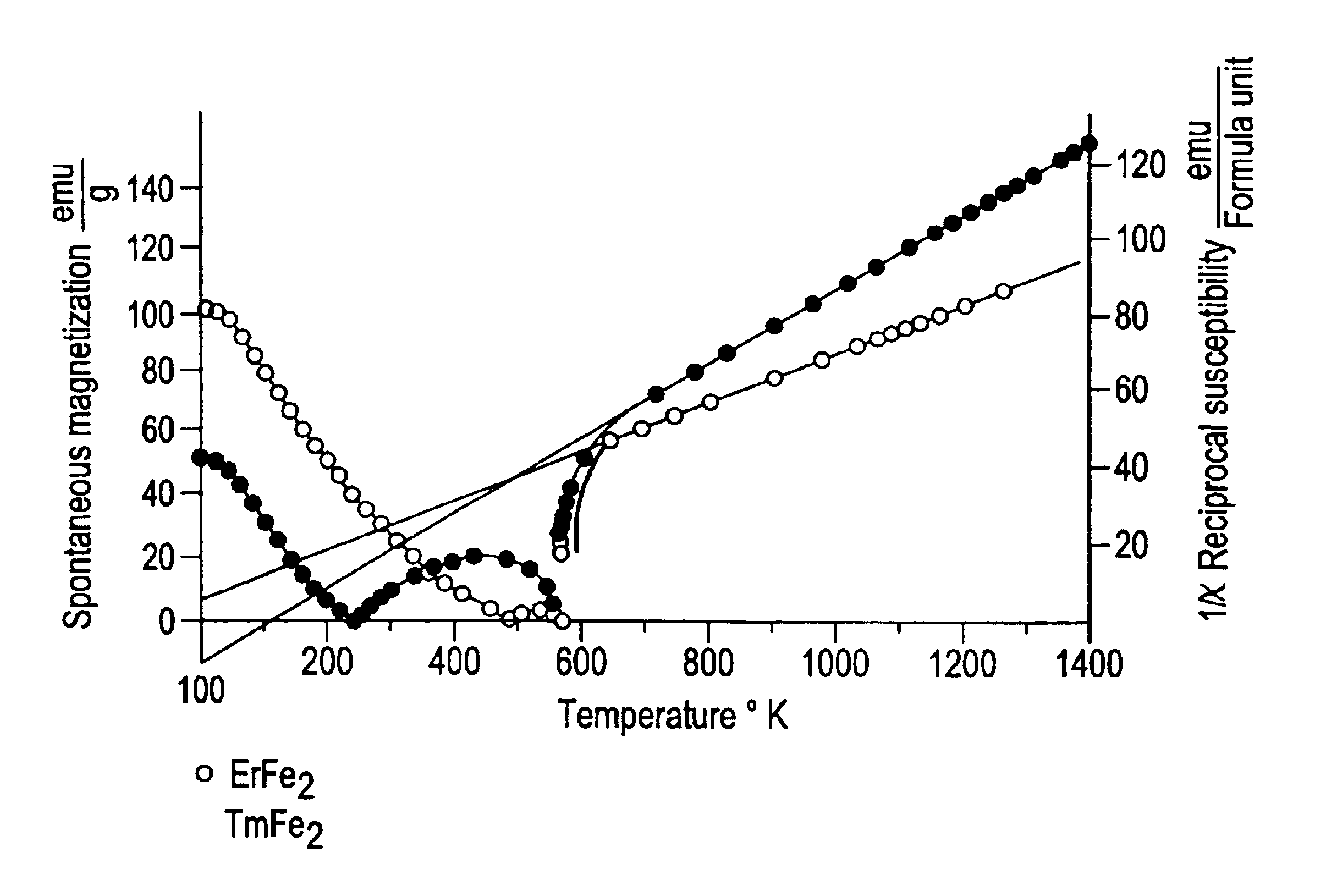
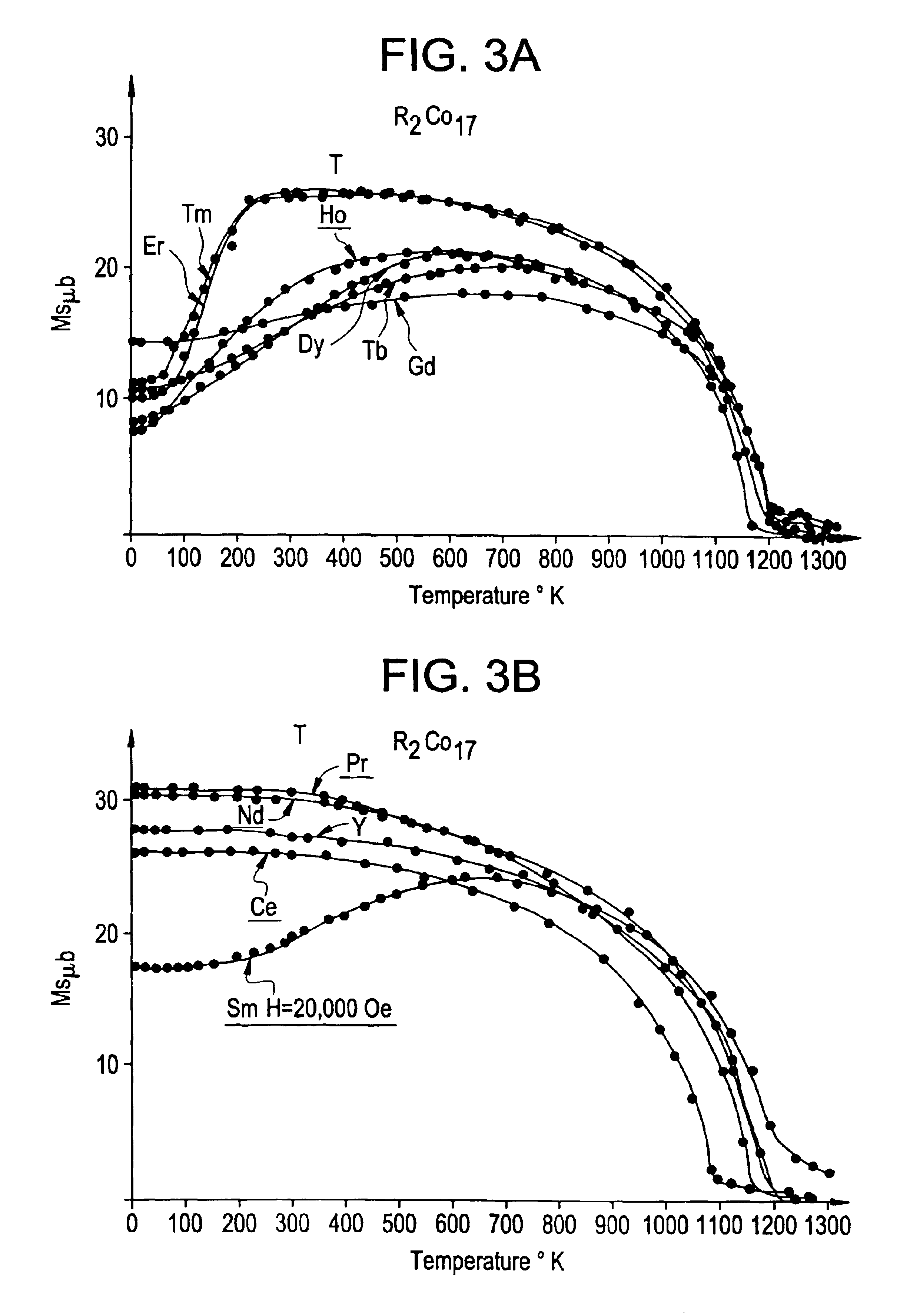
[0058]Magnetic and physical properties for various commercially available ferromagnetic materials and a laboratory prepared ferrimagnetic material were measured. The ferromagnetic materials considered were commercially available Fe (Ancorsteel 300SC) powder, iron-cobalt-vanadium alloy (about 2 weight percent V, about 49 weight percent Fe, and about 49 weight percent Co, known commercially as 2V-Permendur or Vacoflux-50, depending on the manufacturer), and an iron-cobalt alloy (about 50 weight percent Fe and about 50 weight percent Co). The ferrimagnetic materials, Dy2Co17 and ErFe3, were prepared by arc melting in purified argon gas. Table 2 lists the measured values of the magnetic properties along with physical properties obtained from available literature.
[0059]The intrinsic magnetization (Bi) at a magnetic field of about 1.5 Tesla is shown in Table 3 for the various materials. The value of about 24000 Gauss for the Fe—Co alloy was taken from literature. The change in magnetizati...
PUM
| Property | Measurement | Unit |
|---|---|---|
| volume percent | aaaaa | aaaaa |
| volume percent | aaaaa | aaaaa |
| temperature | aaaaa | aaaaa |
Abstract
Description
Claims
Application Information
 Login to View More