
Programmable cylinder lock system
a cylinder lock and cylinder technology, applied in the field of cylinder locks, can solve the problems of increasing the cost of the lock system, limiting the flexibility and timeliness of installation and/or replacement of high-security locks, and somewhat intricate machining, and achieve the effect of enhancing security
- Summary
- Abstract
- Description
- Claims
- Application Information
AI Technical Summary
Benefits of technology
Problems solved by technology
Method used
Image

Examples
Embodiment Construction
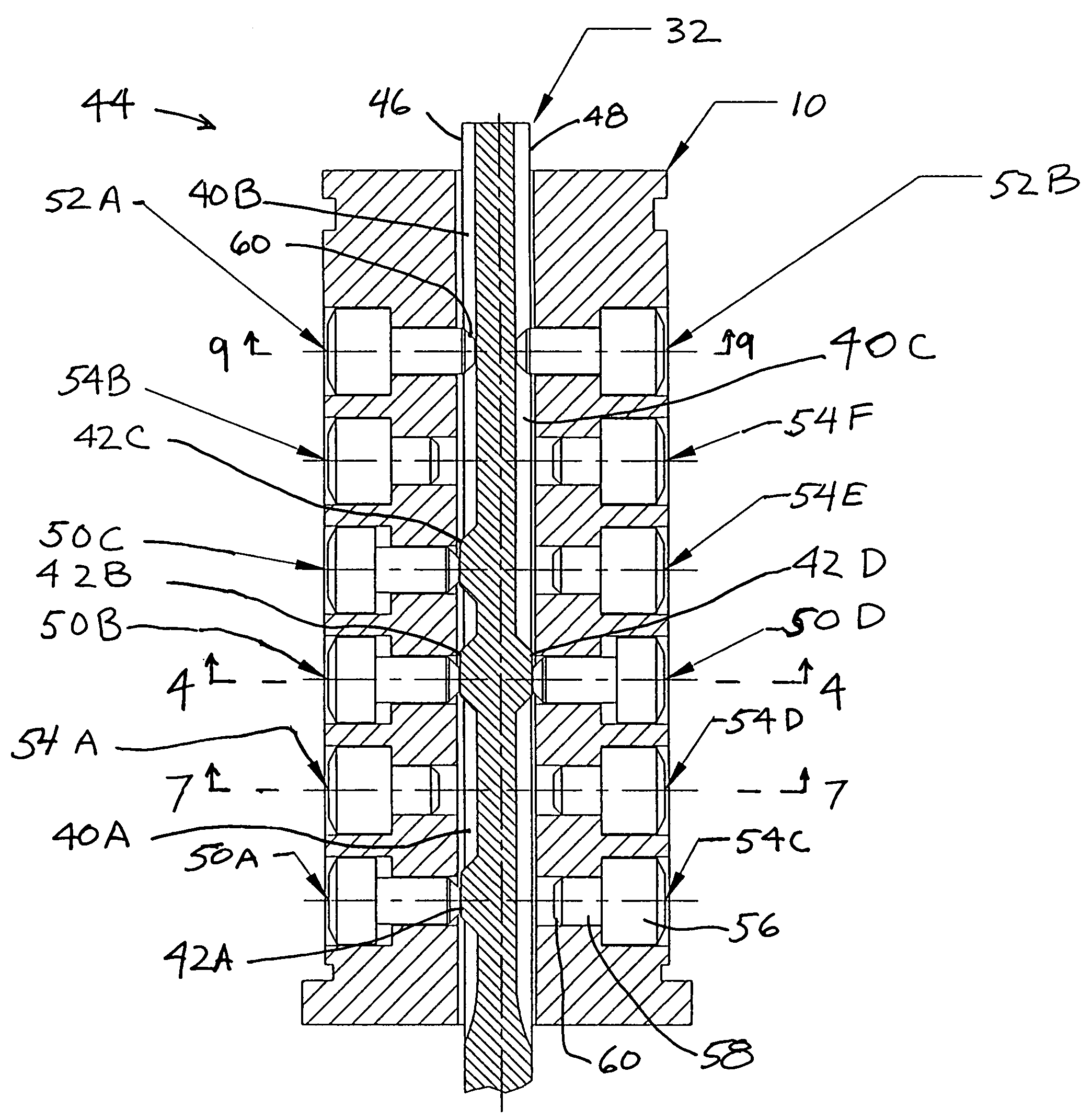
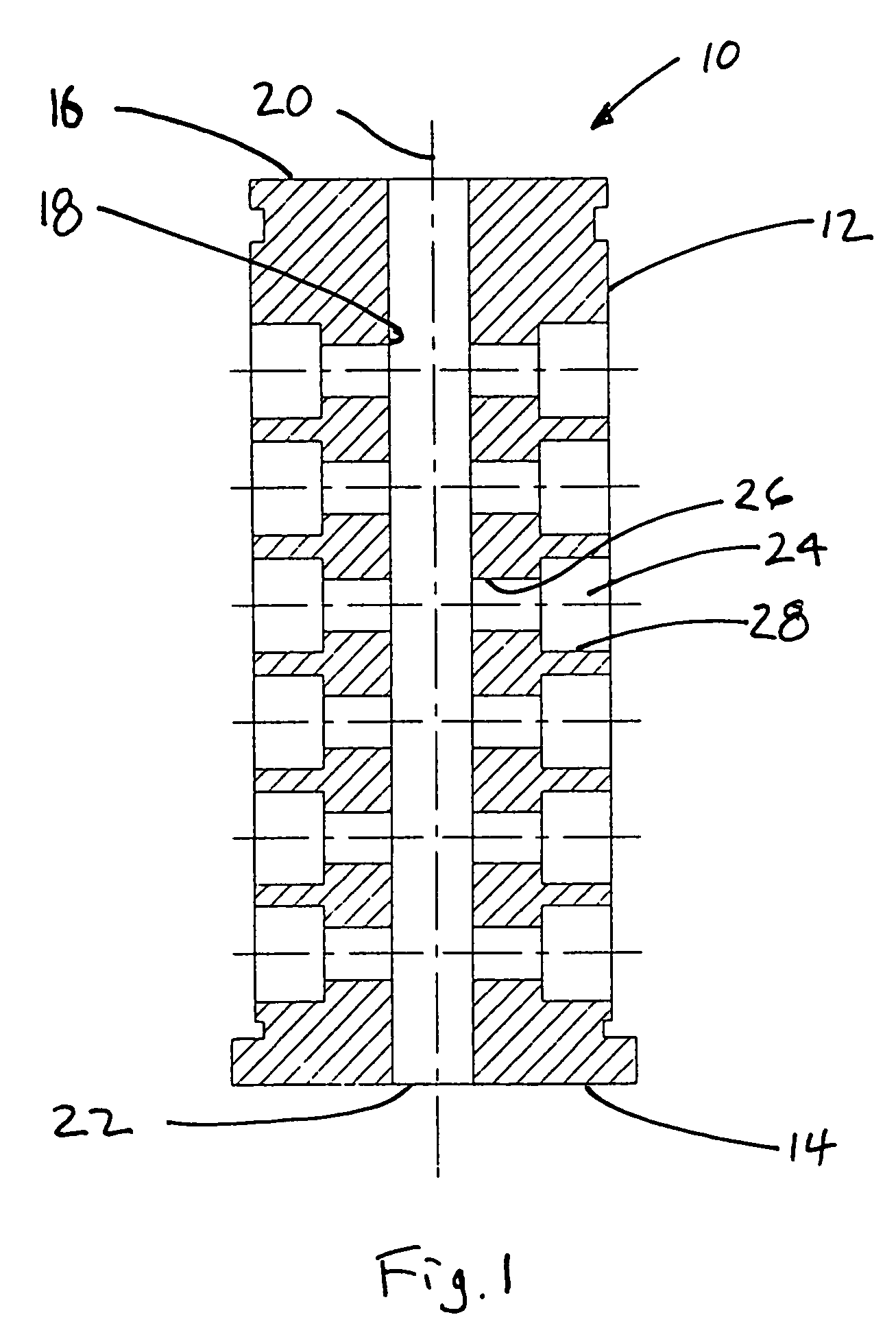
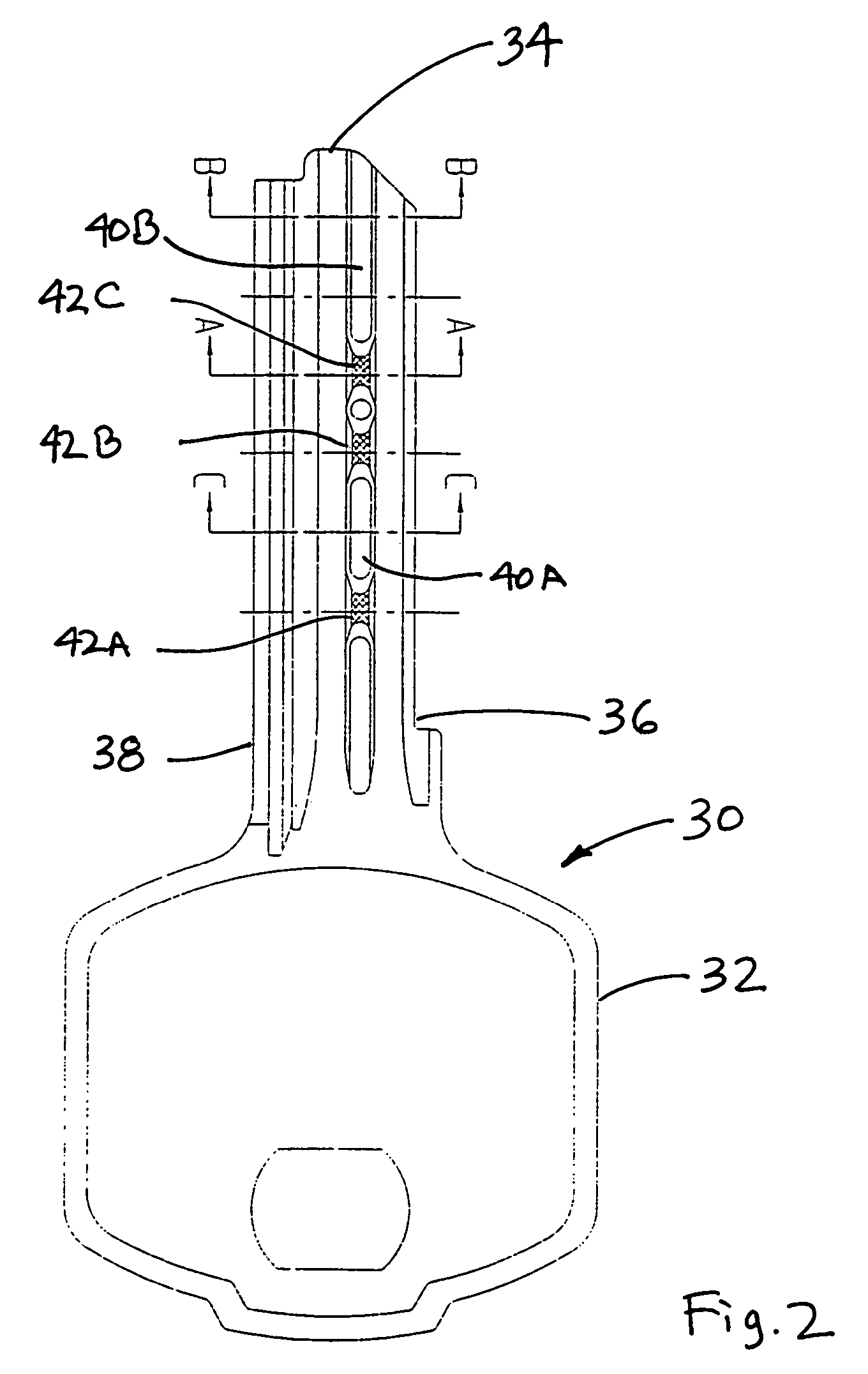
[0047]The present invention is an improvement to, and is based on, a conventional cylinder lock having a substantially cylindrical core for rotation within a substantially hollow cylindrical shell when a properly coded key is fully inserted within a coded keyway in the core. A conventional cylinder will not be further described herein, because one of ordinary skill in the art is very familiar with the way in which the bits on the top edge of a key blade cooperate with tumblers arranged between the shell and core to block the rotational shear line between the shell and the core when no key is present, and to clear the shear line when a properly bitted key is present.
[0048]The present invention provides an additional level of coding associated with the flank of the blade, and the portions of the core and shell which are not normally involved with the conventional cooperation of the key bits with the associated tumblers.
[0049]A first embodiment of the invention in a variety of forms in...
PUM
 Login to View More
 Abstract
Description
Claims
Application Information
 Login to View More