
Closed-loop method for controlling insulin infusion
a closed-loop, insulin-injection technology, applied in the direction of diagnostic recording/measuring, applications, catheters, etc., can solve the problem of less desirable use of traditional external infusion pumps by users, and achieve the effect of reducing the accuracy of sensor signals
- Summary
- Abstract
- Description
- Claims
- Application Information
AI Technical Summary
Benefits of technology
Problems solved by technology
Method used
Image

Examples
Embodiment Construction
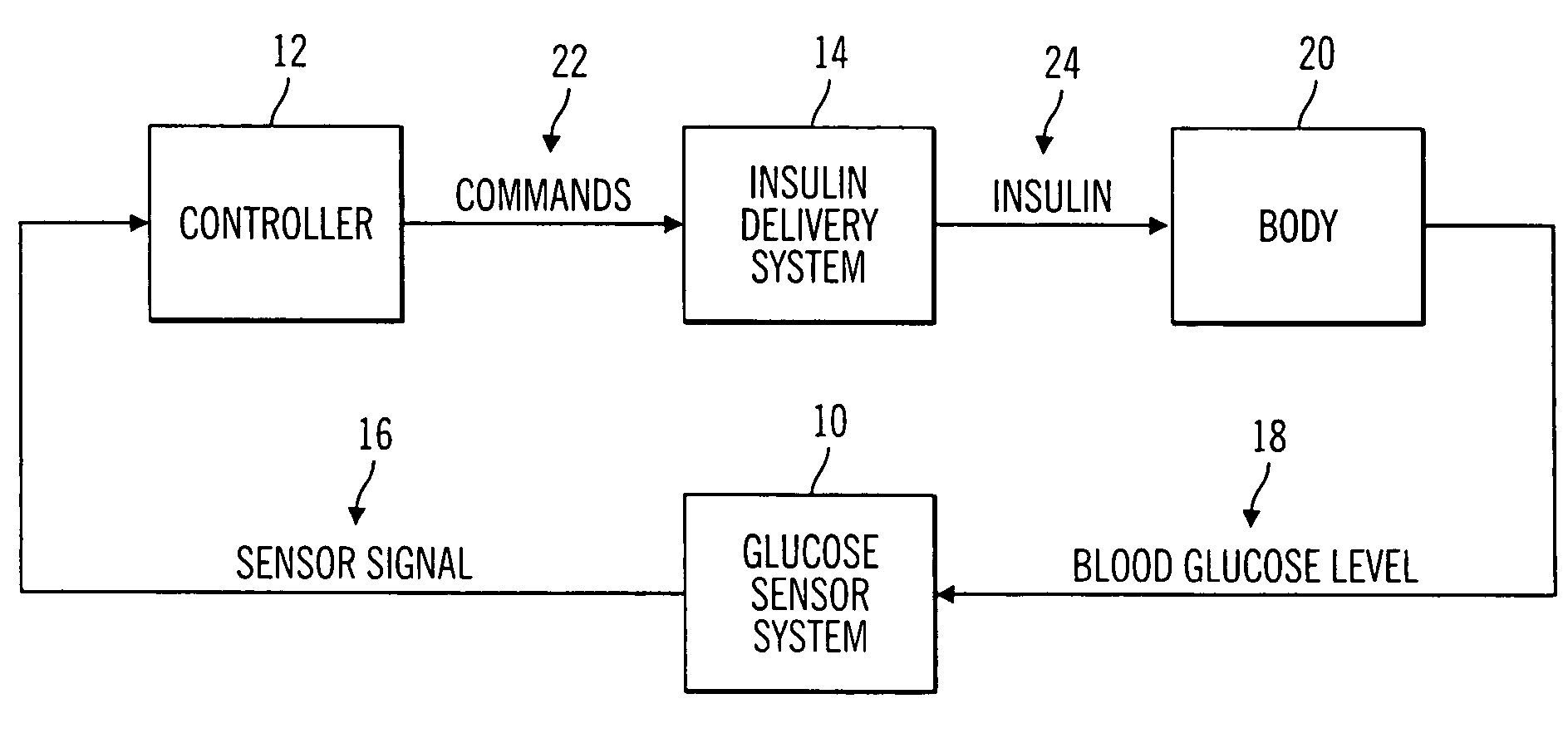
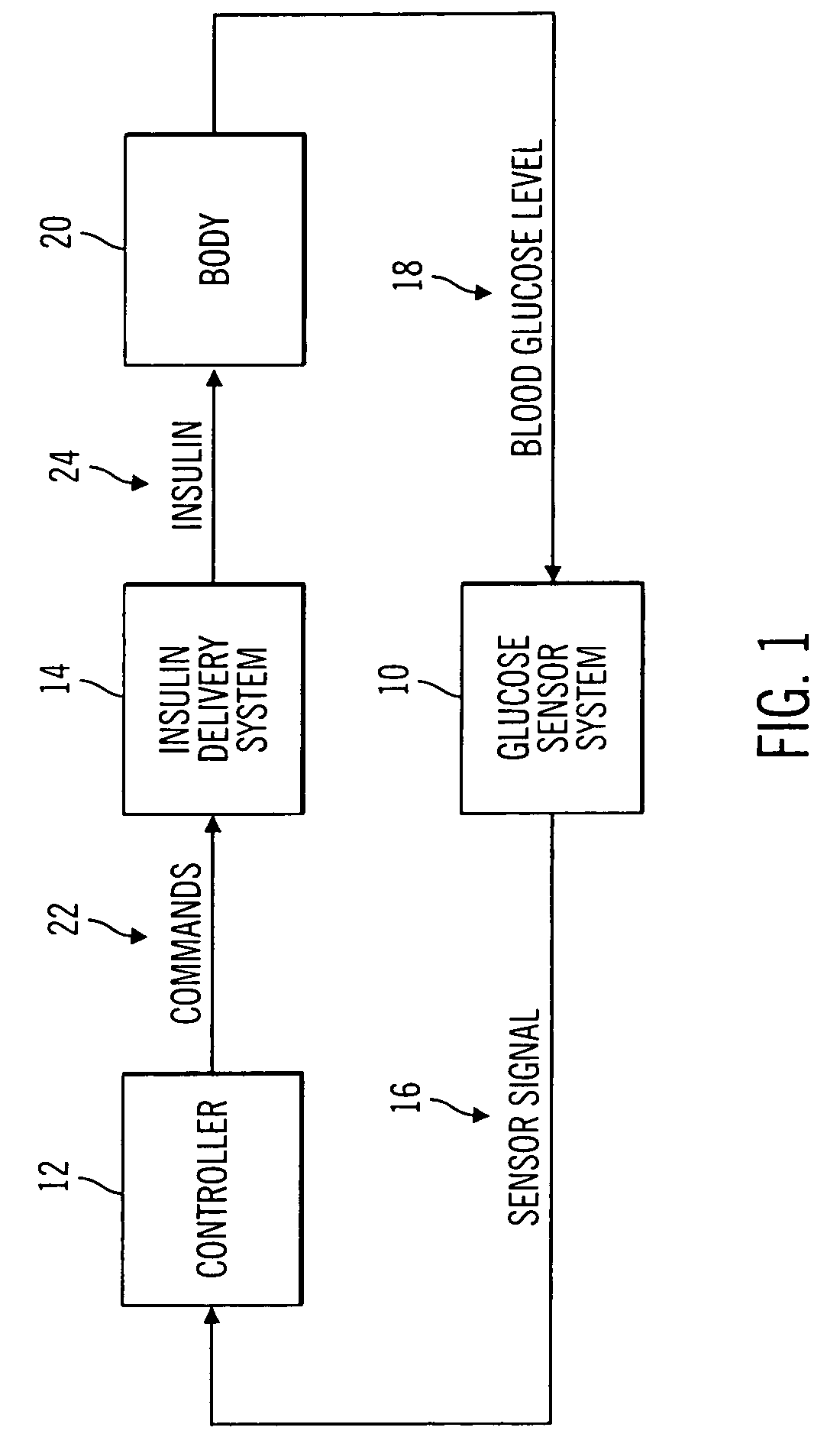
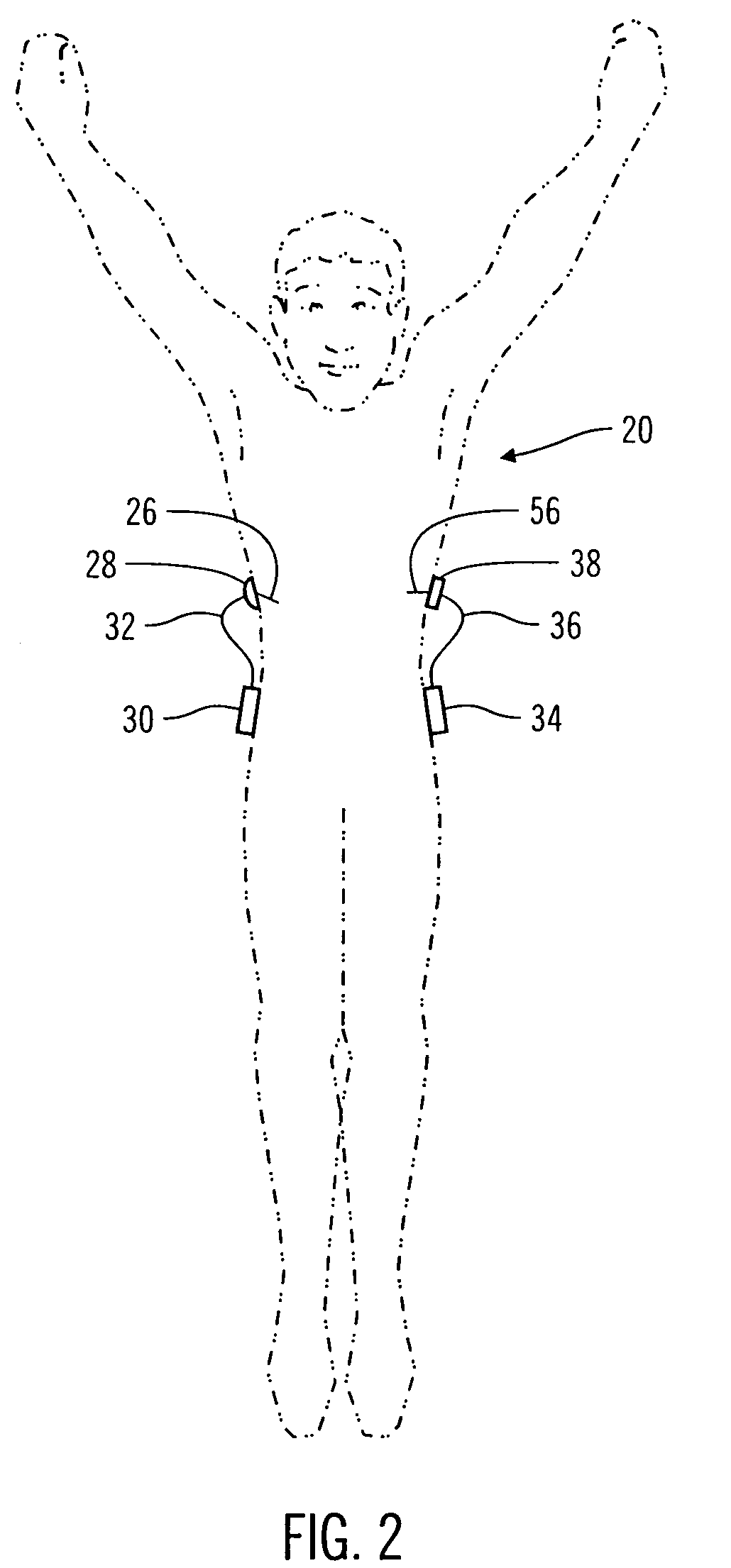
[0089]As shown in the drawings for purposes of illustration, the invention is embodied in a closed loop infusion system for regulating the rate of fluid infusion into a body of a user based on feedback from an analyte concentration measurement taken from the body. In particular embodiments, the invention is embodied in a control system for regulating the rate of insulin infusion into the body of a user based on a glucose concentration measurement taken from the body. In preferred embodiments, the system is designed to model a pancreatic beta cell (β-cell). In other words, the system controls an infusion device to release insulin into a body of a user in a similar concentration profile as would be created by fully functioning human β-cells when responding to changes in blood glucose concentrations in the body.
[0090]Thus, the system simulates the body's natural insulin response to blood glucose levels and not only makes efficient use of insulin, but also accounts for other bodily func...
PUM
 Login to View More
 Abstract
Description
Claims
Application Information
 Login to View More