
Longitudinally flexible stent
a longitudinally flexible, stent technology, applied in the field of stents, can solve the problems of limited longitudinal flexibility after expansion, stress points along the not eliminating the stress along the entire length of the stent, so as to enhance longitudinal flexibility, prevent any “flaring", and enhance radial support
- Summary
- Abstract
- Description
- Claims
- Application Information
AI Technical Summary
Benefits of technology
Problems solved by technology
Method used
Image

Examples
Embodiment Construction
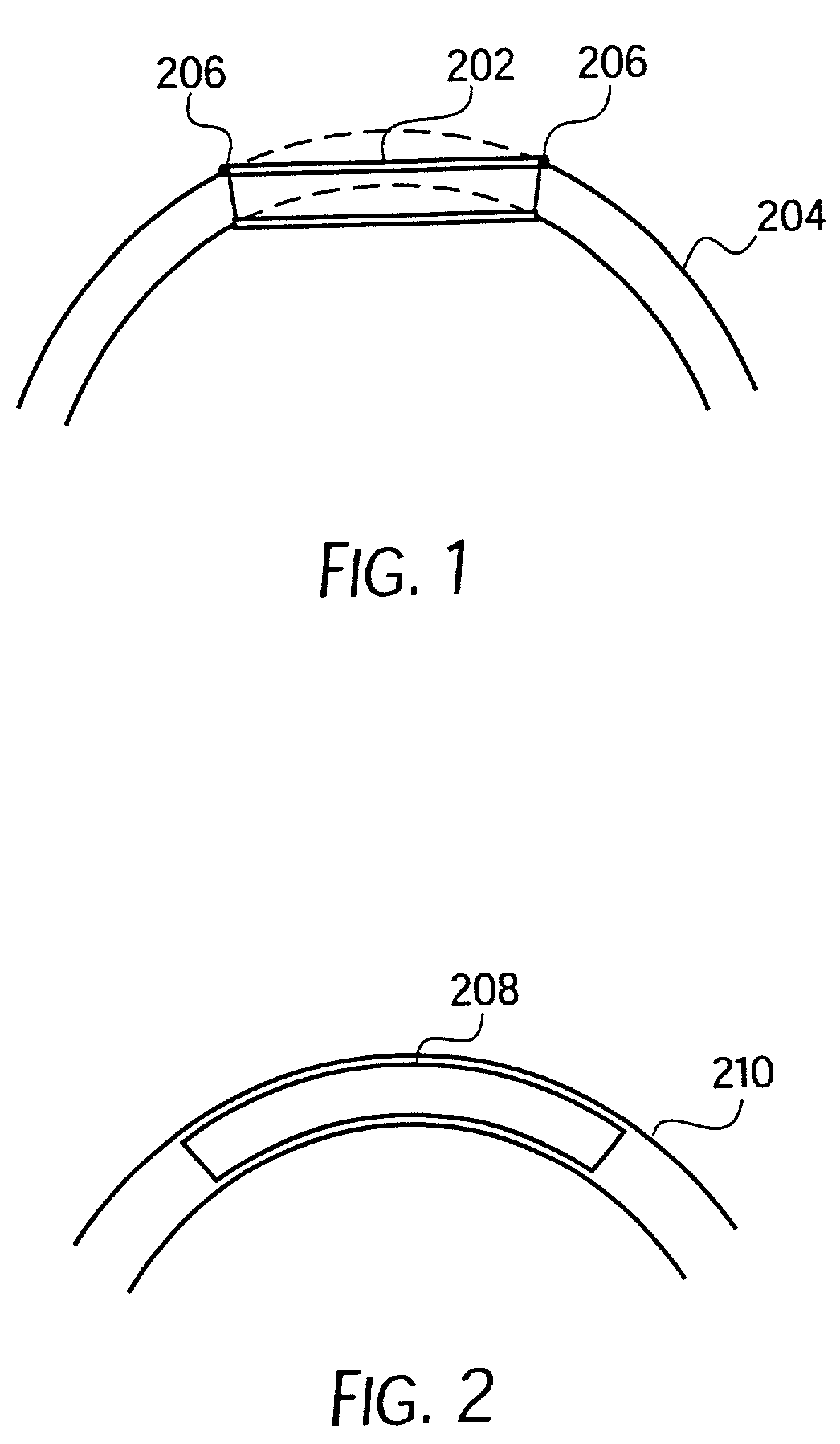
[0036]FIG. 2 shows a schematic diagram of a longitudinally flexible stent 208 of the present invention. The stent 208 may be delivered to a curved vessel 210 by a balloon catheter, and implanted in the artery by inflating the balloon. As described before, the balloon causes the artery to straighten upon inflation of the balloon. However, upon deflation of the balloon, the stent 208 assumes the natural curve of the vessel 210 because it is and remains longitudinally flexible after expansion. This reduces any potential stress points at the ends of the stent and along the length of the stent. Furthermore, because the stent is longitudinally flexible after expansion, the stent will flex longitudinally with the vessel during the cycles caused by a heartbeat. This also reduces any cyclic stress at the ends of the stent and along the length of the stent.
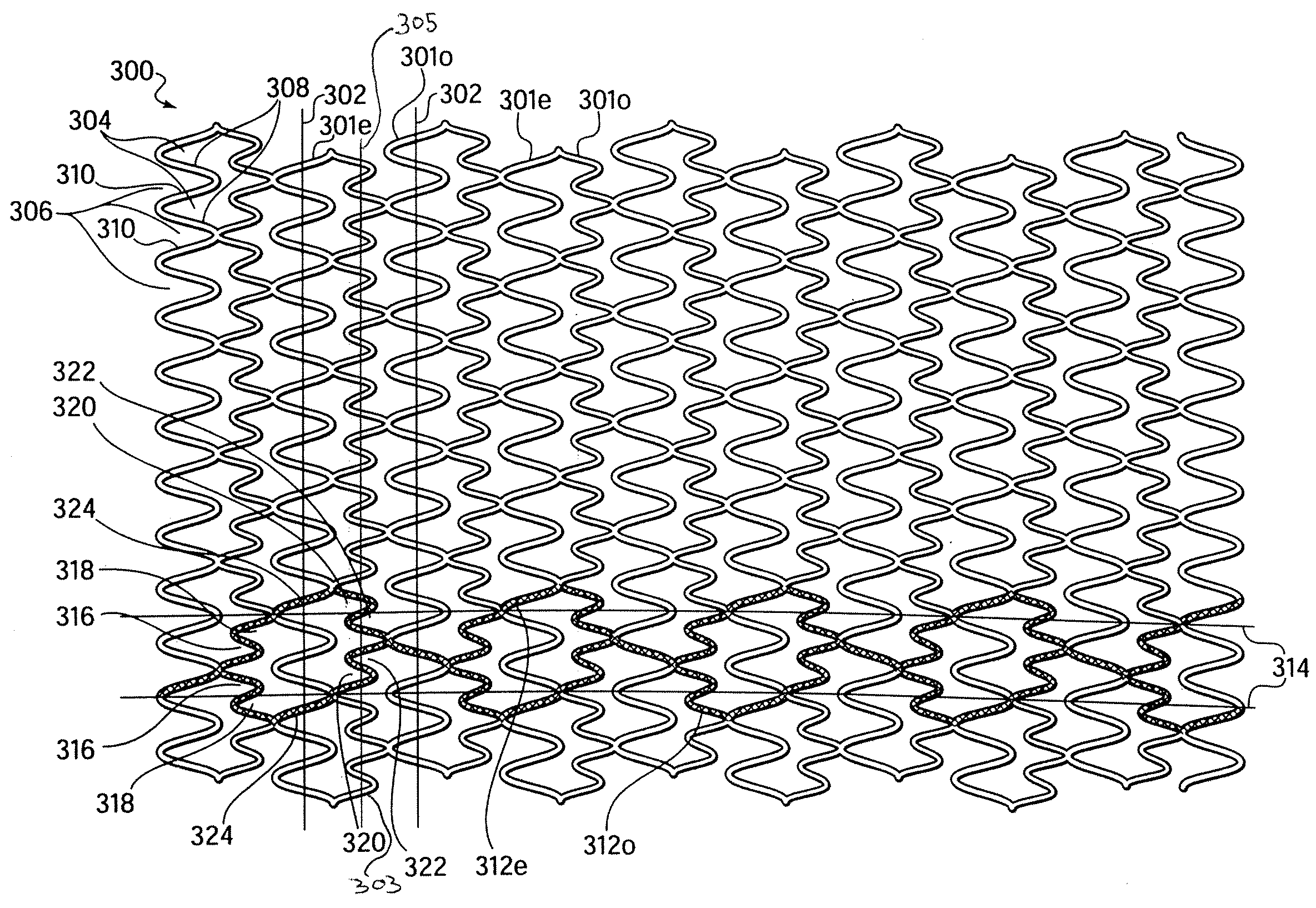
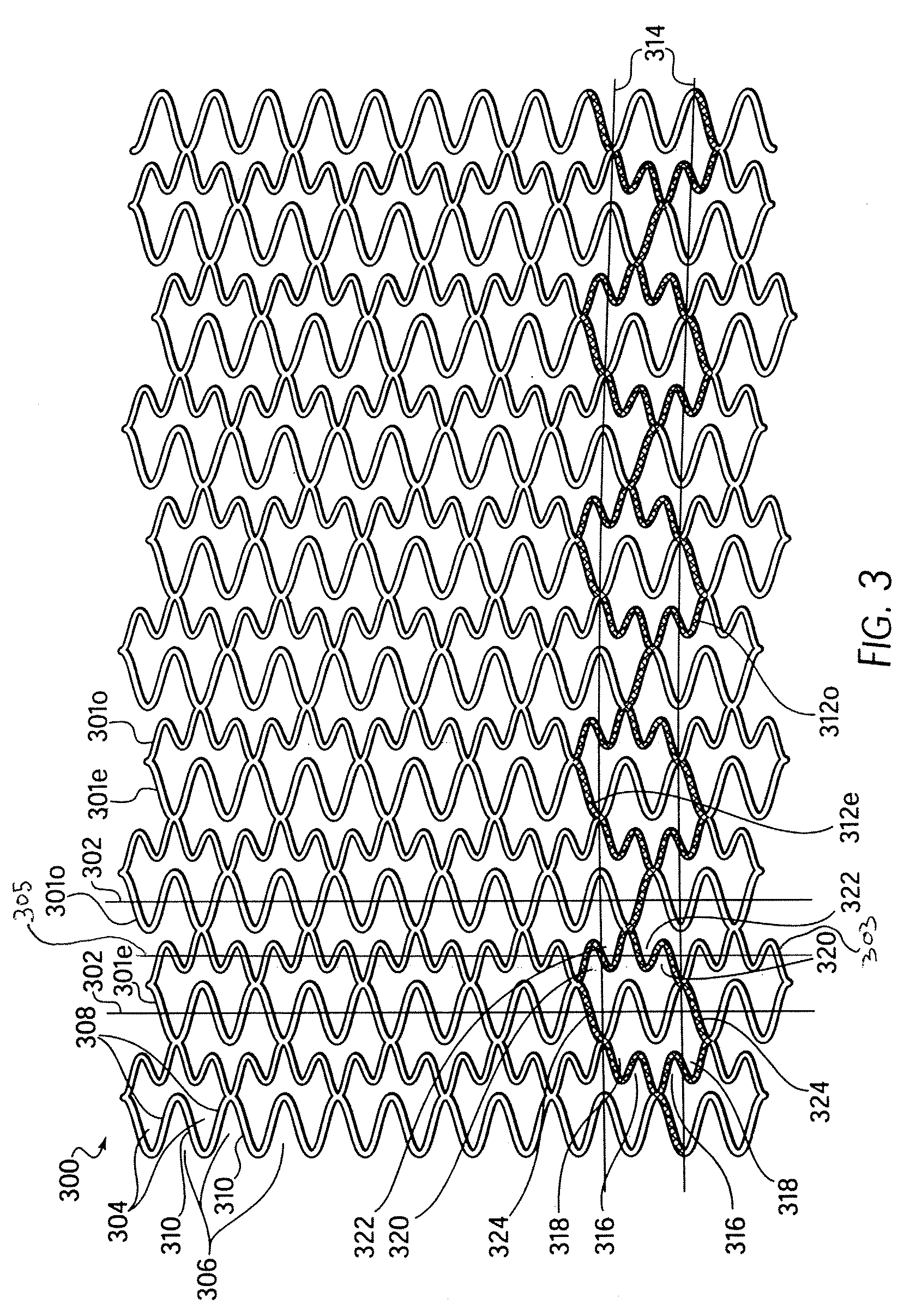
[0037]FIG. 3 shows a pattern of a stent according to the present invention. This pattern may be constructed of known materials, and for ex...
PUM
| Property | Measurement | Unit |
|---|---|---|
| length | aaaaa | aaaaa |
| frequency | aaaaa | aaaaa |
| circumference | aaaaa | aaaaa |
Abstract
Description
Claims
Application Information
 Login to View More