

Method and apparatus for telecommunication expense management
a technology method, applied in the field of telecommunication expense management system, to achieve the effect of avoiding overuse, full control of mobile time, cost and activity, and avoiding surcharges
Patent Information
- Authority / Receiving Office
- US · United States
- Patent Type
- Patents(United States)
- Current Assignee / Owner
- Publication Date
- 2011-06-07
Smart Images
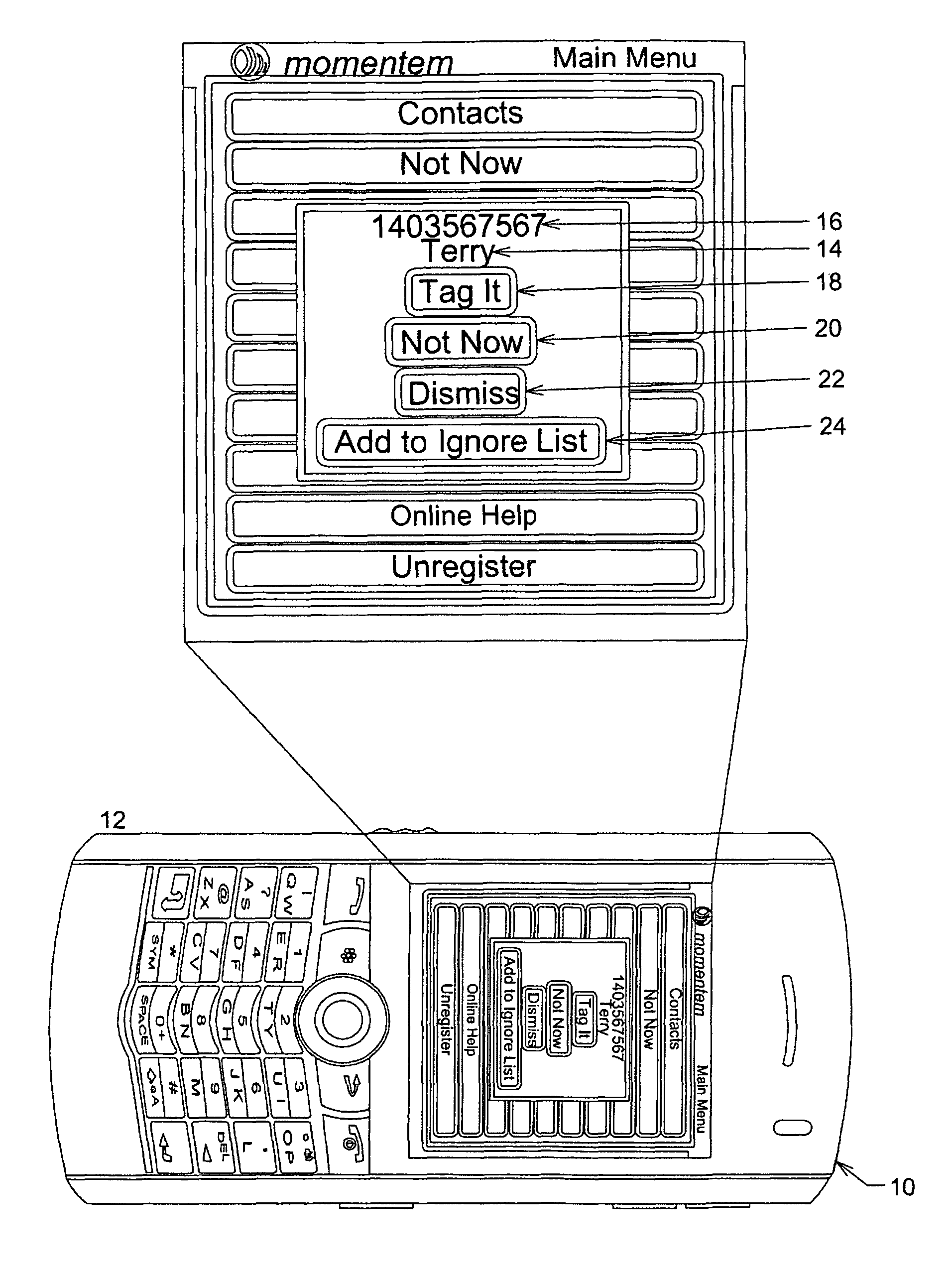
Figure 1 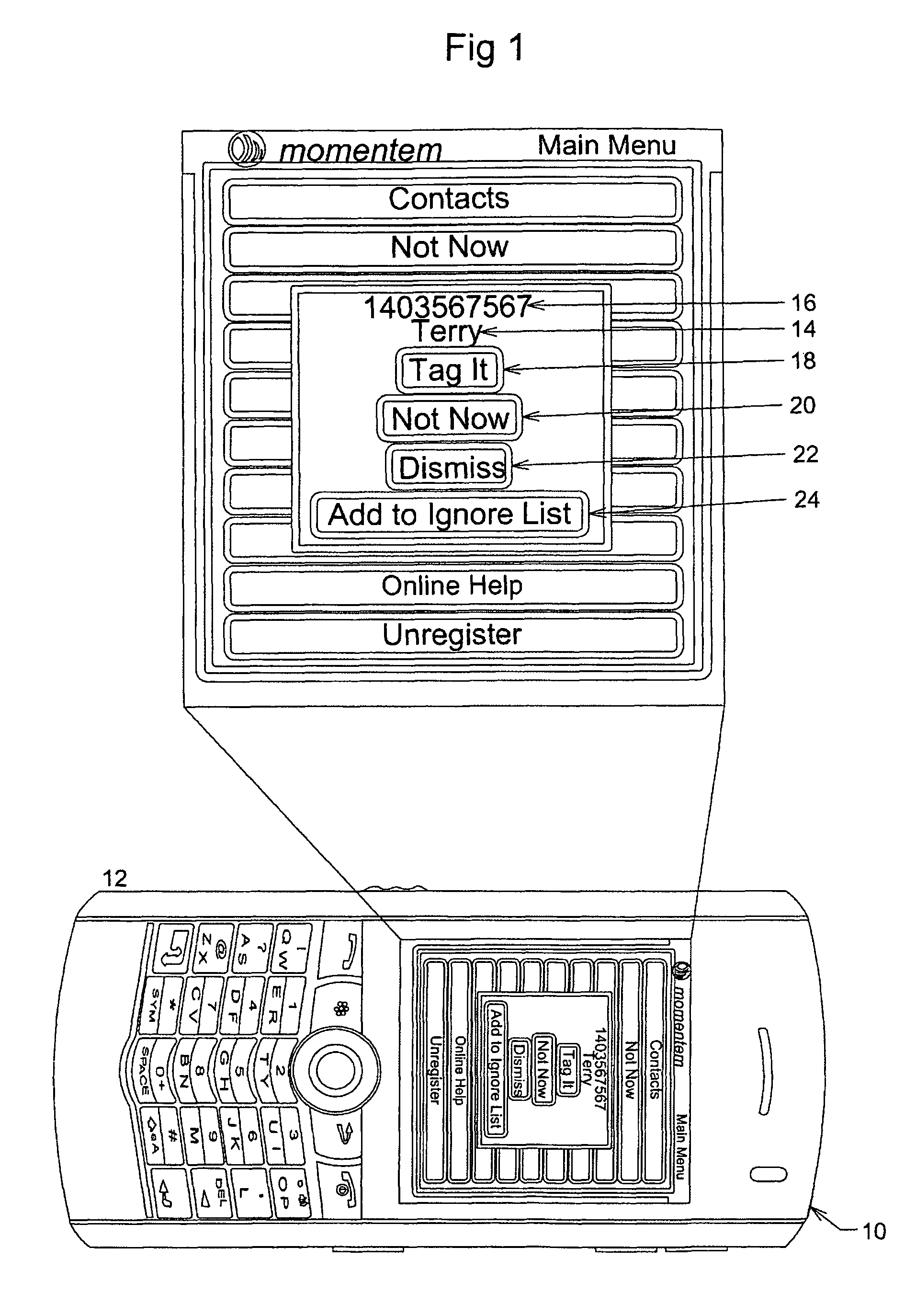
Figure 2 
Figure 3
Abstract
Description
CROSS REFERENCE TO RELATED APPLICATIONS
[0001] This application claims priority from U.S. Provisional Patent Application No. 61 / 071,873 filed May 22, 2008 entitled Method and Apparatus for Telecommunication Expense Management.FIELD OF THE INVENTION
[0002] This invention relates to the field of systems for tracking expenses when using handheld communication devices and in particular to a telecommunication expense management system operating in cooperation between a handheld wireless communicator such as a smartphone and a wireless communication carrier system.BACKGROUND OF THE INVENTION
[0003] It is a cliché that in business time is money. However, cliché or not, in many businesses including those provided by so-called professionals and others of those who offer their services to their customers or clients at an hourly rate, and given the frenetic pace at which in many instances today's business is conducted, the truism becomes “do what you can” and “bill what you do”. It is in keeping wit...
Examples
Embodiment Construction
[0052]The telecommunication expense management system according to the present invention, and herein alternatively referred to by its acronym TEMS, provides a user with the option of tagging a communication event such as a telephone call or an email, and inputting information into the tag regarding the activity of the user. In particular, once a communication event such as a cell phone call ends, the TEMS according to the present invention automatically pops up a user interface onto the screen of the handheld communicator allowing the user to allocate the details of that call, for example, date, time, number, duration, and location information, to a specific client or customer, and project or file reference. Client information is stored on the handset. Information about the call and a copy of the client information is stored in a backend server. Once a cell phone call is disconnected, the data is stored in the call log is read and that data is used to populate the pop-up screen. The...