
Method and apparatus for optimization of distributed generation
a distributed generation and optimization technology, applied in the direction of wind energy generation, process and machine control, emergency supply, etc., can solve the problems of wild spikes in prices and inefficient energy consumption, and achieve the effect of minimizing the total cost of electricity
- Summary
- Abstract
- Description
- Claims
- Application Information
AI Technical Summary
Benefits of technology
Problems solved by technology
Method used
Image

Examples
Embodiment Construction
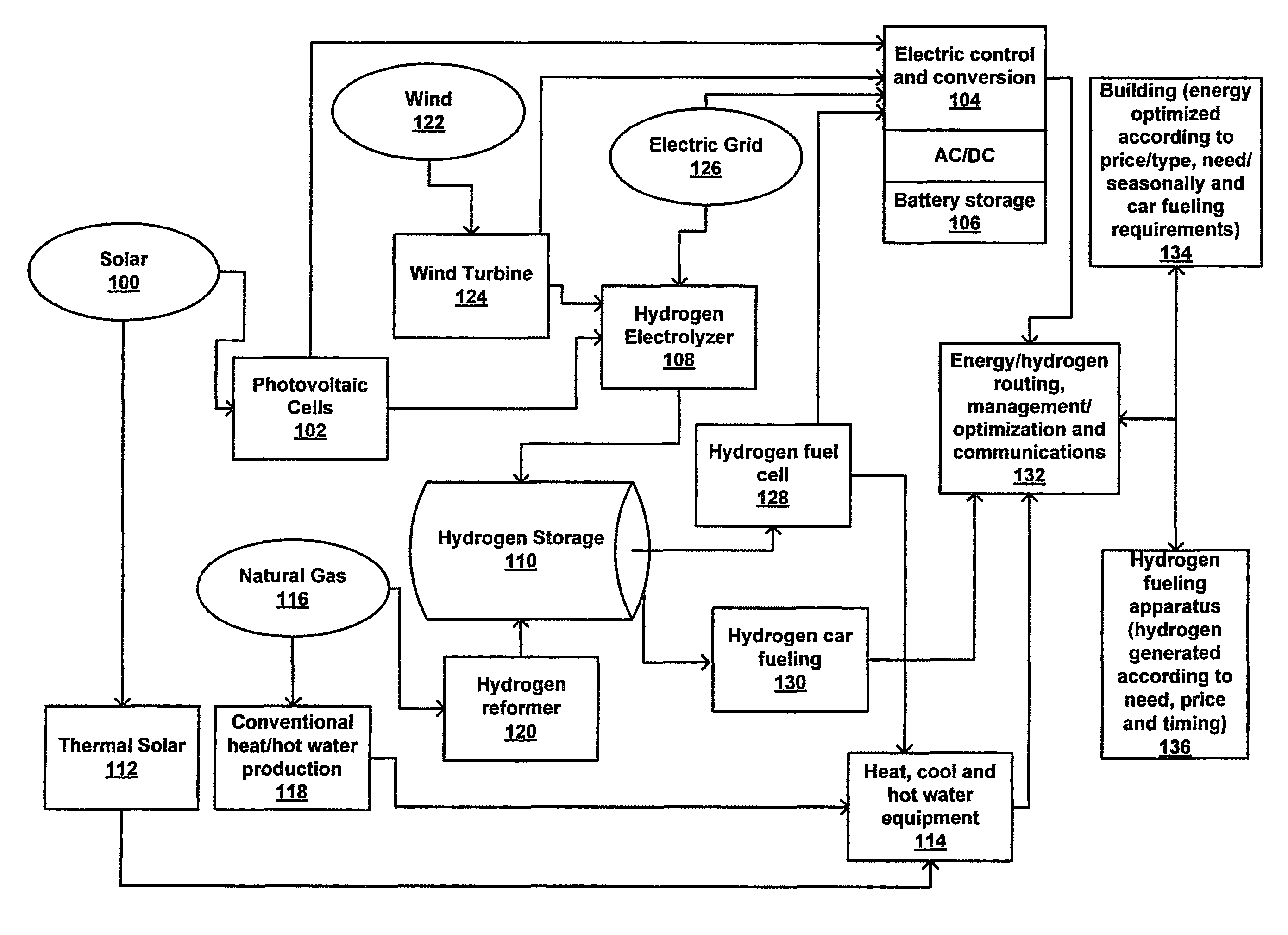
[0033]An energy optimization system may be used in a building or a group of buildings to minimize total energy costs by optimizing the use of utility-supplied energy and alternative source energy. At the same time, the system may produce and store energy that can be used to fuel vehicles, to independently produce electricity and / or thermal energy, or both.
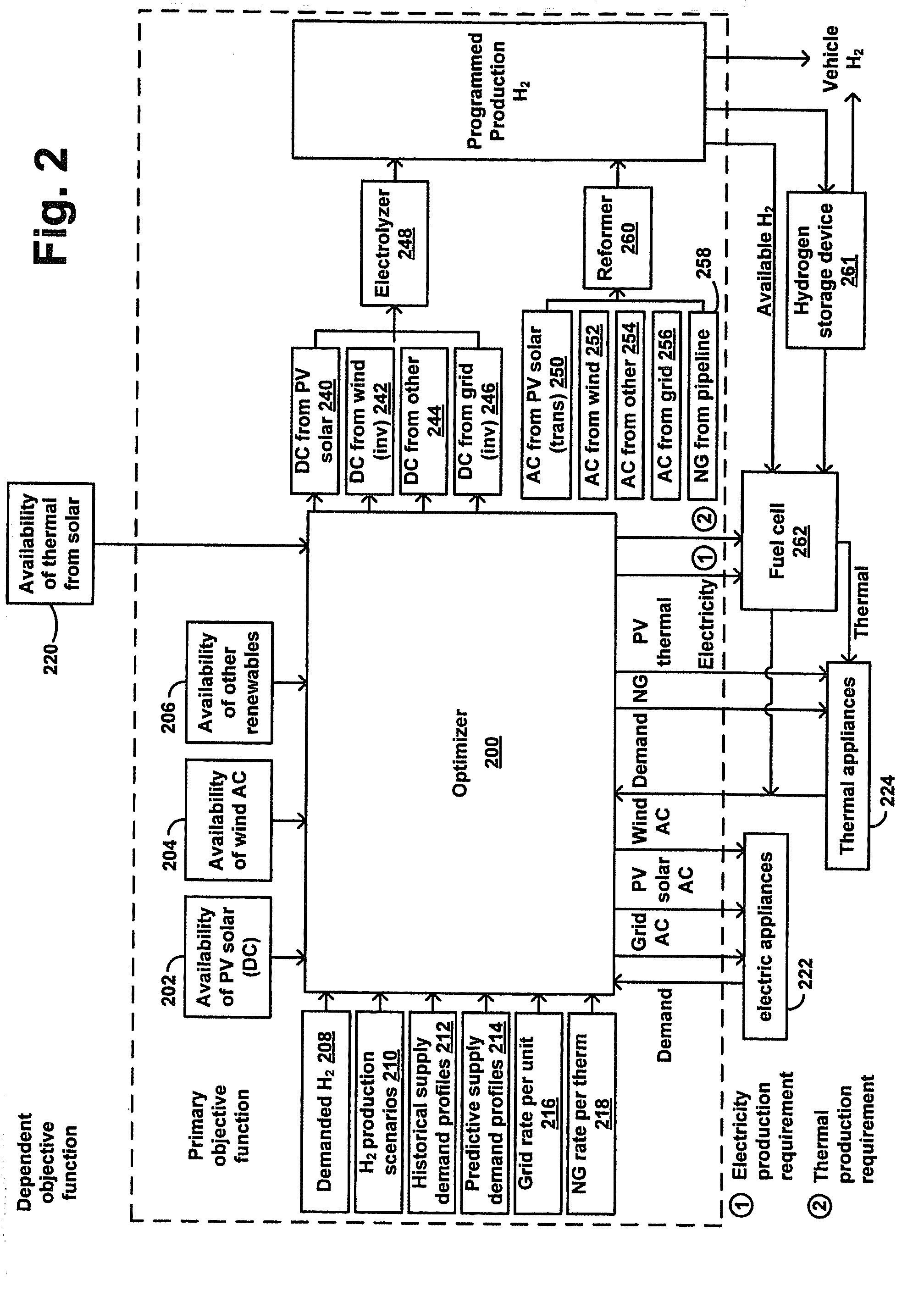
[0034]In a robust embodiment, the system might be implemented in a programmable, microprocessor-based unit that monitors the production of hydrogen, thermal energy and electricity from renewable sources, current stores of hydrogen, current and expected thermal and electricity requirements of a building, current and expected electricity load of the equipment used to process hydrogen, expected thermal and electricity generating capacity of the renewable sources, per unit costs (both seasonal and time of day) of conventional (e.g., utility-based) energy sources, and hydrogen requirements for refueling to assess an optimal mix of renew...
PUM
 Login to View More
 Abstract
Description
Claims
Application Information
 Login to View More