
Process for obtaining biochemicals in a zero-liquid discharge plant
a biochemical and zero-liquid discharge technology, applied in the field of process, can solve the problems of energy-intensive subsequent concentration of sugars through evaporation before fermentation to produce ethanol, and achieve the effect of eliminating the need for waste water treatment plants and reducing process energy consumption
Active Publication Date: 2012-07-03
GRANBIO INTELLECTUAL PROPERTY HOLDINGS LLC
View PDF4 Cites 9 Cited by
- Summary
- Abstract
- Description
- Claims
- Application Information
AI Technical Summary
Benefits of technology
This process efficiently produces saleable chemicals with reduced energy usage and eliminates the need for wastewater treatment plants, achieving a more sustainable and cost-effective conversion of hemicelluloses into valuable products.
Problems solved by technology
Because of the low concentration of hemicelluloses in the extract, when the hemicelluloses are hydrolyzed to sugars, the subsequent concentration of sugars through evaporation before fermentation to produce ethanol is energy intensive.
Method used
the structure of the environmentally friendly knitted fabric provided by the present invention; figure 2 Flow chart of the yarn wrapping machine for environmentally friendly knitted fabrics and storage devices; image 3 Is the parameter map of the yarn covering machine
View moreImage
Smart Image Click on the blue labels to locate them in the text.
Smart ImageViewing Examples

Examples
Experimental program
Comparison scheme
Effect test
example 1
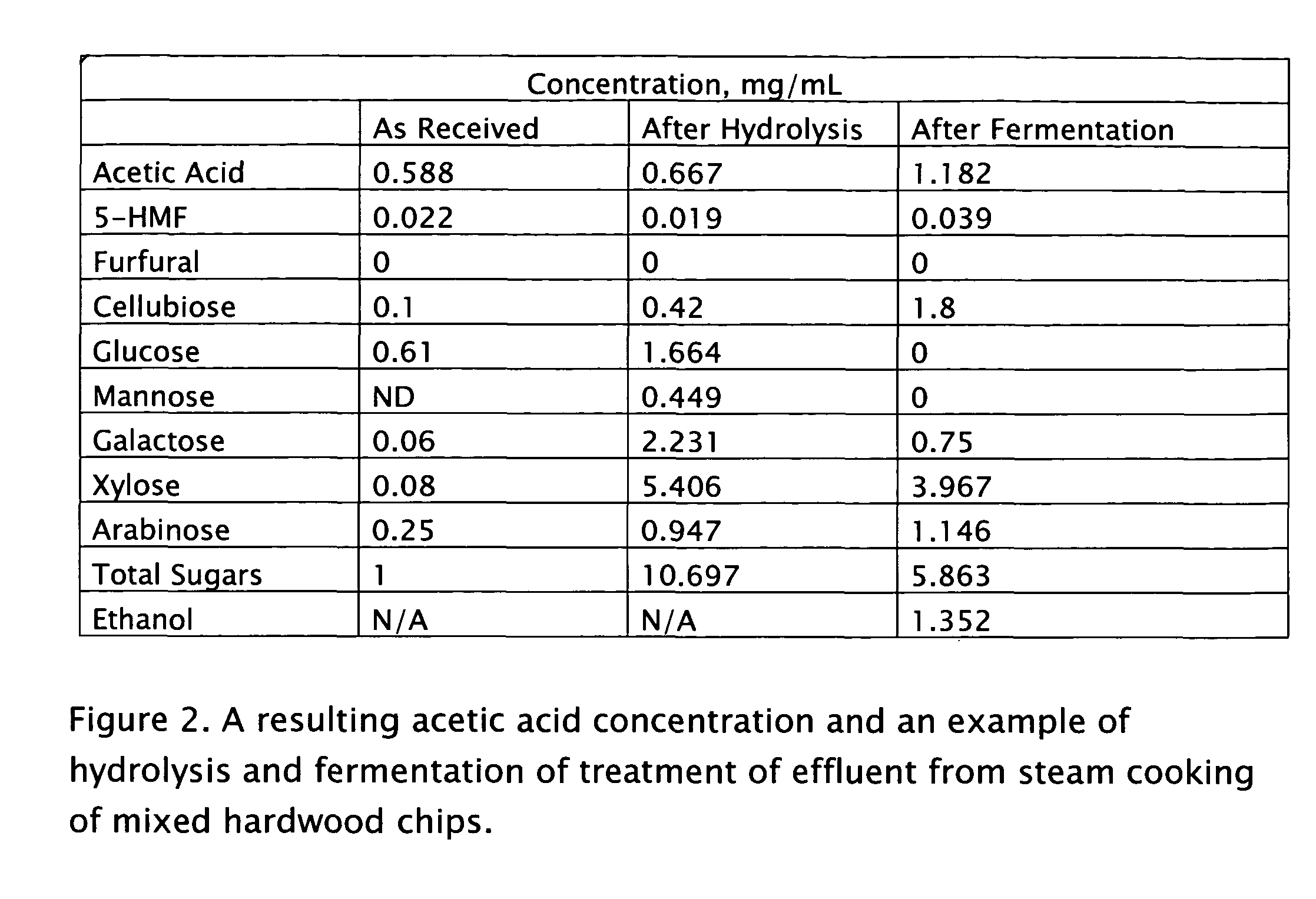
[0020]The pH of 125 mL of extract from the steam cooking of hardwood chips was adjusted to 1 by adding 95% sulfuric acid. The extract was then hydrolyzed at 120 degrees C. for 1 hour in an autoclave. The pH of the hydrolyzed liquor was adjusted to 5.6 using ammonium hydroxide (30% ammonia). The liquor was then combined with 3 g peptone and 1.5 g yeast extract nutrients. 15 g of this solution was combined with 3 g yeast and inoculated at 30 degrees C. for 4 hours. The inoculated solution was recombined with the original and fermented at 35 degrees C. for 4 hours. FIG. 2 shows the concentration of acetic acid, ethanol, and other wood derived components for the extract as received, after hydrolysis, and after fermentation.
the structure of the environmentally friendly knitted fabric provided by the present invention; figure 2 Flow chart of the yarn wrapping machine for environmentally friendly knitted fabrics and storage devices; image 3 Is the parameter map of the yarn covering machine
Login to View More PUM
| Property | Measurement | Unit |
|---|---|---|
| temperature | aaaaa | aaaaa |
| molecular-weight | aaaaa | aaaaa |
| alkaline | aaaaa | aaaaa |
Login to View More
Abstract
A method is presented for the production of cellulosic ethanol, acetic acid and derivatives from the extract containing fibers and hemicelluloses after steam cooking of biomass in a host plant. The process is integrated with the host plant process to minimize the effect of loss of heat value from the extracted hemicelluloses and eliminate the need for the waste water treatment plant.
Description
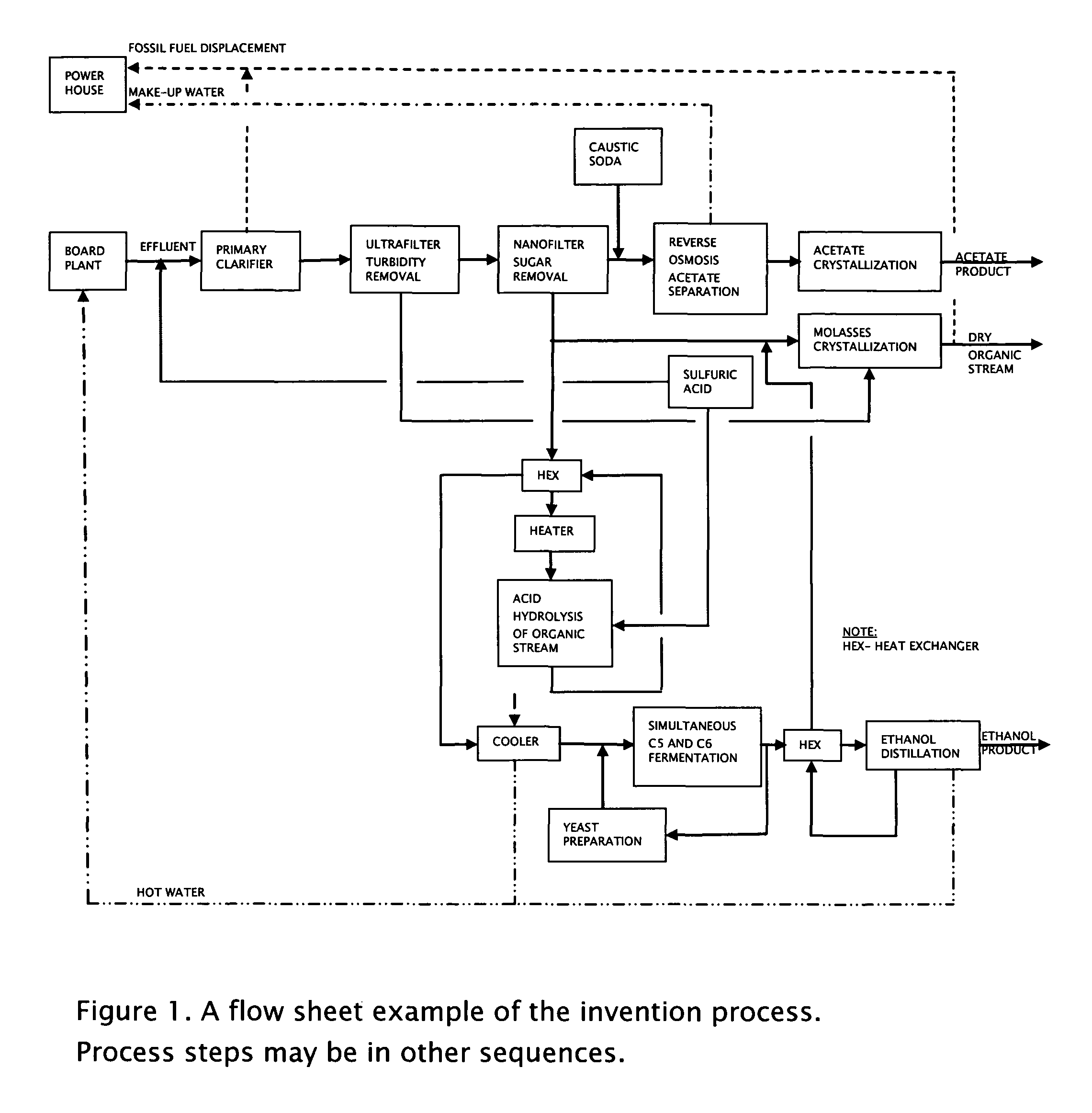
FIELD OF THE INVENTION[0001]This invention relates, in general, to the post treatment of effluent from forest product or food or beverage plant. The treatment specifically converts the soluble fraction of extracted lignocellulosic material to byproduct ethanol, acetic acid and other chemicals.BRIEF DESCRIPTION OF THE DRAWINGS[0002]A more complete understanding of the present invention may be obtained by reference to the following detailed description when read in conjunction with the accompanying drawings wherein:[0003]FIG. 1 illustrates a typical general arrangement of the unit operations for mixed hardwood derived extract from steam cooking water effluent. Other effluent liquors are possible.[0004]FIG. 2 shows concentrations of acetic acid and other wood derived components after hydrolysis and fermentation of treatment of effluent from steam cooking of mixed hardwood chips.BACKGROUND OF THE INVENTION[0005]Forest products industry effluents contain dissolved or mechanically separat...
Claims
the structure of the environmentally friendly knitted fabric provided by the present invention; figure 2 Flow chart of the yarn wrapping machine for environmentally friendly knitted fabrics and storage devices; image 3 Is the parameter map of the yarn covering machine
Login to View More Application Information
Patent Timeline
 Login to View More
 Patent Type & AuthorityPatents(United States)
IPC IPC(8): C12P7/10C12P7/14C12P7/06C12P7/16C12P7/54C12P19/00C12P19/12C12P19/04C12P19/02C07G1/00C07H1/00C12P7/08
CPCC12P7/10C12P7/16C12P19/02C07C51/47Y02E50/17Y02E50/10Y02E50/16
InventorRETSINA, THEODORAPYLKKANEN, VESANELSON, KIMBERLEY
OwnerGRANBIO INTELLECTUAL PROPERTY HOLDINGS LLC