
Cables with intertwined strain relief and bifurcation structures
- Summary
- Abstract
- Description
- Claims
- Application Information
AI Technical Summary
Benefits of technology
Problems solved by technology
Method used
Image

Examples
Embodiment Construction
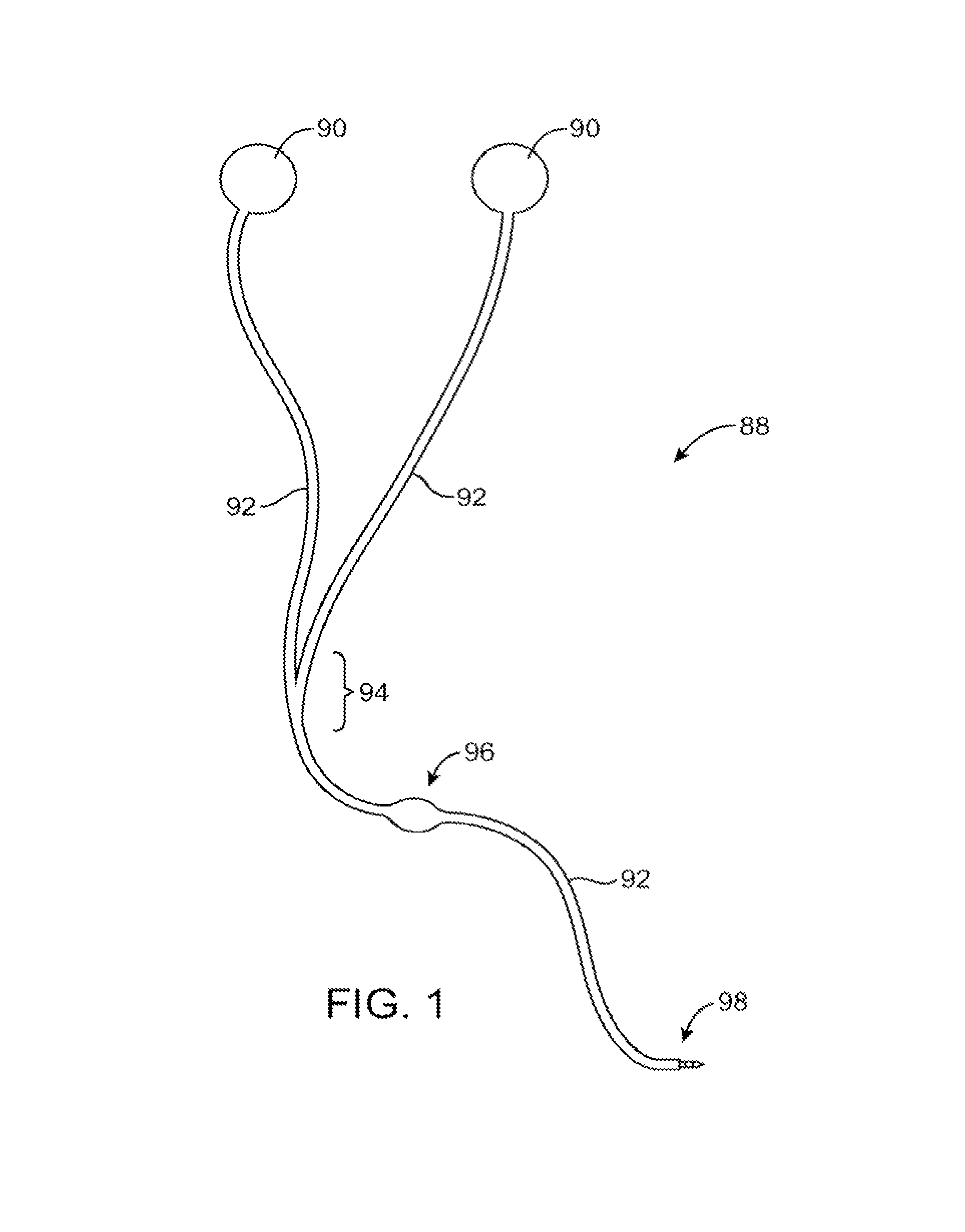
[0024]Cables may be used in headphones, patch cords, power cords, or other equipment they conveys electrical signals. As an example, cables are sometimes described herein in the context of accessories such as headsets. This is, however, merely illustrative. Any suitable apparatus may be provided with a cable if desired.
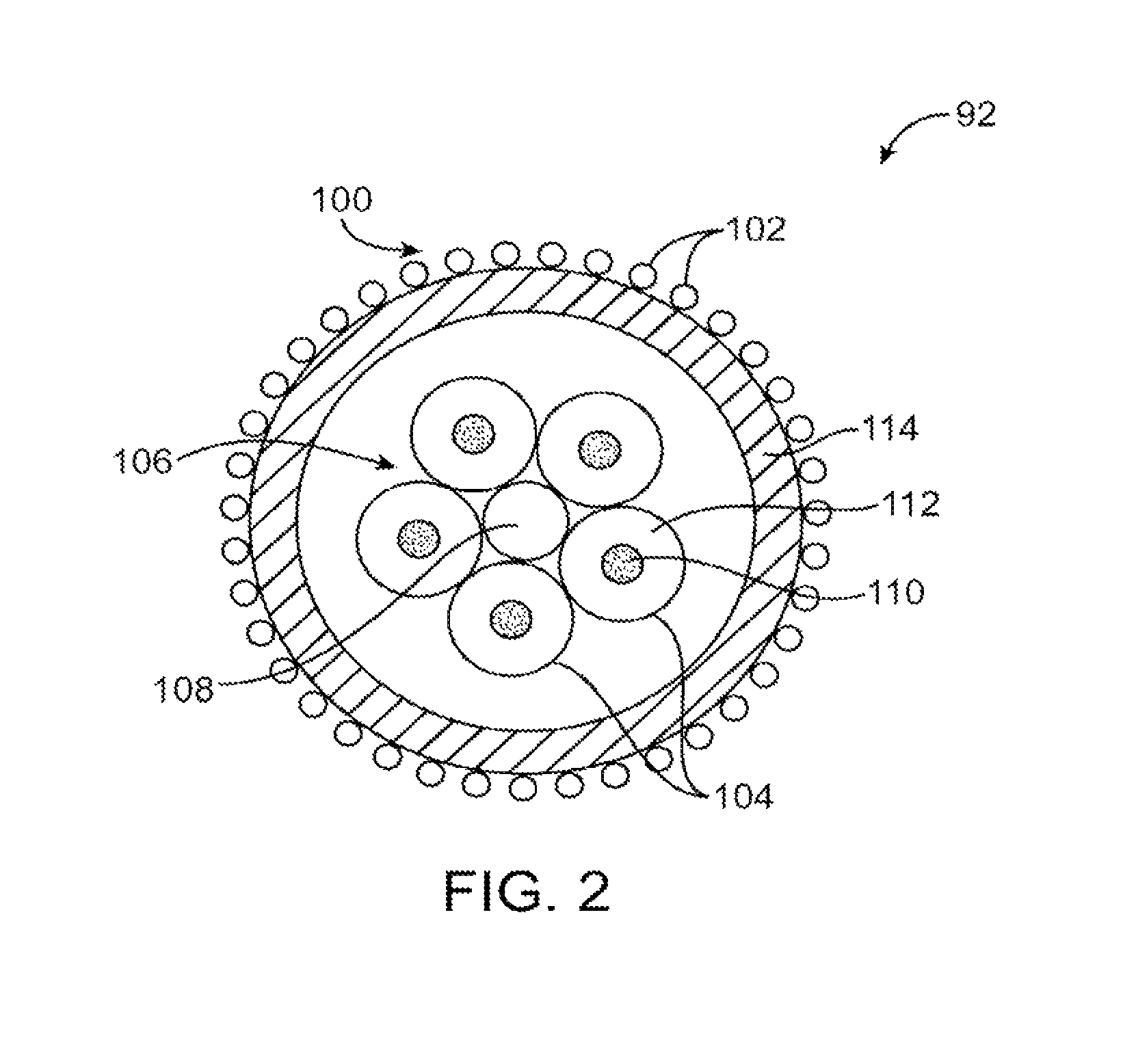
[0025]The inner portions of a cable may contain wires for carrying power and data signals and an optional strengthening cord. Electromagnetic shielding (e.g., a metal braid, interwoven metal, and / or wrapped metal foil), a plastic sheath, and other layers may be used to cover the wires and strengthening cord. To provide the cable with an attractive and durable outer layer, the cable may be covered with intertwined fibers. The intertwined fibers of the outer layer may be formed by an intertwining tool such as an intertwining tool. The outer layer may have a tubular shape and may sometimes be referred to as an intertwined fiber cable cover or tubular intertwined fiber ca...
PUM
| Property | Measurement | Unit |
|---|---|---|
| Length | aaaaa | aaaaa |
| Density | aaaaa | aaaaa |
| Strength | aaaaa | aaaaa |
Abstract
Description
Claims
Application Information
 Login to View More