
Sound field spatial stabilizer with structured noise compensation
a sound field and spatial stabilizer technology, applied in the field of sound field processing, can solve the problems of mono, output signal that does not have spatial information, and spatial information reduction or loss
- Summary
- Abstract
- Description
- Claims
- Application Information
AI Technical Summary
Benefits of technology
Problems solved by technology
Method used
Image

Examples
Embodiment Construction
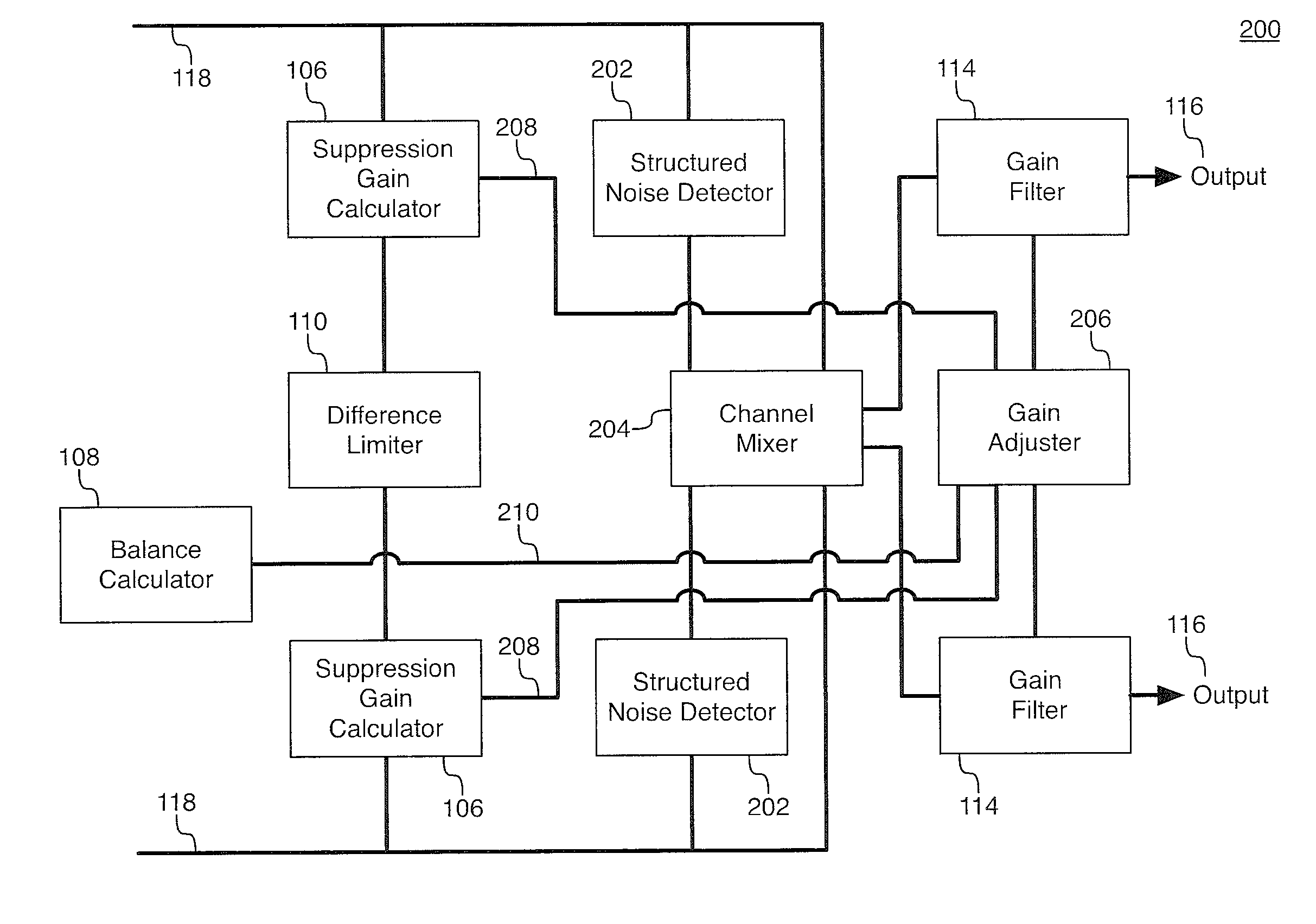
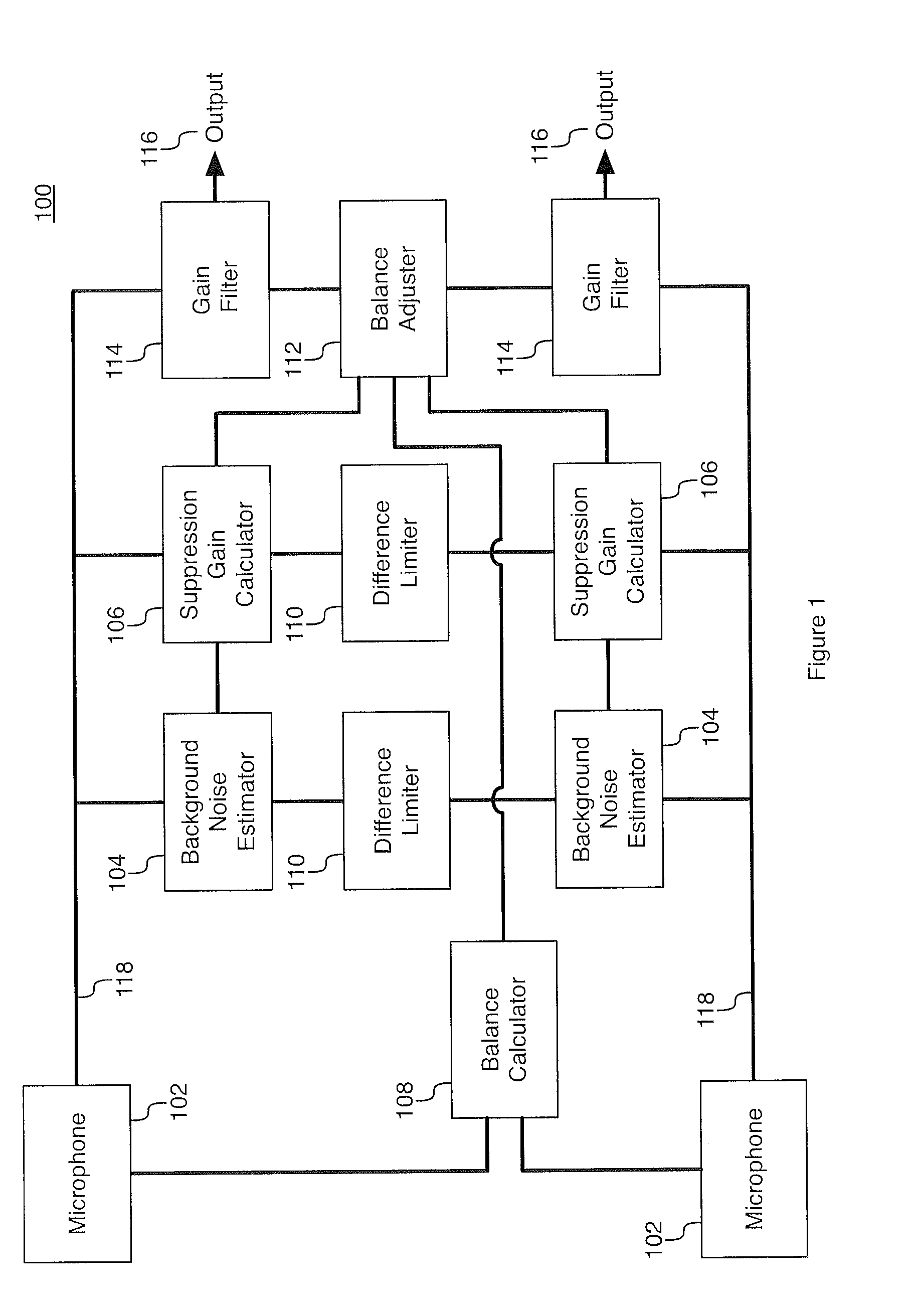
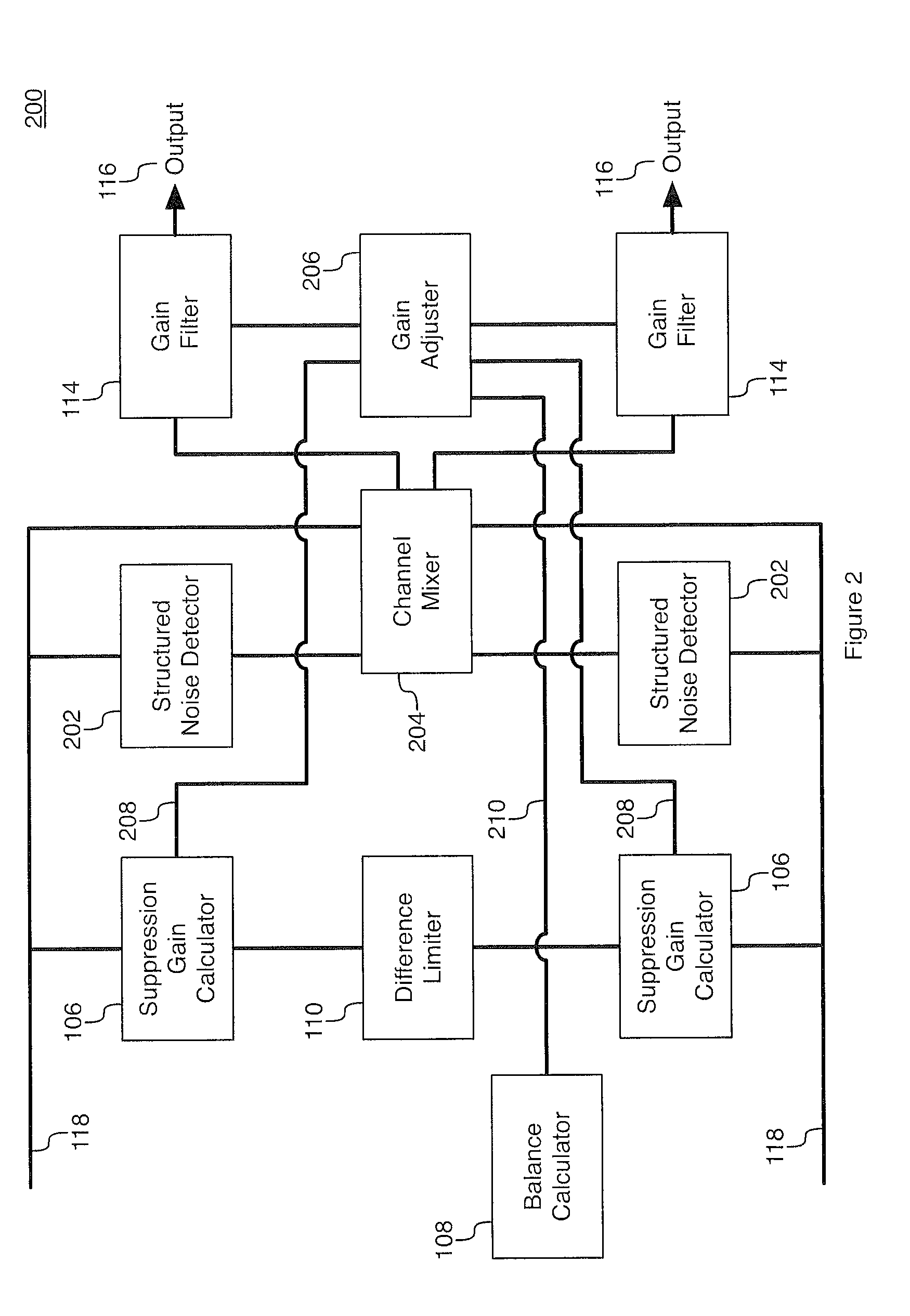
[0021]In a system and method for maintaining the spatial stability of a sound field balance gains may be calculated for each of two or more microphone signals. The balance gain may be associated with a spatial image in the sound field. One or more signal values may be calculated for each of the two or more microphone signals. The signal values may be the background noise estimate or signal gains associated with echo cancellation and noise reduction processes. Structured noise content may be detected for each of the two or more microphone signals. The structured noise content may be for example, impulse noise or tonal noise. A first microphone signal of the two or more microphone signals may be mixed with a second microphone signal of the two or more microphone signals responsive to the detected structured noise. Increasing amounts of detected structured noise may increase the amount of mixing, or blending, of the first microphone signal with the second microphone signal. The gain ma...
PUM
 Login to View More
 Abstract
Description
Claims
Application Information
 Login to View More