
Near-infrared cut filter and device using near-infrared cut filter
A near-infrared and cut-off filter technology, which is applied to optics, optical components, camera bodies, etc., can solve the problem that the absorption capacity of near-infrared rays is not necessarily sufficient
Patent Information
- Authority / Receiving Office
- CN · China
- Patent Type
- Patents(China)
- Current Assignee / Owner
- Publication Date
- 2016-03-02
Smart Images
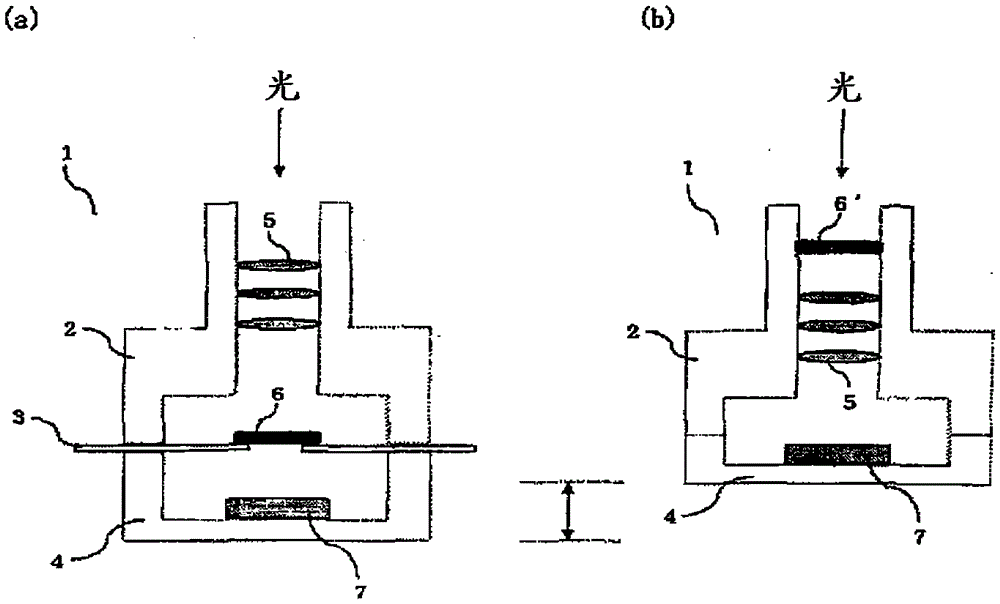
Figure 1 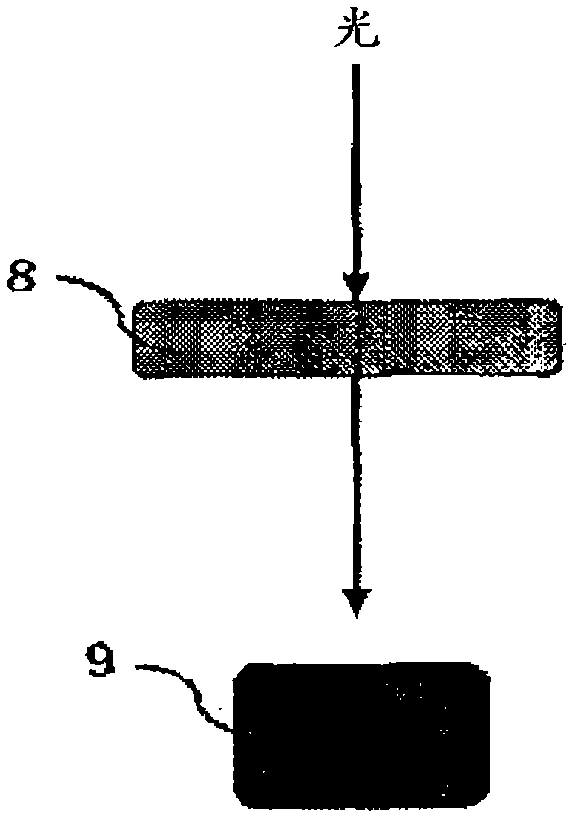
Figure 2 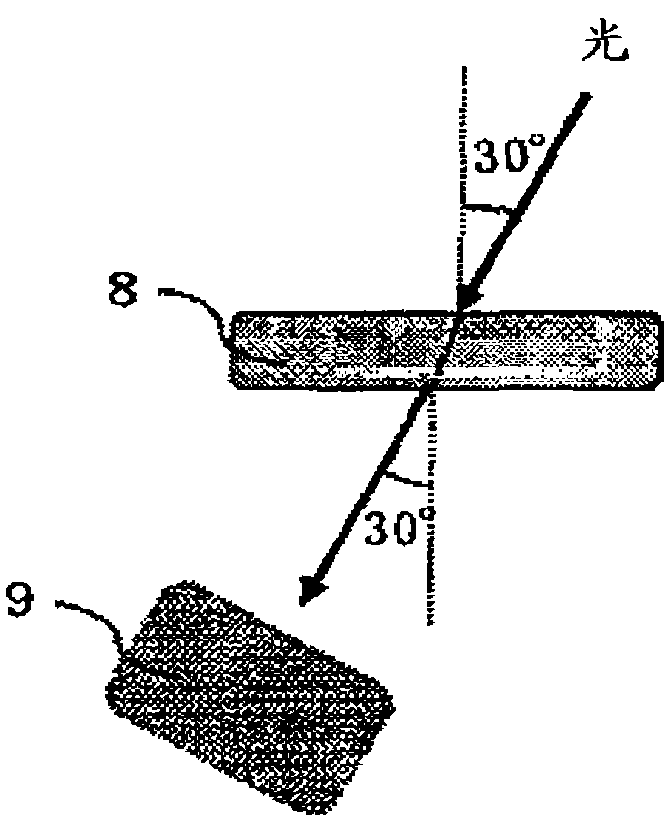
Figure 3
Abstract
Description
technical field
[0001] The present invention relates to a near-infrared cut filter. Specifically, it relates to a near-infrared cut filter that has a sufficient viewing angle and can be used particularly preferably as a visibility correction filter for solid-state imaging (solid-state imaging) devices such as CCD and CMOS. Background technique
[0002] In recent years, televisions equipped with plasma display panels (PDPs) have been commercialized and widely used in ordinary households. This PDP is a display that operates by plasma discharge, and it is known that near-infrared rays (wavelength: 800 to 1000 nm) are generated during plasma discharge.
[0003] On the other hand, in the home, near-infrared rays are increasingly used in the remote controls of home appliances such as TVs, stereos, and air conditioners, and in the information exchange of personal computers. reason.
[0004] Therefore, the front panels of many commercially available PDPs are gradually provided wi...
Examples
Embodiment
[0545] Hereinafter, although an Example demonstrates this invention, this invention is not limited at all by this Example. It should be noted that "parts" means "parts by weight" unless otherwise specified.
[0546] First, the measurement method of each physical property value and the evaluation method of a physical property are demonstrated.
[0547] (1) Molecular weight:
[0548]Using a Gel Permeation Chromatography (GPC) device (Model 150C) manufactured by WATERS Corporation equipped with an H-type column manufactured by TOSOH, under the conditions of o-dichlorobenzene solvent and 120°C, the standard polystyrene conversion The weight average molecular weight (Mw) and number average molecular weight (Mn).
[0549] (2) Glass transition temperature (Tg):
[0550] Using a differential scanning calorimeter (DSC6200) manufactured by SI INano Technology Co., Ltd., the measurement was performed at a temperature increase rate of 20° C. per minute under a nitrogen flow.
[0551] ...
Synthetic example 1
[0559] The 8-methyl-8-methoxycarbonyltetracyclo[4.4.0.1 represented by the following formula (a) 2,5 .1 7,10 ] Reaction in which 100 parts of dodec-3-ene (hereinafter also referred to as "DNM"), 18 parts of 1-hexene (molecular weight regulator), and 300 parts of toluene (solvent for ring-opening polymerization reaction) were replaced with nitrogen In a container, the solution was heated to 80°C. Next, 0.2 parts of a toluene solution (0.6 mol / L) of triethylaluminum and 0.9 parts of a toluene solution (concentration 0.025 mol / L) of methanol-modified tungsten hexachloride as a polymerization catalyst were added to the solution in the reaction vessel , the solution was heated and stirred at 80° C. for 3 hours, thereby performing ring-opening polymerization reaction to obtain a ring-opening polymer solution. The polymerization conversion rate of this polymerization reaction was 97%.
[0560]
[0561] 1000 parts of the thus obtained ring-opened polymer solution were put into a...
Synthetic example 2
[0564] In a 1L stainless steel autoclave that was fully dried and replaced with nitrogen, 420.4 g of dehydrated cyclohexane, 180.2 g of p-xylene, 5-trimethoxysilyl-bicyclo[2.2.1]heptane- 48.75 millimoles (10.43 g) of 2-ene and 1425 millimoles (134.1 g) of bicyclo[2.2.1]hept-2-ene were added, and gaseous ethylene was added to bring the inner pressure of the autoclave to 0.1 MPa. Thereafter, the autoclave was heated to 75°C.
[0565] Add 0.003 milligram atoms of palladium 2-ethylhexanoate (as Pd atom) and 0.0015 millimoles of tricyclohexylphosphine as catalyst components to 10 ml of toluene, and react at 25° C. for 1 hour to prepare a solution. triphenylcarbon fluorophenyl borate 0.00315 mmoles were added in this order to the autoclave heated to 75°C to start polymerization.
[0566] Add 11.25 millimoles (2.41 g) 90 minutes after the start of polymerization, and then add 7.5 millimoles (1.61 g), 3.75 millimoles (0.80 g), and 3.75 millimoles four times every 30 minutes. 5-Tri...