
Preparation method of glycopeptide hydrogel containing glucosamine unit and application of glycopeptide hydrogel in preparing postoperation scar inhibitor
A technology of glucosamine and hydrogel, applied in the field of biomedicine, can solve the problems of difficulty in artificial synthesis of decorin, increase in cost, etc., and achieve the effect of saving cost and simplifying the treatment process
Patent Information
- Authority / Receiving Office
- CN · China
- Patent Type
- Patents(China)
- Current Assignee / Owner
- Publication Date
- 2013-08-21
Smart Images
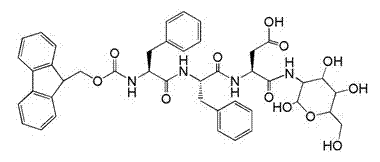
Figure 1 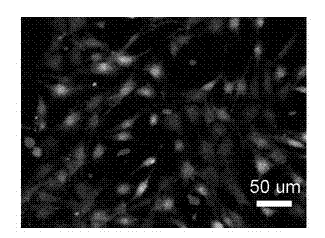
Figure 2 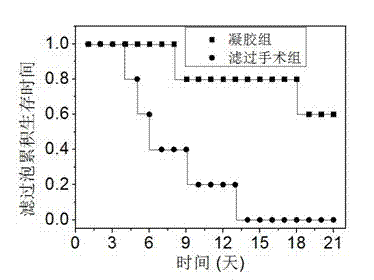
Figure 3
Abstract
Description
technical field
[0001] The invention relates to a preparation method of glycopeptide hydrogel containing glucosamine units and its application in the preparation of postoperative scar inhibitors, belonging to the field of biomedicine. technical background
[0002] Glaucoma is an eye disease that can lead to blindness. Its clinical symptoms are high pressure in the eye that compresses the optic disc and damages the optic nerve. At present, filtering surgery is a common method for treating glaucoma, but the scar tissue formed by excessive wound healing after surgery often leads to the failure of glaucoma filtering surgery. The main causes of postoperative scar formation are postoperative inflammatory response and subconjunctival tissue fibrosis. In clinical practice, in order to effectively inhibit postoperative inflammatory response and subconjunctival tissue fibrosis, anti-proliferative drug aqueous solution needs to be injected into the patient's eyes multiple times within...
Examples
Embodiment 1
[0033] (1) Preparation of tripeptide FMOC-Phe-Phe-Asp(OtBu)-OH containing hydrophobic N-fluorene-9-methoxycarbonyl
[0034] Using 2-chloro-trityl chloride resin (substitution degree of available chlorine on the resin is 1.32mmol / g) as a solid phase carrier, the short peptide FMOC-Phe-Phe-Asp (OtBu) was prepared by using a peptide solid-phase automatic synthesizer -OH. The peptide chain extends from the carbon-terminus to the nitrogen-terminus on the resin. The specific synthesis steps are as follows: Weigh 1.5g of 2-chloro-trityl chloride resin (the available chlorine content is 1.5×1.32=1.98mmol), and use 10mL of dichloromethane (CH 2 Cl 2 ) and N,N-dimethylformamide (DMF) for 3 washes, and then soak the resin with 10 mL of DMF for 30 minutes. Remove the DMF, add the DMF solution dissolved in FMOC-Asp(OtBu)-OH (3×1.98mmol) and diisopropylethylamine (DiEA, 4×1.98mmol) to the resin, shake and react at room temperature for 30 minutes . The reaction solution was removed, the...
Embodiment 2
[0049] (1) Preparation of tripeptide Nap-Phe-Phe-Asp(OtBu)-OH containing hydrophobic naphthyl acetyl group
[0050] With reference to the method of Example 1, the peptide chain was extended on the 2-chloro-trityl chloride resin. After the synthesis of the peptide chain was completed, a solution of naphthaleneacetic acid (2×1.98mmol), DiEA (3×1.98mmol), HBTU ( 2.4×1.98mmol) and HOBt (2.4×1.98mmol) in DMF were added to the resin, and the reaction was shaken at room temperature for 1.5 hours. Aspirate the DMF, respectively with 10mL DMF and CH 2 Cl 2 Wash the resin 3 times and dry the resin at room temperature. Add 20 mL of cutting agent (1:2:7 volume ratio of acetic acid, trifluoroethanol and CH 2 Cl 2 ) to cut the product from the resin and collect the filtrate and concentrate. The product was precipitated by adding a large amount of cold diethyl ether, filtered and washed several times, and dried overnight at room temperature.
[0051] (2) Synthesis of glycopeptide Nap-P...
Embodiment 3
[0057] (1) Preparation of tripeptide Py-Phe-Phe-Asp(OtBu)-OH containing hydrophobic pyrenebutyryl
[0058] Referring to the method of Example 1, extend the peptide chain on the 2-chloro-trityl chloride resin. After the synthesis of the peptide chain is completed, add pyrenebutyric acid (2×1.98mmol), DiEA (3×1.98mmol), HBTU (2.4×1.98mmol) and HOBt (2.4×1.98mmol) in DMF were added to the resin, and the reaction was shaken at room temperature for 1.5 hours. Aspirate the DMF, respectively with 10mL DMF and CH 2 Cl 2 Wash the resin 3 times and dry the resin at room temperature. Add 20 mL of cutting agent (1:2:7 volume ratio of acetic acid, trifluoroethanol and CH 2 Cl 2 ) to cut the product from the resin and collect the filtrate and concentrate. The product was precipitated by adding a large amount of cold diethyl ether, filtered and washed several times, and dried overnight at room temperature.
[0059] (2) Synthesis of glycopeptide Py-Phe-Phe-Asp-glucosamine containing glu...