
Preparation method of high-concentration PAM-aluminum, zinc iron composite water treatment agent
A high-concentration, water treatment technology, applied in the direction of flocculation/sedimentation water/sewage treatment, etc., can solve problems that do not involve the compound function of inorganic and organic, and achieve excellent pollution removal efficiency, good stability, and sludge generation little effect
Patent Information
- Authority / Receiving Office
- CN · China
- Patent Type
- Patents(China)
- Current Assignee / Owner
- Publication Date
- 2014-04-16
- Estimated Expiration
- Not applicable · inactive patent
Smart Images
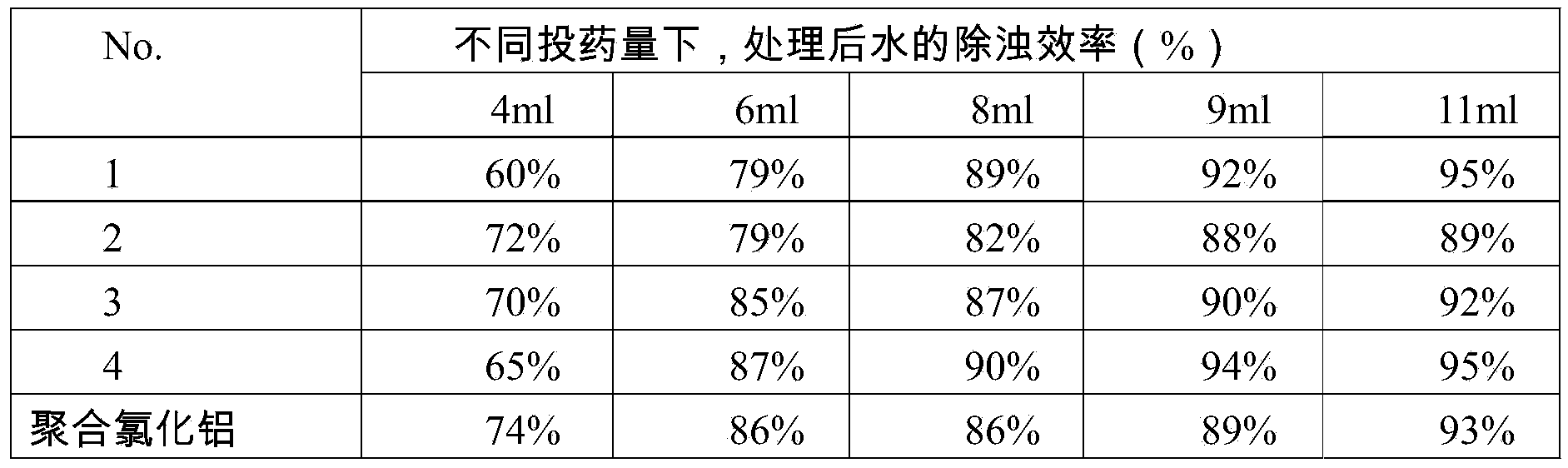
Figure 1 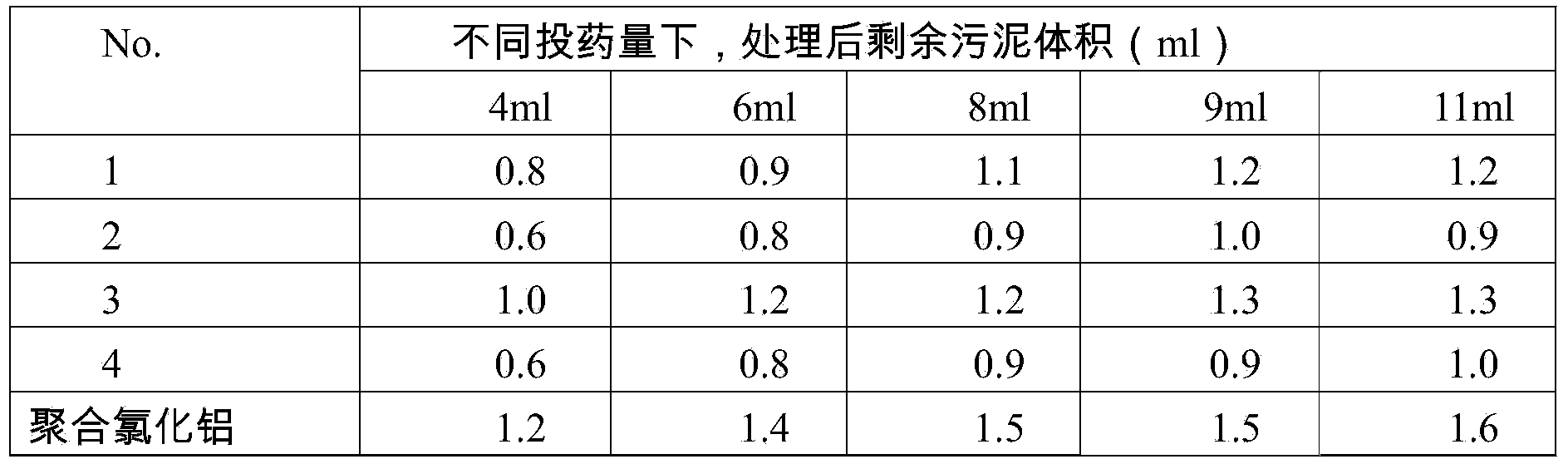
Figure 2
Abstract
Description
technical field
[0001] The invention belongs to the technical field of sewage treatment, and relates to a preparation method of a PAM-aluminum-zinc-iron composite water treatment agent. Background technique
[0002] Over the past 30 years of reform and opening up, China's urbanization has developed rapidly, and the scale of sewage treatment has been expanding day by day. At present, the urban sewage treatment capacity has reached more than 100 million cubic meters, and the number of sewage treatment plants has reached more than 3,000. It is estimated that nearly 2,000 sewage plants will be added within five years. The operation of the sewage plant is accompanied by the generation of a large amount of excess sludge. Based on the water content of 97%, the amount of sludge produced accounts for about 0.3% to 0.5% of the total treatment volume. Based on the water content of 80%, the total annual sludge production in China Nearly 30 million tons. Sludge is the dirtiest substanc...
Examples
Embodiment 1
[0021] 7kg of galvanized slag was crushed into medium or fine slag samples by wet method. At a temperature of 70°C-100°C and a stirring speed of 200rpm-600rpm, add 12kg of dilute sulfuric acid solution (55% mass fraction) into the above block sample for leaching for 2h, and then use Filter through quartz sand with a thickness of 10 cm, and control the filtration temperature at 55° C. to 100° C. to obtain the filtrate for use. Under the condition of temperature 45℃~75℃ and stirring speed 400rpm~800rpm, add 8kg sodium hydroxide (mass fraction 45%) solution to the above filtrate, adjust the pH value to 2.5 ~3.5, stop stirring, carry out polymerization reaction, polymerization time is 0.25 hours, and obtain colorless liquid semi-product. Mix 6.2kg of polyacrylamide solution (0.5% by mass) with the above colorless liquid semi-product at a temperature of 35°C to 45°C and a stirring speed of 400 to 800 rpm, and then add 6kg of sodium hydroxide (mass fraction: 20%) solution, adjust ...
Embodiment 2
[0023] 11kg of galvanized slag was crushed into medium slag or fine slag samples by wet method. At a temperature of 70°C-100°C and a stirring speed of 200-600 rpm, add 17kg of dilute sulfuric acid solution (mass fraction 40%) into the above block sample for leaching for 3 hours, and then use Filter through quartz sand with a thickness of 20 cm, and control the filtration temperature to 55° C. to 100° C. to obtain a filtrate for use. Add 14kg of sodium hydroxide (50% by mass) solution to the above filtrate at a temperature of 45°C to 75°C and a stirring speed of 400 to 800 rpm to adjust the pH to 2 ~3, stop stirring, carry out polymerization reaction, the polymerization time is 0.5 hour, obtain colorless liquid semi-product. Mix 6.4kg of polyacrylamide solution (0.3% by mass) with the above colorless liquid semi-product at a temperature of 35°C-45°C and a stirring speed of 400rpm-800rpm, and then add 13kg of sodium hydroxide (mass fraction 20%) solution, adjust the pH value t...
Embodiment 3
[0025]15kg of galvanized slag was crushed into medium or fine slag samples by wet method. At a temperature of 70°C to 100°C and a stirring speed of 200 to 600 rpm, add 24kg of dilute sulfuric acid solution (70% mass fraction) into the above block sample for leaching for 5 hours, and then use Filter through quartz sand with a thickness of 10 cm, and control the filtration temperature at 55° C. to 100° C. to obtain the filtrate for use. Add 19kg of sodium hydroxide (45% by mass) solution to the above filtrate at a temperature of 45°C to 75°C and a stirring speed of 400 to 800 rpm to adjust the pH to 3.5 ~4, stop stirring, carry out polymerization reaction, the polymerization time is 0.5 hours, and obtain a colorless liquid semi-product. At a temperature of 35°C-45°C and a stirring speed of 400-800 rpm, mix 13kg of polyacrylamide solution (0.6% by mass) with the above-mentioned colorless liquid semi-product, and then add 21kg Sodium hydroxide (mass fraction: 15%) solution, adju...