
A gene chip for the screening of causative genes of primary cilia-related diseases
A gene chip and disease-causing gene technology, which is applied in the field of gene chip screening of disease-causing genes related to primary cilia, can solve problems such as diagnosis dependence and phenotypic diagnosis interference
Patent Information
- Authority / Receiving Office
- CN · China
- Patent Type
- Patents(China)
- Current Assignee / Owner
- Publication Date
- 2018-01-05
- Estimated Expiration
- Not applicable · inactive patent
Smart Images
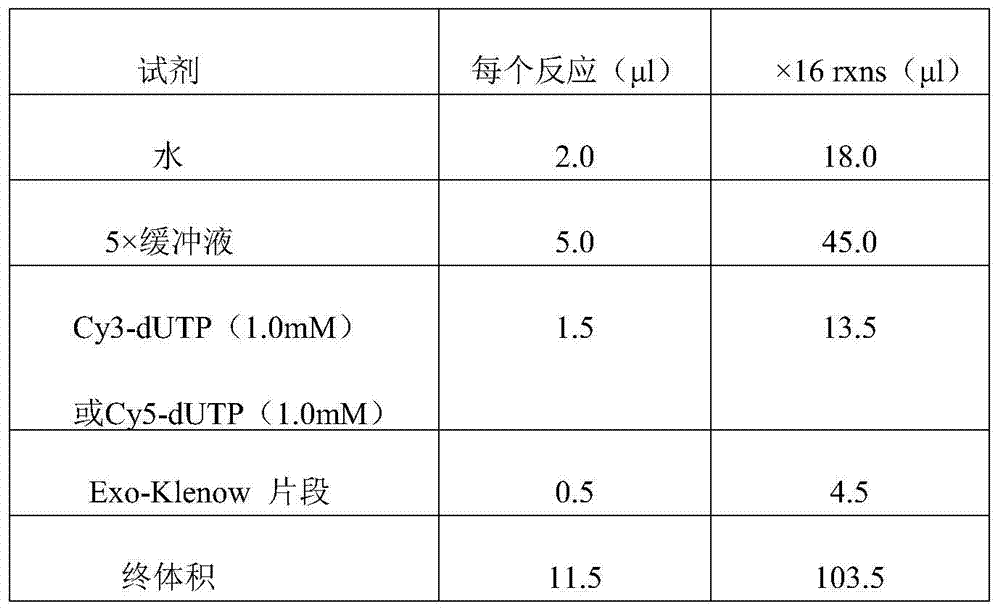
Figure 1 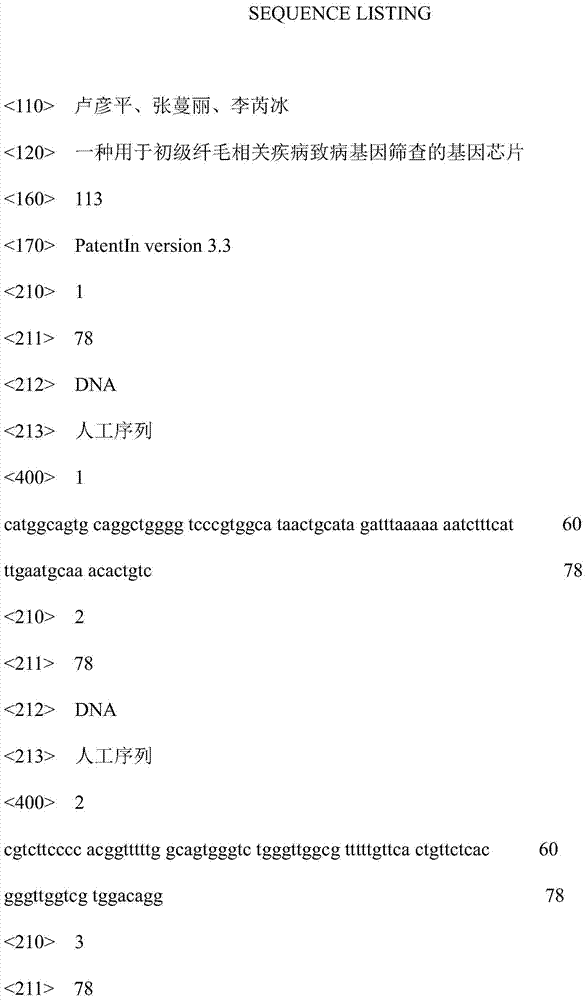
Figure 2 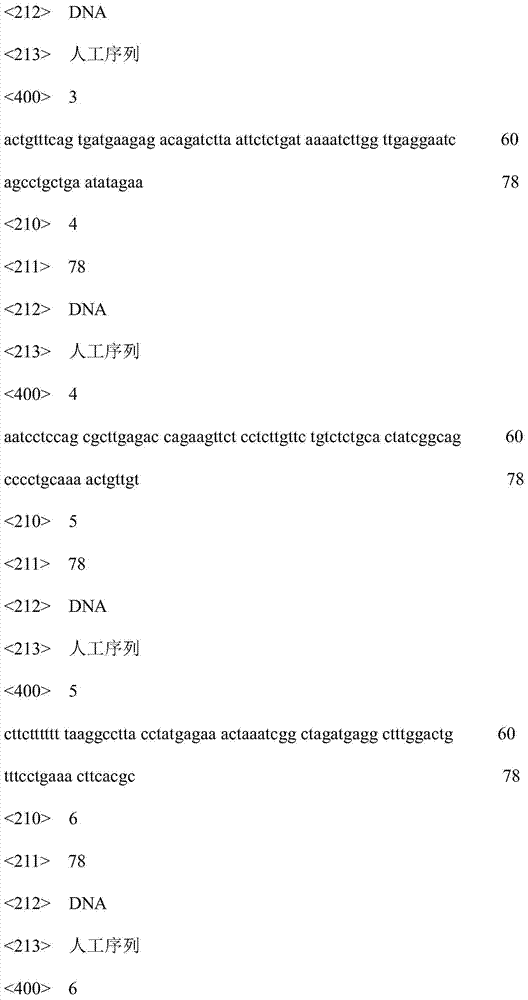
Figure 3
Abstract
Description
technical field
[0001] The invention belongs to the field of gene diagnosis and relates to a gene chip, in particular to a gene chip for primary cilia-related disease-causing gene screening and its application. Background technique
[0002] Primary cilia-associated disorders are a group of overlapping clinical phenotypes and genotypes that are caused by defects in primary cilia. Cilia-related diseases involve various organs of the human body such as kidneys, brain, limbs, eyes, ears, liver, bones, etc. Its phenotypes include polycystic kidney disease, hepatobiliary disease, polydactyly, cognitive impairment, retinal degeneration, skeletal abnormalities, obesity, and visceral transposition. Primary cilia-related disorders include: Bardet-Biedl syndrome (BBS), juvenile wasting nephropathy (NPHP), Senior-Loken syndrome (SLNS), Alstrom syndrome (ALMS), Meckel-Grubber syndrome (MKS), Joubert syndrome Syndrome (JBTS), Orofacial-Digital Syndrome Type 1 (OFD1), Elliott Syndrome (E...
Examples
Embodiment 1
[0031] Example 1 Preparation of Gene Chip and Preservation of Probes
[0032] 1. Probe synthesis
[0033] Probes of corresponding lengths were designed and synthesized by using in situ synthesis technology according to the probe sequences. The probe sequences are shown in SEQ ID NO.1-113, and the synthesized probes were purified by HPLC technology.
[0034] 2. Elution probe
[0035] Soak the chip with probe in 5ml of 35% ammonia water, seal it and put it on a constant temperature rotator, rotate for more than 2 hours, elute the probe from the chip, and transfer it to centrifuge tube 2.0.
[0036] 3. Centrifugal drying
[0037] The eluted probe was concentrated in a rotary vacuum using a vacuum concentrator, and stopped when there was no liquid.
[0038] 4. Dissolution of the probe
[0039] Add 200 μl of RNA and DNase-free deionized water to the concentrated probe tube, vortex for more than 1 minute, and combine all dissolved probes into one tube for storage.
[0040] 5. B...
Embodiment 2
[0044] Example 2 The method of using the gene chip
[0045] (1) Preparation of sample DNA fragments
[0046] The blood of patients and normal people was taken, and the whole genome DNA (gDNA) was extracted by conventional methods.
[0047] Adjust the temperature of the water bath to 37°C and 65°C, dissolve 10× buffer C (see the table below), vortex briefly and then centrifuge for a few seconds.
[0048] For each reaction, gDNA was added to an appropriate nuclease-free PCR tube and nuclease-free water was added to bring the reaction volume to 10.1 μl.
[0049] Prepare the enzyme digestion mix master solution on ice, and add the reagents in the order listed in Table 1:
[0050] Table 1
[0051] Reagent
Each reaction (μl)
×16rxns(μl)
water
1.0
17.0
[0052] 10× Buffer C
1.3
22.1
Acetylated BSA (10μg / μl)
0.1
1.7
Alu I (10U / μl)
0.25
4.25
Rsa I (10U / μl)
0.25
4.25
final volume
2.9 ...
Embodiment 3
[0081] Example 3 Detection Accuracy of Gene Chips for Primary Ciliary-Related Disease-causing Genes
[0082] 1. Selection of experimental subjects: 50 cases with clinical manifestations of primary cilia-related diseases were selected as test subjects, and the causative genes of the above test subjects have been determined using gene expression profiling and gene sequencing techniques.
[0083] 2. Utilize the gene chip of the present invention to detect the pathogenic gene of the case
[0084] According to the method described in Example 2, the pathogenic genes of the above cases were determined. The results show that: the gene chip containing the probe sequence shown in SEQ ID NO.1-113 detected the disease-causing genes of 50 patients with the same detection results obtained by using gene expression profile and gene sequencing technology, the gene chip has the same effect on primary cilia The detection accuracy of related disease-causing genes is 100%.
[0085] 3. Comparativ...