
Potential sensor for phosphate anions and application of potential sensor
A phosphate ion and potential-type technology, which is applied in the field of analysis and testing, can solve problems such as the difficulty in detecting the potential of phosphate ions, and achieve the effects of easy miniaturization, good selectivity, and simple production
Patent Information
- Authority / Receiving Office
- CN · China
- Patent Type
- Applications(China)
- Current Assignee / Owner
- Publication Date
- 2016-07-06
Smart Images
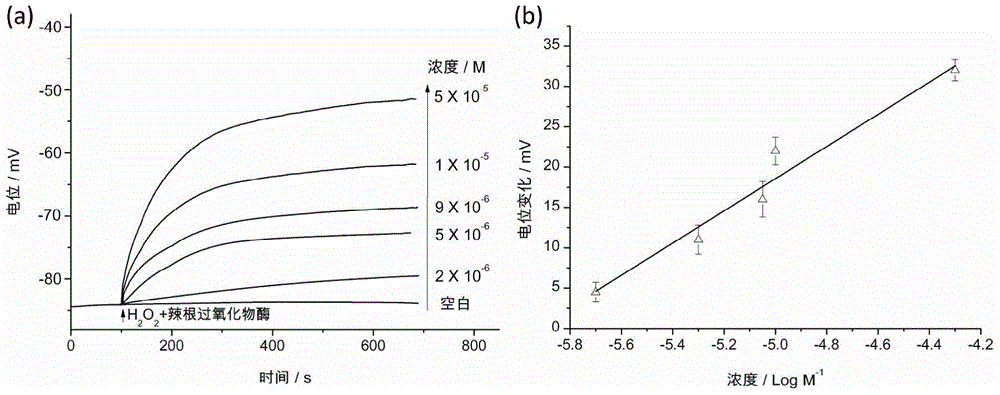
Figure 1 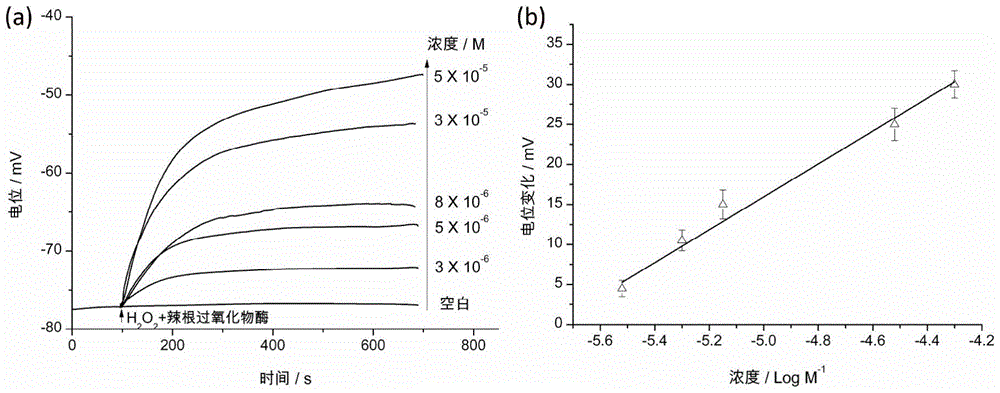
Figure 2 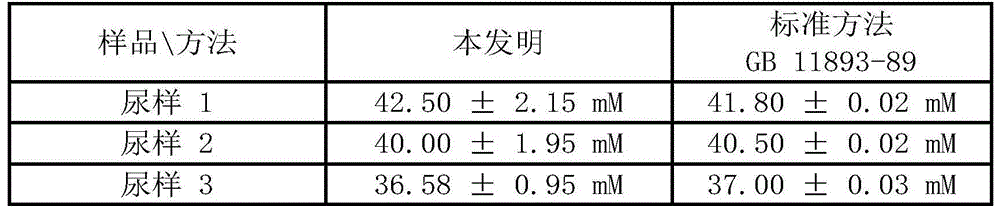
Figure 3
Abstract
Description
Technical field
[0001] The invention belongs to the technical field of analysis and testing, and specifically relates to a phosphate ion potential sensor and its application. Background technique
[0002] Phosphate ions have important physiological and environmental significance. Abnormal phosphate ion concentration in body fluids can be used as a sign of disease and metabolic dysfunction, and excessive phosphate in environmental waters can cause eutrophication of the water. The traditional method for detecting phosphate is ammonium molybdate spectrophotometry, which has high accuracy but is easily interfered by turbidity and color. In addition, most of the currently developed phosphate detection methods rely on large-scale laboratory instruments. These problems all lead to the fact that the existing methods cannot be widely used in the on-site rapid detection of environmental water bodies. It is still a difficult problem to develop a simple, selective, and not interfered by t...
Examples
Embodiment 1
[0024] Take Cu 2+ -BPMP is the molecular recognition body to detect phosphate ion as an example. The steps are as follows:
[0025] (1) Preparation of polymer membrane electrode
[0026] Weigh 196 mg of polyvinyl chloride, 196 mg of o-nitrophenyl octyl ether, and 4.0 mg of tridodecyl monomethyl ammonium chloride in 3.0 mL of tetrahydrofuran, stir well, and pour into the glass plate with an inner diameter of 3.5 cm In the glass ring. After the tetrahydrofuran evaporates, use a puncher to cut the membrane into small discs with an inner diameter of 3mm and paste them onto the pipette tip with a PVC tube at the bottom. Use the HEPES solution (containing 10 mM NaCl) with pH=7.0 as the inner filling solution and the activation solution to activate the electrode, and it will be used.
[0027] (2) Assembly of molecular recognition body and indicator molecule
[0028] Use 20mMHEPES buffer solution to prepare 200μM copper perchlorate solution, 100μM H-BPMP solution, mix the two in equal volu...
Embodiment 2
[0036] Take Zn 2+ -BPMP is the molecular recognition body to detect phosphate ion as an example. The steps are as follows:
[0037] (1) Preparation of polymer membrane electrode
[0038] Weigh 196 mg of polyvinyl chloride, 196 mg of o-nitrophenyl octyl ether, and 4.0 mg of tridodecyl monomethyl ammonium chloride in 3.0 mL of tetrahydrofuran, stir well, and pour into the glass plate with an inner diameter of 3.5 cm In the glass ring. After the tetrahydrofuran evaporates, use a puncher to cut the membrane into small discs with an inner diameter of 3mm and paste them onto the pipette tip with a PVC tube at the bottom. Use the HEPES solution (containing 10 mM NaCl) with pH=7.0 as the inner filling solution and the activation solution to activate the electrode, and it will be used.
[0039] (2) Assembly of molecular recognition body and indicator molecule
[0040] Use 20mMHEPES buffer solution to prepare 200μM zinc perchlorate solution, 100μM H-BPMP solution, mix the two in equal volume...