
Brazilian green propolis quality control method
A quality control method, the technology of propolis, applied in the direction of measuring devices, instruments, scientific instruments, etc., can solve the problems that it is difficult to ensure the effectiveness and stability of propolis, no correlation of curative effect, different fingerprints, etc.
Patent Information
- Authority / Receiving Office
- CN · China
- Patent Type
- Applications(China)
- Current Assignee / Owner
- Publication Date
- 2016-09-07
Smart Images
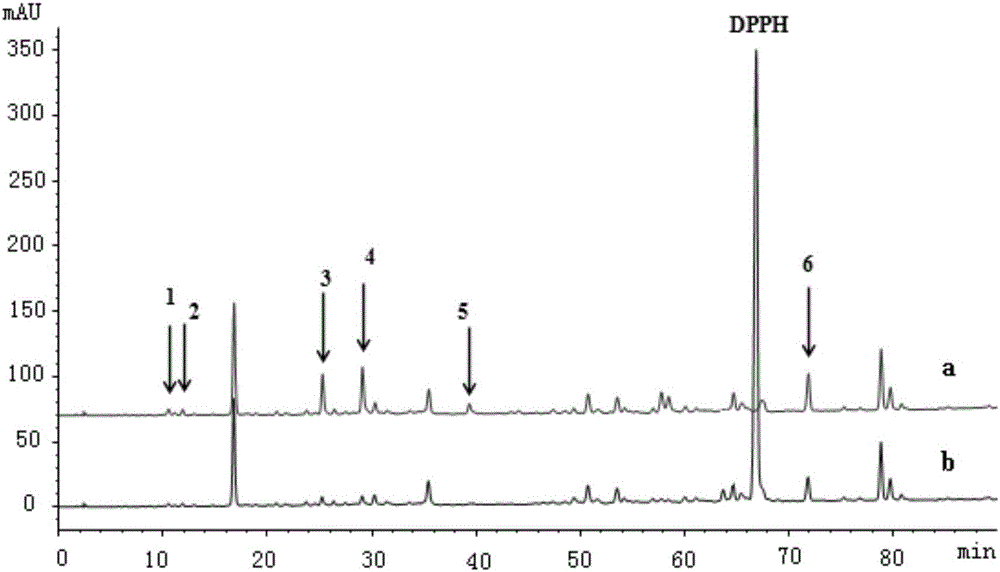
Figure 1 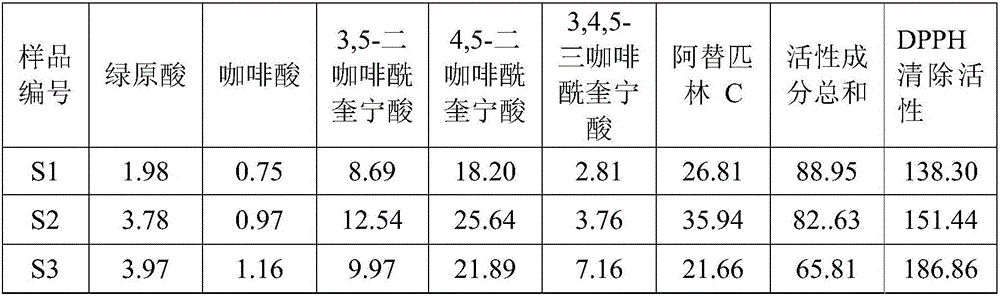
Figure 2 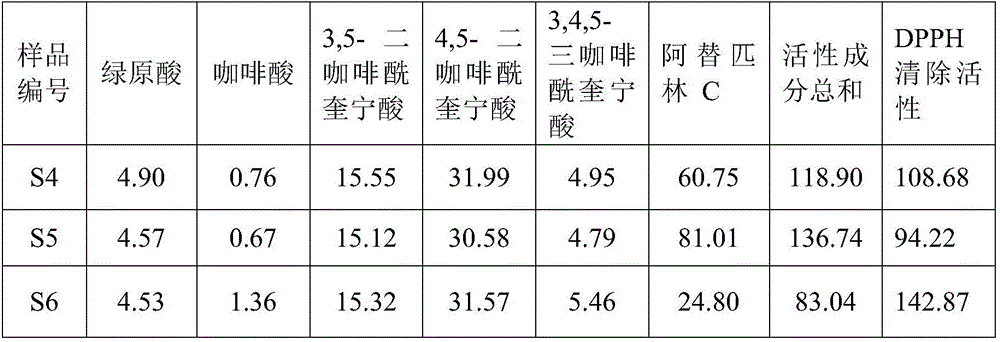
Figure 3
Abstract
Description
technical field
[0001] The invention belongs to the field of propolis quality control and relates to a method for controlling the quality of Brazilian green propolis. Background technique
[0002] Brazilian green propolis is collected from the southeastern and central western regions of Brazil, and its plant source is Baccharis dracunculifolia DC. It is one of the most popular and researched types of propolis at home and abroad, and has been widely used in health food to improve human Health and disease prevention.
[0003] Brazilian green propolis has been imported to China for more than ten years. Due to the lack of quality evaluation methods, we can only refer to the national standard of Chinese propolis and use the total flavonoid content as the quality control index. The main components of Brazilian green propolis are prenylated phenylpropanoids and prenyl derivatives of p-coumaric acid, and the content of flavonoids is relatively low. Obviously, taking the total flav...
Examples
Embodiment 1
[0017] (1) Propolis sample preparation
[0018] Take 3 samples of Brazilian green propolis from different batches, freeze and pulverize them, and use 95% ethanol for ultrasonic extraction for 30 minutes. Dilute to 50mL, filter through a microporous membrane to obtain S1, S2, and S3 detection sample solutions respectively.
[0019] (2) HPLC detection
[0020] Conditions: Sepax HP-C18 (150mm*4.6mm, 5μm); mobile phase: methanol-0.1% acetic acid; flow rate: 1.0mL / min; wavelength: 280nm. Column temperature: 33°C. Injection volume: 5 μL. The optimized gradient elution program is: 0-10min, 15-25% methanol; 10-25min, 25-40% methanol; 25-55min, 40-60% methanol; 55-75min, 60-75% methanol; 75 -90min, 75-85% methanol.
[0021] (3) Offline HPLC-DPPH analysis
[0022] Pipette S1, S2, and S3 propolis alcohol extracts respectively, add freshly prepared DPPH ethanol solution, react in the dark for a period of time at room temperature, and filter through a filter membrane as the experimen...
Embodiment 2
[0032] (1) Propolis sample preparation
[0033] Take 3 samples of Brazilian green propolis from different batches, freeze and pulverize them, and use 70% ethanol for ultrasonic extraction for 45 minutes. The ratio of solid to liquid is 1:30. Dilute to 50mL, filter through a microporous membrane to obtain S4, S5, and S6 detection sample solutions respectively.
[0034] (2) High performance liquid chromatography detection conditions
[0035] Sepax HP-C18 (150mm*4.6mm, 5μm); mobile phase: methanol-0.1% acetic acid; flow rate: 1.0mL / min; wavelength: 280nm. Column temperature: 33°C. Injection volume: 5 μL. The optimized gradient elution program is: 0-10min, 15-25% methanol; 10-25min, 25-40% methanol; 25-55min, 40-60% methanol; 55-75min, 60-75% methanol; 75 -90min, 75-85% methanol.
[0036] (3) Quality evaluation of antioxidant activity of Brazilian green propolis
[0037] Calculation of chlorogenic acid, caffeic acid, 3,5-dicaffeoylquinic acid, 4,5-dicaffeoylquinic acid, 3,4,...
Embodiment 3
[0041] (1) Propolis sample preparation
[0042] Take 3 samples of Brazilian green propolis from different batches, freeze and pulverize them, and use 85% ethanol for ultrasonic extraction for 45 minutes. The ratio of solid to liquid is 1:10. Dilute to 50mL, filter through microporous membrane to obtain S7, S8, S9 testing sample solutions respectively.
[0043] (2) High performance liquid chromatography detection conditions
[0044] Sepax HP-C18 (150mm*4.6mm, 5μm); mobile phase: methanol-0.1% acetic acid; flow rate: 1.0mL / min; wavelength: 280nm. Column temperature: 33°C. Injection volume: 5 μL. The optimized gradient elution program is: 0-10min, 15-25% methanol; 10-25min, 25-40% methanol; 25-55min, 40-60% methanol; 55-75min, 60-75% methanol; 75 -90min, 75-85% methanol.
[0045](3) Quality evaluation of antioxidant activity of Brazilian green propolis
[0046] Calculation of chlorogenic acid, caffeic acid, 3,5-dicaffeoylquinic acid, 4,5-dicaffeoylquinic acid, 3,4,5-tricaff...