
Method for preparing 6alpha-alkylchenodeoxycholic acid
A technology of alkyl and cholanoic acid, applied in the direction of steroids, organic chemistry, etc., to achieve the effects of high product yield, reduction of three wastes, and simple process operation
Patent Information
- Authority / Receiving Office
- CN · China
- Current Assignee / Owner
- Publication Date
- 2017-01-04
- Estimated Expiration
- Not applicable · inactive patent
Smart Images
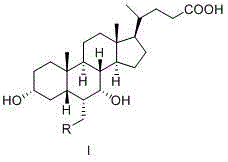
Figure 1 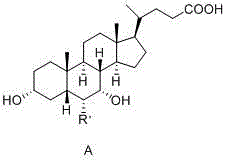
Figure 2 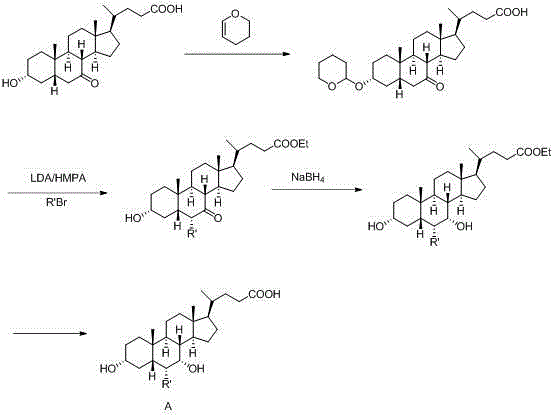
Figure 3
Abstract
Description
technical field
[0001] The invention relates to the field of organic synthesis of medicines, in particular to a preparation method of 6α-alkylchenodeoxycholic acid. Background technique
[0002] Bile acid is a general term for a class of cholanic acid present in bile, which accounts for about 50% to 70% of the total solids of bile. Because of its strong surface activity, modern medicine believes that bile acid is harmful to lipids and fat-soluble Digestion and absorption of cholesterol and regulation of cholesterol metabolism play an important role. However, the discovery that bile acids activate nuclear receptor signaling pathways breaks the relatively simple traditional understanding of bile acids.
[0003] Farnesoid X receptor (FXR) is a bile acid-activated nuclear receptor. A large number of studies have confirmed that FXR is a key metabolic regulator involved in the regulation of various physiological activities in the body, including bile acid Metabolism, lipid metab...
Examples
Embodiment 1
[0027] Dissolve 120g of 3α-hydroxy-6-vinyl-7-keto-5β-cholanic acid (0.279mol) in 500mL of methanol at room temperature, add 12g of 10% palladium on carbon and 175.6g of ammonium formate (2.79mol), and heat React at 50°C~60°C for 1 hour, and monitor the reaction by HPLC. After 3α-hydroxy-6β-ethyl-7-keto-5β-ammonium cholanate is completely formed, 100ml of 40% sodium hydroxide solution is added, heated to 70°C~80°C for 1 hour, and the reaction is monitored by HPLC. After the 3α-hydroxy-6α-ethyl-7-keto-5β-cholanoate is completely formed, 500ml of 10% sodium borohydride aqueous solution is added, the temperature is raised to 80°C~90°C for 3 hours, and the reaction is monitored by HPLC. After the reaction, remove the catalyst by filtration, add 1L of water to the filtrate and adjust the pH value to 4~5 with 1M hydrochloric acid, a large amount of white precipitates are produced, crystallize at 0°C~5°C for 1 hour, filter, and wash the filter cake with 200ml of water. After drying, ...
Embodiment 2
[0029] Dissolve 100g of 3α-hydroxy-6-propenyl-7-keto-5β-cholanic acid (0.225mol) in 500mL of ethanol at room temperature, add 10g of 10% palladium on carbon and 70.9g of ammonium formate (1.12mol), 20 React at ~30°C for 5 hours, and monitor the reaction by HPLC. After the complete formation of 3α-hydroxy-6β-propyl-7-keto-5β-ammonium cholanate, add 300ml of 10% sodium hydroxide solution, heat to 60°C~70°C for 1 hour, and monitor the reaction by HPLC. After the 3α-hydroxy-6α-propyl-7-keto-5β-cholanoate is completely formed, add 250ml of 10% sodium borohydride aqueous solution, keep warm at 60°C~70°C for 4 hours, and monitor the reaction by HPLC. After the reaction, remove the catalyst by filtration, add 500ml of water to the filtrate and adjust the pH value to 4~5 with 1M hydrochloric acid, a large amount of white precipitate is produced, crystallize at 20°C~30°C for 1 hour, filter, and wash the filter cake with 200ml of water. After drying, 85.9 g of crude product of 3α,7α-dih...
Embodiment 3
[0031] Dissolve 50g of 3α-hydroxy-6-isobutenyl-7-keto-5β-cholanic acid (0.109mol) in 200mL of isopropanol at room temperature, add 5g of 10% palladium on carbon and 13.8g of ammonium formate (0.218mol) , react at 70° C. to 80° C. for 5 hours, and monitor the reaction by HPLC. 3α-Hydroxy-6β-isobutyl-7-keto-5β-ammonium cholanate is completely formed, then 100ml of 30% sodium hydroxide solution is added, heated to 90°C~100°C for 1 hour, and the reaction is monitored by HPLC. After the 3α-hydroxy-6α-isobutyl-7-keto-5β-cholanoate is completely formed, add 80ml of 10% sodium borohydride aqueous solution, keep warm at 90°C~100°C for 1 hour, and monitor the reaction by HPLC. After the reaction, remove the catalyst by filtration, add 300ml of water to the filtrate and adjust the pH value to 4~5 with 1M hydrochloric acid, a large amount of white precipitate will be produced, crystallize at 10°C~20°C for 1 hour, filter, and wash the filter cake with 100ml of water. After drying, 42.6 g ...