
Nucleic acid aptamer modified molybdenum disulfide nanosheet photothermal agent with targeted identification
A nucleic acid aptamer and molybdenum disulfide technology, which is applied in molybdenum sulfide, medical preparations with non-active ingredients, medical preparations containing active ingredients, etc., can solve poor biocompatibility, retention of photothermal materials, poisoning, etc. problems, to achieve the effect of low cost, low toxicity and high metabolic rate
Patent Information
- Authority / Receiving Office
- CN · China
- Patent Type
- Applications(China)
- Current Assignee / Owner
- Publication Date
- 2020-09-18
Smart Images
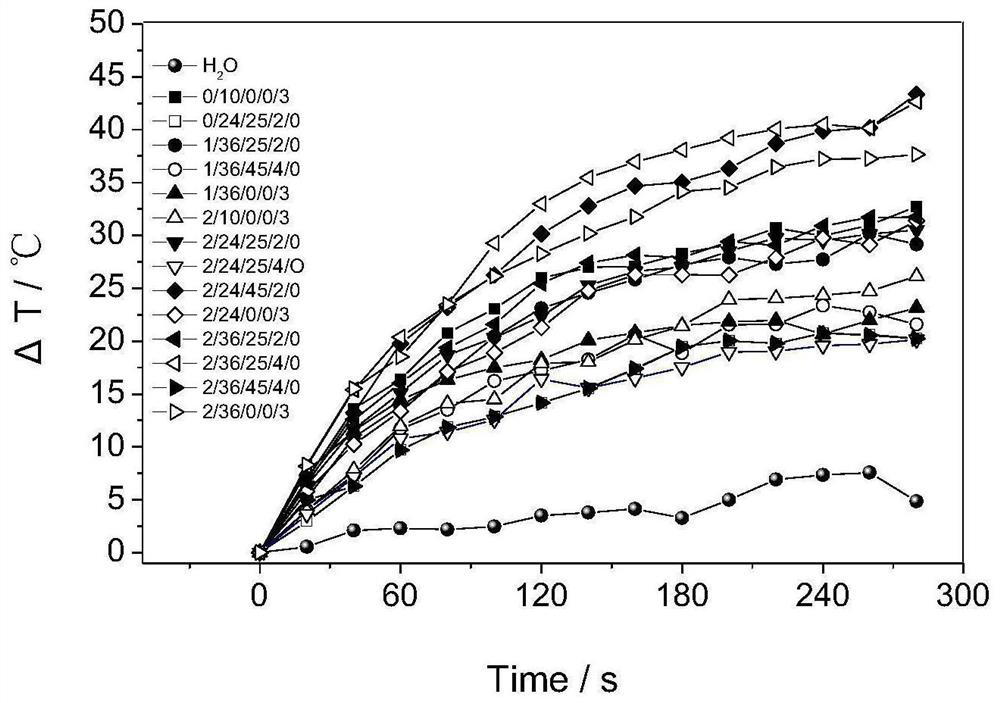
Figure 1 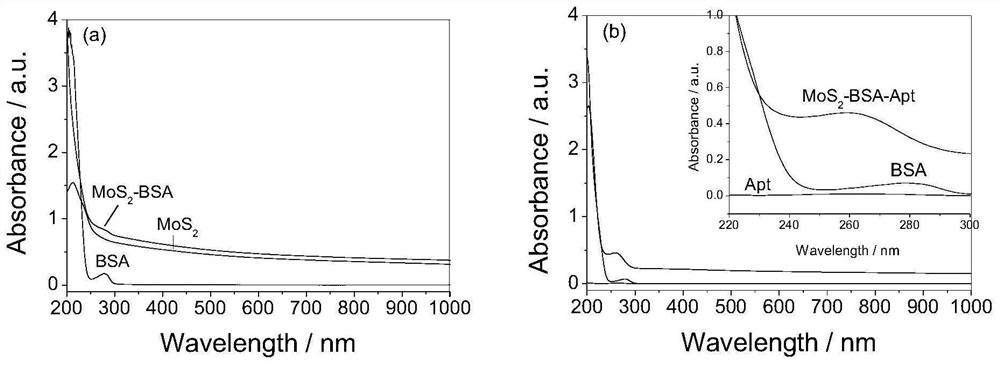
Figure 2 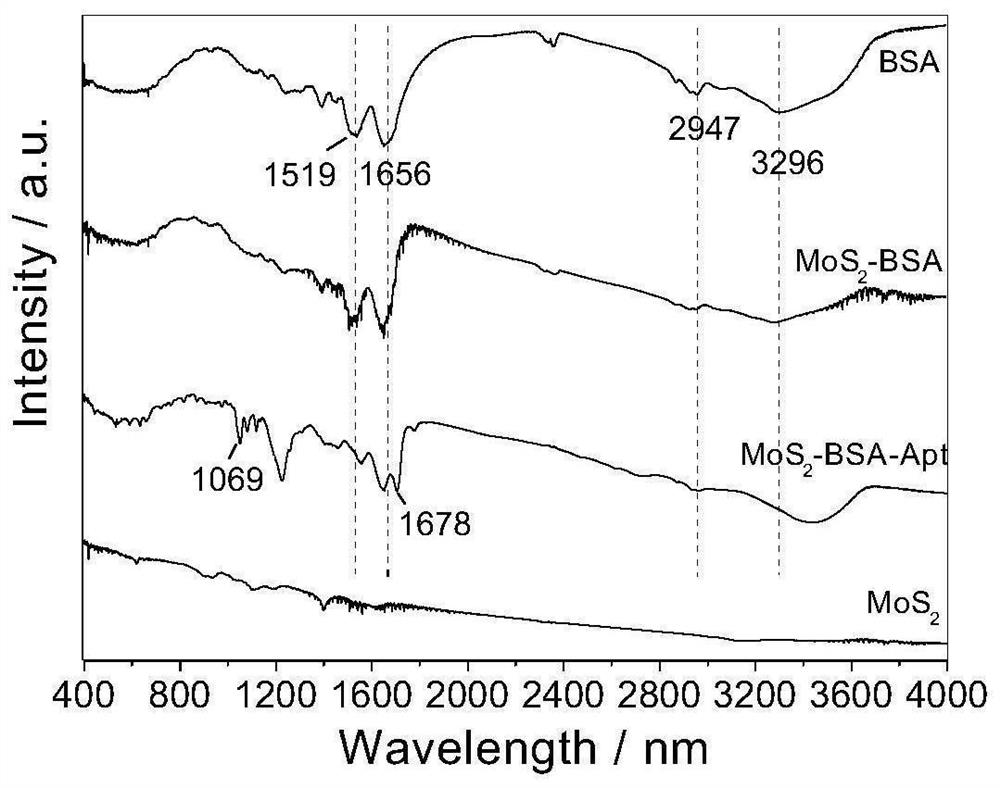
Figure 3
Abstract
Description
technical field
[0001] The invention relates to a nano-sheet photothermal agent with targeted recognition, in particular to a nucleic acid aptamer-modified molybdenum disulfide nano-sheet photothermal agent with targeted recognition. Background technique
[0002] Cancer is a fatal disease that seriously threatens human health and life, and is one of the major public health problems facing the current society. So far, more than 100 kinds of cancers have been discovered one after another, and corresponding treatments will be adopted clinically for the development and progress of different cancers. Clinical treatment of cancer mainly includes chemotherapy, radiotherapy and surgery. Chemotherapy and radiotherapy have the problem of non-selective damage to normal tissues of the body. While eliminating tumor cells, they will also bring relatively large side effects to patients. For some tumors that are close to important organs of the human body, surgical resection of the tumor ...
Examples
Embodiment 1
[0068] Example 1: MOS2-BSA synthesis condition optimization research and photothermal performance research
[0069] (1) Dissolve 0.25g sodium molybdate in 25mL ultrapure water, and after ultrasonic oscillation for 5 minutes, adjust the pH of the solution to 6.5 with 0.1mol L-1HCl; dissolve 0.5g cysteine in ultrapure water and dilute to 50mL , to obtain a cysteine solution. Slowly add cysteine solution and a certain amount of stripping agent glucose into sodium molybdate solution in sequence, and after ultrasonic oscillation, transfer the mixed solution to a hydrothermal reaction kettle; hydrothermal reaction at 200°C for a certain period of time, one-step hydrothermal synthesis The molybdenum disulfide was naturally cooled to room temperature, centrifuged at 12,000 rpm for 30 minutes, and the collected supernatant was molybdenum disulfide nanosheets; freeze-dried for 12 hours to obtain solid molybdenum disulfide nanosheets. When synthesizing molybdenum disulfide nanoshe...
Embodiment 2
[0075] Example 2: Research on MoS2-BSA coupled nucleic acid aptamer and photothermal effect
[0076] (1) Take EDC (500 μl, 500 mM) and NHS (500 μl, 100 mM) to activate the free carboxyl groups on the surface of MoS2-BSA obtained in Example 1, and react 1 mL of MoS2-BSA with EDC and NHS at room temperature for half an hour, over Filtrate and centrifuge, wash with deionized water to obtain activated MoS2-BSA sheets; denature the nucleic acid aptamer (Apt, 5'-NH2-AGGAGCACGACTCTGACGTAGGATCGAGACGAGGTACGTAT-3') at 85°C for 10 minutes, then renature in ice bath for 10 minutes; the activated MoS2- The BSA sheet was reacted with the nucleic acid aptamer in an ice bath for 5 h, followed by ultrafiltration and centrifugation at 4000 rpm until no aptamer was detected in the ultrafiltrate, and finally aptamer-modified MoS2-BSA-Apt nanosheets were obtained.
[0077] The product obtained in this example is characterized, wherein the absorption spectra of MoS modified BSA and Apt are as follo...
Embodiment 3
[0080] Example 3: Characterization of functionalized molybdenum disulfide nanosheets
[0081] To the MoS that makes in embodiment 1,2, MoS2-BSA, MoS2-BSA-Apt is carried out by transmission electron microscope (TEM), high-resolution transmission electron microscope (HRTEM), X-ray diffraction spectrum (XRD) and zeta potential characterization.
[0082] Morphological characterization of the MoS2, MoS2-BSA, MoS2-BSA-Apt nanosheets prepared in 1 and 2, the TEM results are as follows Image 6 , 7, 8. Image 6 It can be seen that the size of MoS2 nanosheets is about 10nm to 50nm, and the lattice spacing is about 0.62nm, which is consistent with the literature (Liu Q, PuZH, Abdullah M. Asiri, etal. One-step solvothermal synthesis of MoS2 / TiO2 nanocomposites with enhanced photocatalytic The (002) crystal plane of hexagonal MoS2 reported by H2 production [J]. NanopartRes, 2013, 15: 2057). Figure 7 There are some circular MoS2 black spots on the BSA surface of MoS2-BSA nanosheets wit...