
Method for Synthesizing Environmentally Responsive Polymers by Copolymerization Modification of Alkenyl Sulfonate Monomers
A technology of alkenyl sulfonate and copolymerization modification, which is applied in the specific preparation field of hydrogel composite assembly to synthesize environment-responsive polymers, achieving the effects of less side reactions, high grafting rate, and high efficacy
Patent Information
- Authority / Receiving Office
- CN · China
- Patent Type
- Patents(China)
- Current Assignee / Owner
- Publication Date
- 2022-03-15
Smart Images
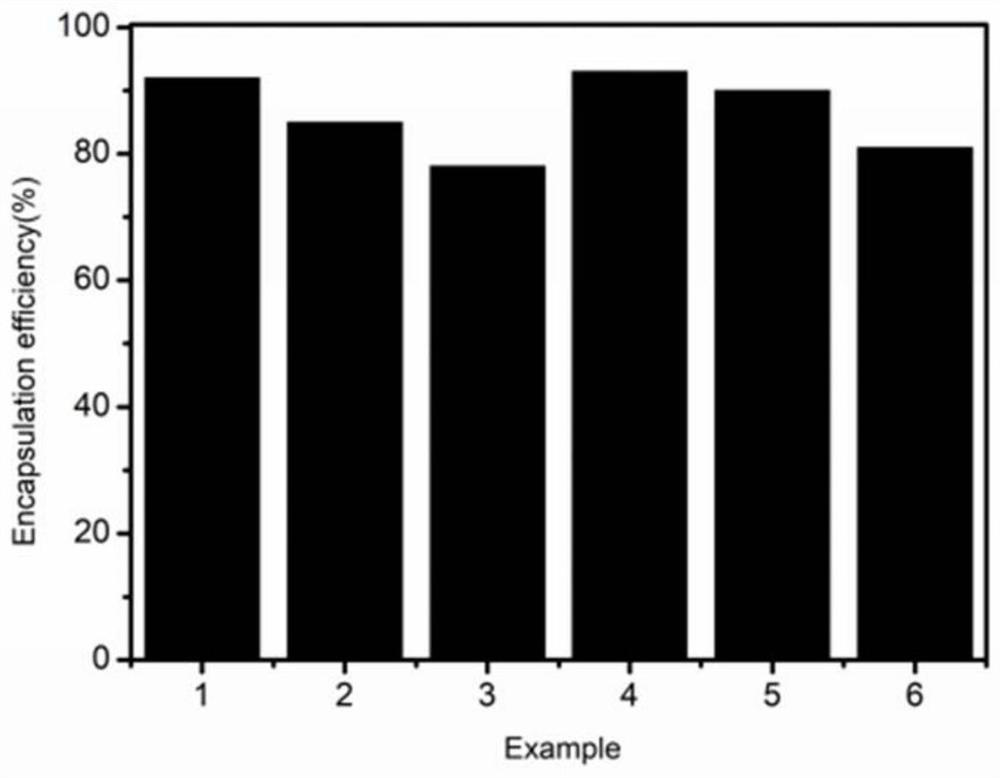
Figure 1 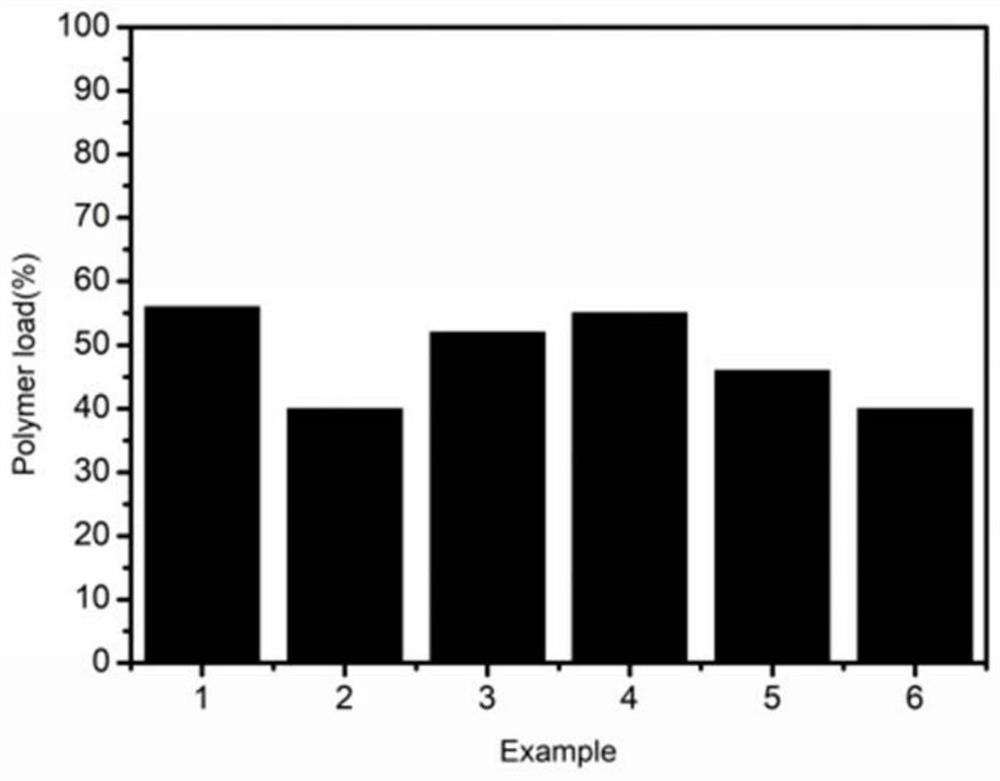
Figure 2 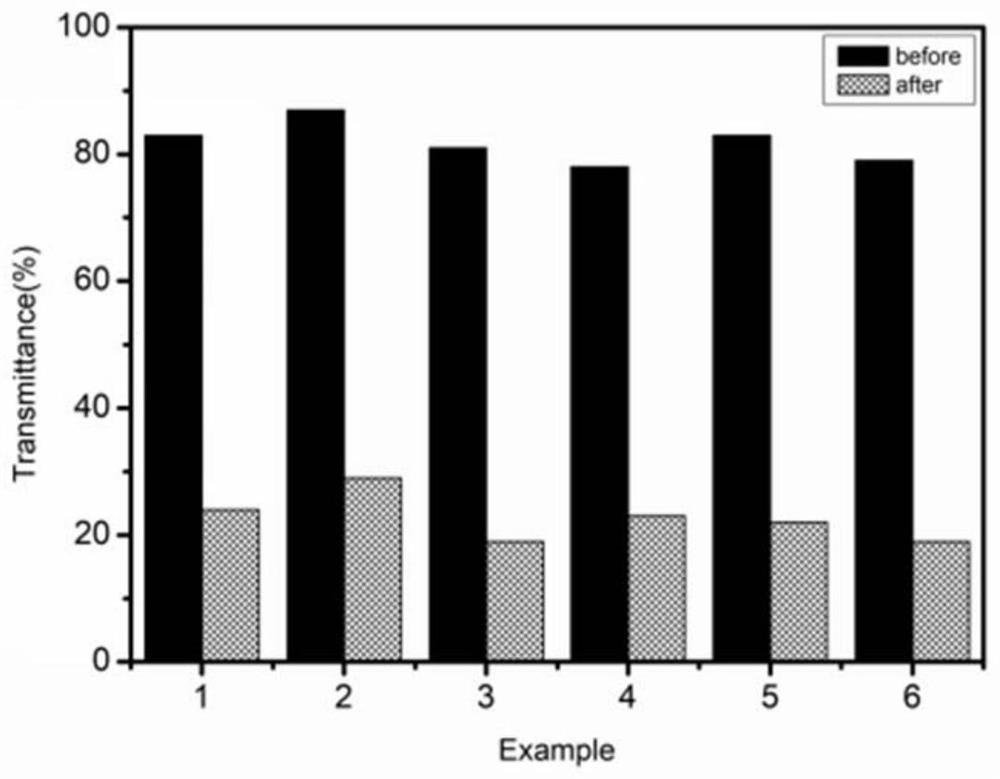
Figure 3
Abstract
Description
technical field
[0001] The invention relates to the technical field of an electric field responsive polymer for cement concrete, in particular to a hydrogel composite assembly synthesis using a hydrophobic monomer firstly grafted and polymerized and then cross-linked and copolymerized with an alkenyl sulfonate monomer Specific preparation methods of environment-responsive polymers. Background technique
[0002] As an indispensable engineering material for modern economic construction, concrete is widely used in structural engineering such as roads, bridges, water conservancy and hydropower. Due to the shrinkage of the volume of the concrete during the service process, the uneven tensile stress will be generated inside, causing the concrete to warp and deform, and even cracks in the concrete structure. Cracks not only affect the aesthetics of concrete materials, but also reduce the structural strength in severe cases, endangering the integrity and durability of buildings. W...
Examples
Embodiment 1
[0032] First, 30g of styrene and 90g of dimethyl sulfoxide were added to the reactor, stirred and heated to 70°C, filled with nitrogen for 3 times and deoxygenated for 30 minutes, then sealed, added 5.19g of isopropanol, and then added 79.05g mass fraction It is a nitric acid solution of 20% ceric ammonium nitrate, after stirring for 12 minutes, add 24.23g of 70% gluconic acid aqueous solution, after constant temperature reaction for 2 hours, cool to 20°C, add 50% sodium hydroxide solution Neutralize until the pH is 7, remove the solvent by distillation under reduced pressure, and then add 9g of an aqueous solution of 10% sodium lauryl sulfate to obtain a polymer emulsion; 40g of 2-acrylamide-2-methylbenzene Sulfonic acid, 9.76g of N-methylolacrylamide and 14.93g of deionized water were added to the reactor, stirred and heated to 60°C, purged with nitrogen for 10 minutes, and 20g of potassium persulfate with a mass fraction of 5% was added Stir the aqueous solution for 15 minu...
Embodiment 2
[0034] First, add 30g of phenylisopropene and 240g of 1,4-dioxane into the reactor, stir and raise the temperature to 60°C, fill with nitrogen for 5 times and remove oxygen for 10 minutes, then seal it, add 5.14g of n-dodecyl Mercaptan, then add 5.93g mass fraction of 30% cerium ammonium nitrate nitric acid solution, after stirring for 8 minutes, add 55.42g mass fraction of 50% sodium gluconate aqueous solution, after constant temperature reaction for 5 hours, cool to 35 ° C, add The potassium hydroxide solution with a mass fraction of 20% was neutralized to a pH of 8, the solvent was removed by distillation under reduced pressure, and then 6 g of an aqueous solution of sodium dodecylbenzenesulfonate with a mass fraction of 25% was added to obtain a polymer emulsion; Add 40g of sodium p-styrene sulfonate, 2.8g of acrylic acid and 34.24g of deionized water into the reactor, stir and heat up to 50°C, blow nitrogen for 20 minutes, and add 17.1g of 20% persulfuric acid Stir the so...
Embodiment 3
[0036] First, 30g of vinyltoluene and 150g of dimethylformamide were added to the reactor, stirred and heated to 80°C, filled with nitrogen gas for 4 times to remove oxygen and then sealed for 20 minutes, then added 27.71g of isooctyl 3-mercaptopropionate, Then add 6.98g mass fraction of 20% cerium ammonium nitrate nitric acid solution, stir for 5 minutes and add 104.1g mass fraction of 40% gluconic acid aqueous solution, after constant temperature reaction for 6 hours, cool to 40°C, add 30% mass fraction % ethylenediamine solution to be neutralized to a pH of 6, the solvent is removed by distillation under reduced pressure, and then 12g of a mass fraction of 20% sodium stearate is added to obtain a polymer emulsion; 40g of vinylsulfonic acid, 9.56 Add 6.2 g of methacrylic acid and 29.74 g of deionized water into the reactor, stir and heat up to 80 ° C, blow nitrogen for 15 minutes, add 6.2 g of 40% ammonium persulfate aqueous solution and stir for 5 minutes, then add 0.99g N,...