
Preparation method and application of blended hydrogel biological scaffold material with biological activity
A technology of biological activity and scaffold materials, applied in the field of preparation of blended hydrogel bio-scaffold materials, can solve the problems of lack of biological activity, complex operation, strong immune response, etc., and achieve simple and easy-to-operate experimental methods and biocompatibility Good, easy to process and shape effect
Patent Information
- Authority / Receiving Office
- CN · China
- Patent Type
- Applications(China)
- Current Assignee / Owner
- Publication Date
- 2020-12-18
Smart Images
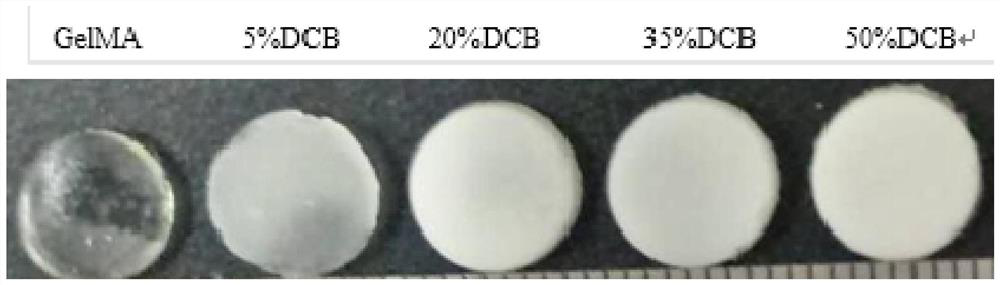
Figure 1 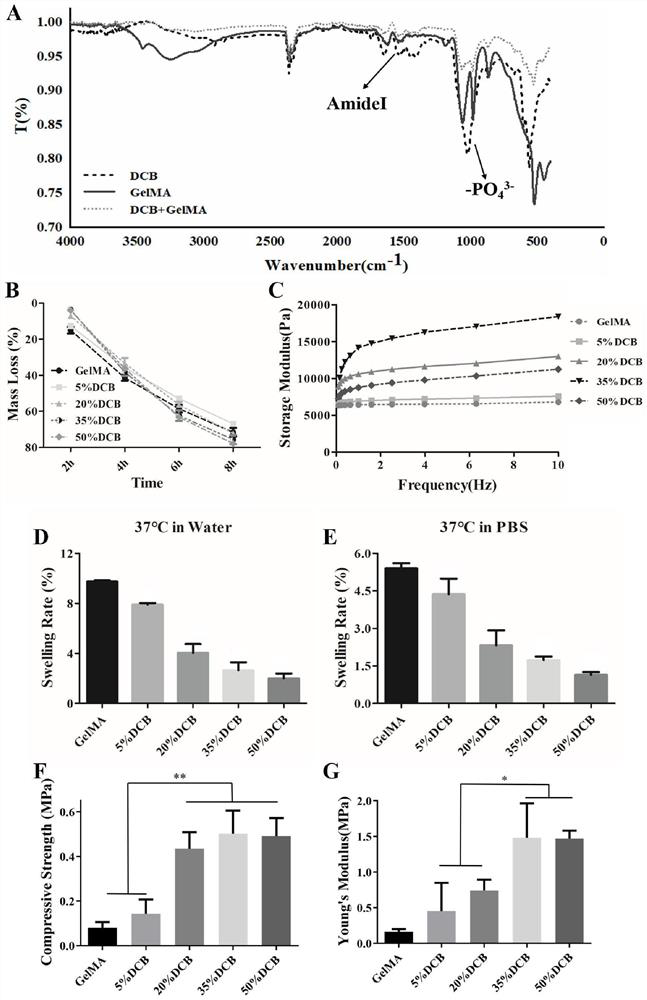
Figure 2 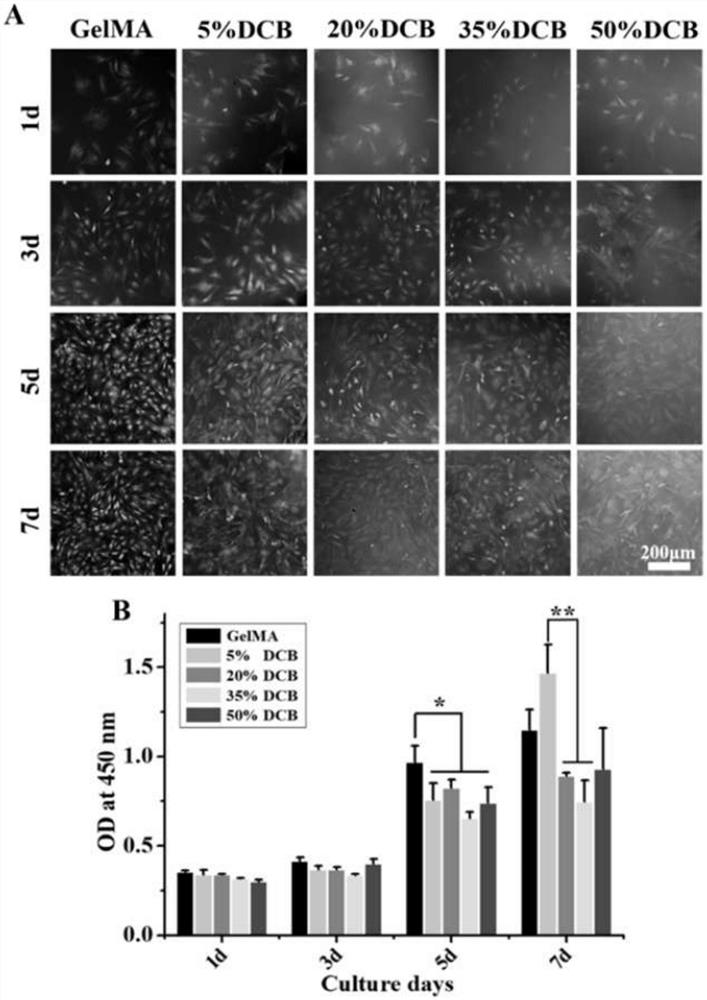
Figure 3
Abstract
Description
technical field
[0001] The invention belongs to the biological field of tissue repair and regeneration, and in particular relates to the preparation and application of a bioactive blended hydrogel bio-scaffold material. Background technique
[0002] Tissue engineering is a comprehensive emerging discipline based on the development and application of chemistry, physics, engineering, life and clinical medicine, dedicated to solving medical problems such as tissue defect and organ failure. It encompasses the most fundamental understanding of the structure and function of normal and diseased tissues, and the use of biological substitutes to recreate, maintain or promote functional expression of tissues. In the human body, various biophysical and biochemical stimuli control its growth and development process, and maintain the physiological structure and function of tissues and organs. Therefore, we must understand and be good at using these promoting factors to simulate tissue en...
Examples
Embodiment 1
[0034] Such as Figure 1 to Figure 5 As shown, the invention discloses a preparation method of a bioactive blended hydrogel bioscaffold material,
[0035] (1) Weigh 20% w / v GelMA solid, add it to a 5ml centrifuge tube containing 2ml deionized water, dissolve in a 37°C water bath, shake and mix;
[0036] (2) Weigh 5% decellularized bone powder, add it to the dissolved solution in step (1), dissolve in a 37°C water bath, shake and mix;
[0037] (3) Weigh 0.1% w / v photoinitiated crosslinking agent Ig2959, add it to the mixed solution in step (2), shake and mix well; the photoinitiated crosslinking agent is 2-hydroxy-2-methyl-1- [4-(2-Hydroxyethoxy)phenyl]-1-propanone.
[0038] (4) Clean the polytetrafluoroethylene mold with a diameter of 8 mm and a depth of 1 mm, and dry it for use.
[0039] (5) Drop 60 μl of the mixed solution prepared in step (3) into the polytetrafluoroethylene mold prepared in step (4);
[0040] (6) Place the material prepared in step (5) under a 365nm ul...
Embodiment 2
[0043] (1) Weigh 20% w / v GelMA solid, add it to a 5ml centrifuge tube containing 2ml deionized water, dissolve in a 37°C water bath, shake and mix;
[0044] (2) Weigh 20% of the decellularized bone powder, add it to the dissolved solution in step (1), dissolve in a 37°C water bath, shake and mix;
[0045](3) Weigh 0.1% w / v photoinitiated cross-linking agent Ig2959, add it to the mixed solution in step (2), shake and mix;
[0046] (4) Clean the polytetrafluoroethylene mold with a diameter of 8 mm and a depth of 1 mm, and dry it for use.
[0047] (5) Drop 60 μl of the mixed solution prepared in step (3) into the polytetrafluoroethylene mold prepared in step (4);
[0048] (6) Place the material prepared in step (5) under a 365nm ultraviolet lamp and irradiate it for 2 minutes, and the photocrosslinking is completed;
[0049] (7) The material obtained in step (6) is soaked in the buffer solution and stored.
Embodiment 3
[0051] (1) Weigh 20% w / v GelMA solid, add it to a 5ml centrifuge tube containing 2ml deionized water, dissolve in a 37°C water bath, shake and mix;
[0052] (2) Weigh 35% decellularized bone powder, add it to the dissolved solution in step (1), dissolve in a 37°C water bath, shake and mix;
[0053] (3) Weigh 0.1% w / v photoinitiated cross-linking agent Ig2959, add it to the mixed solution in step (2), shake and mix;
[0054] (4) Clean the polytetrafluoroethylene mold with a diameter of 8 mm and a depth of 1 mm, and dry it for use.
[0055] (5) Drop 60 μl of the mixed solution prepared in step (3) into the polytetrafluoroethylene mold prepared in step (4);
[0056] (6) Place the material prepared in step (5) under a 365nm ultraviolet lamp and irradiate it for 2 minutes, and the photocrosslinking is completed;
[0057] (7) The material obtained in step (6) is soaked in the buffer solution and stored.