
Method for testing volume expansion coefficient of irregular or micro-scale crystal material
A technology of volume expansion coefficient and crystal materials, which is applied to the analysis of materials, material analysis using radiation diffraction, material analysis using wave/particle radiation, etc., can solve the problems of limited test objects and difficult realization of micro-scale material samples, etc. Achieve low sample requirements, solve the problem of difficult detection of expansion coefficient and strong application value
Patent Information
- Authority / Receiving Office
- CN · China
- Current Assignee / Owner
- Publication Date
- 2021-02-05
Smart Images
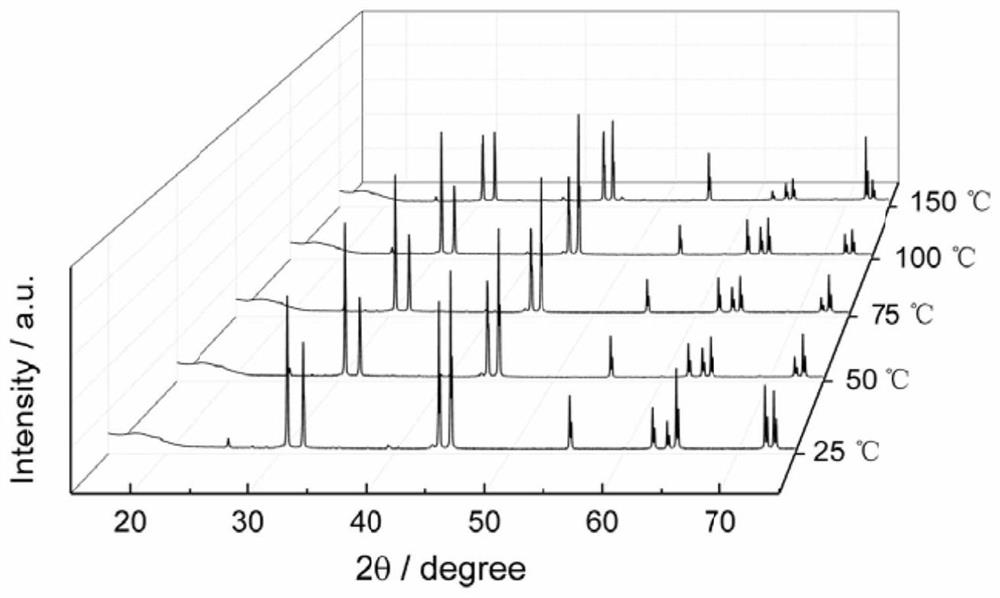
Figure 1 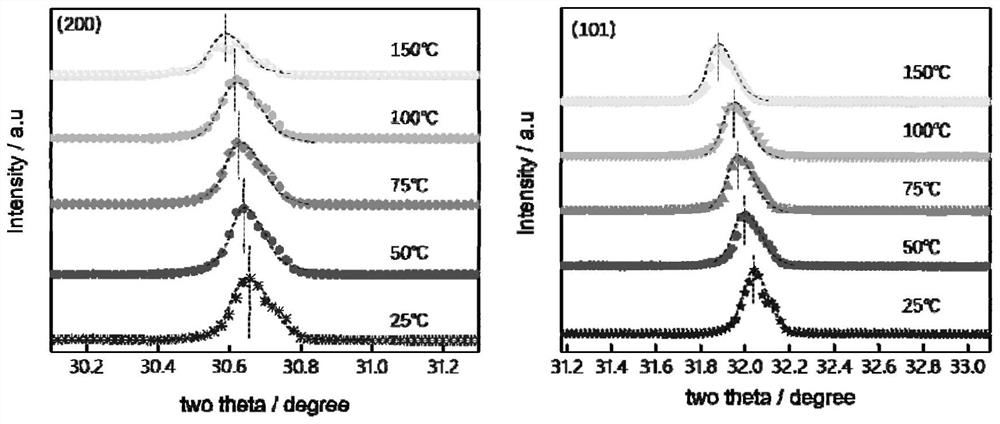
Figure 2 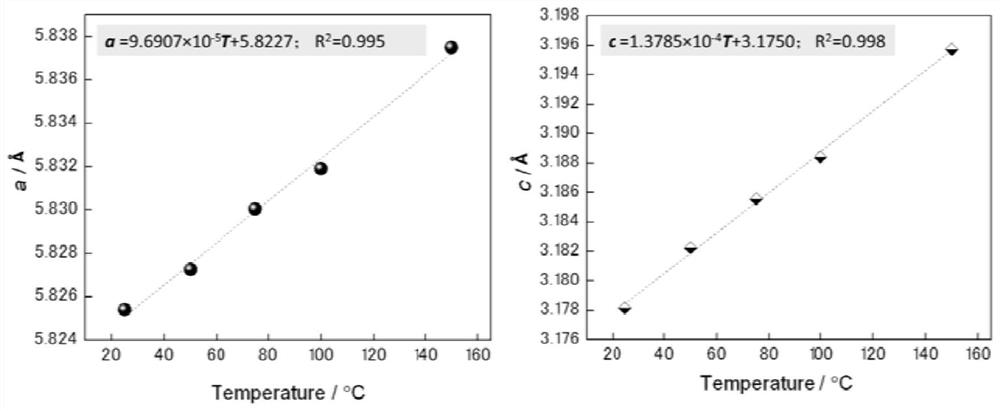
Figure 3
Abstract
Description
technical field
[0001] The invention belongs to the technical field of material detection, and in particular relates to a method for testing the expansion coefficient of irregular or micro-scale crystal materials, where the irregular shape refers to a non-standard rod. Background technique
[0002] In the environment of alternating temperature, the material will produce obvious phenomenon of thermal expansion and contraction, which is common in nature. But this phenomenon may have some serious consequences, it will affect the accuracy of precision parts, for example, the thermal expansion and contraction of materials will cause a serious loss of satellite camera accuracy; it will affect the molding quality of materials, for example, metal forging, rolling In the process of manufacturing or extrusion, due to the influence of temperature changes, residual stress and deformation are introduced, and in the worst case, crack-type defects will be formed; it will also cause relativ...
Examples
Embodiment 1
[0090] For solder joint materials, the coefficient of thermal expansion is used as the basic data for thermal stress and strain analysis, simulation, and structural design. When the expansion coefficients of the packaging materials are different, especially when the expansion coefficients differ greatly (Δα>5×10 -6 ℃ -1 ), the temperature alternation will cause the package as a whole to be subjected to severe thermal stress shocks. When the strength of the package solder joints is low, the continuous thermal stress shock will cause cracks in the solder joints, resulting in thermal mismatch problems. For example, the fatigue damage caused by the thermal expansion coefficient mismatch between the solder and the pin material will lead to local cracking of the pin solder; Overall expansion mismatch. In this part, Sn metal solder (Sn [wt%] above 98.6%) is selected for thermal expansion coefficient test and analysis.
[0091] 1) X-ray diffraction spectrum collection
[0092]Use...
Embodiment 2
[0104] PbSn solder is still the most reliable soldering material and is widely used in aerospace, ships, weapons and other fields. As mentioned above, its welding reliability largely depends on the matching of thermal expansion coefficient. PbSn solder balls (specification: micro-scale, diameter 250 μm. Composition: Pb [wt%] = 36.8%, Sn [wt%] = 63.2%) were selected for thermal expansion coefficient test and analysis. To exemplify materials in various phases.
[0105] 1) X-ray diffraction spectrum collection
[0106] Use X-ray diffractometer to collect diffraction spectra at different temperatures, tube voltage: 40kV, tube current: 30mA, Cu K α Radiation, scan step size and speed were set to 0.02° and 0.5° / min, respectively. The test temperature settings include: 25°C, 50°C, 75°C, and 100°C. The XRD patterns obtained at different temperatures are as follows: Figure 4 shown.
[0107] 2) Calculation of lattice constant
[0108] Analysis of the XRD spectrum shows that the c...