
Antifungal/antibacterial agent comprising two-step baked shell powder
Patent Information
- Authority / Receiving Office
- US · United States
- Current Assignee / Owner
- Publication Date
- 2009-11-19
- Estimated Expiration
- Not applicable · inactive patent
Smart Images
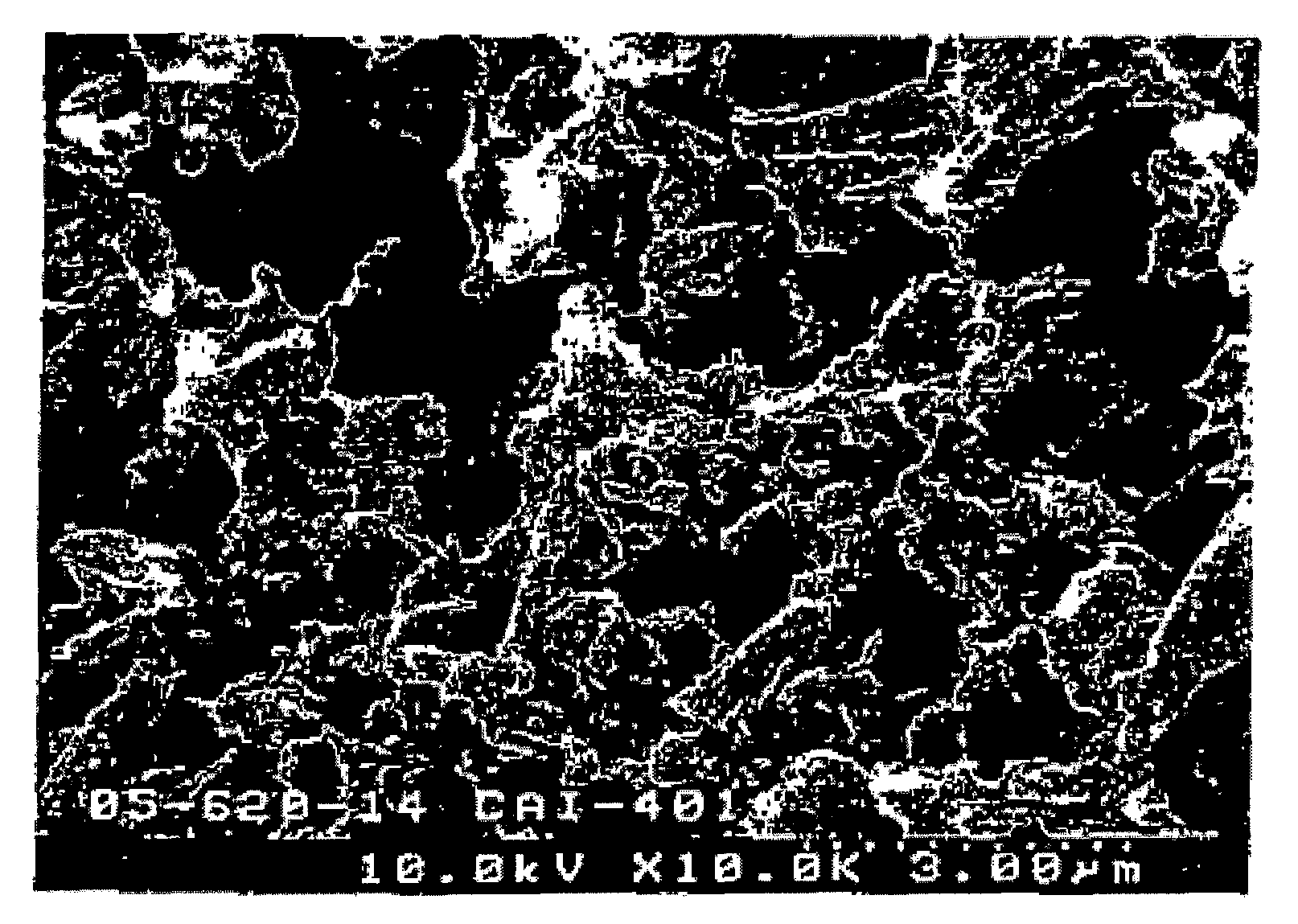
Figure 1 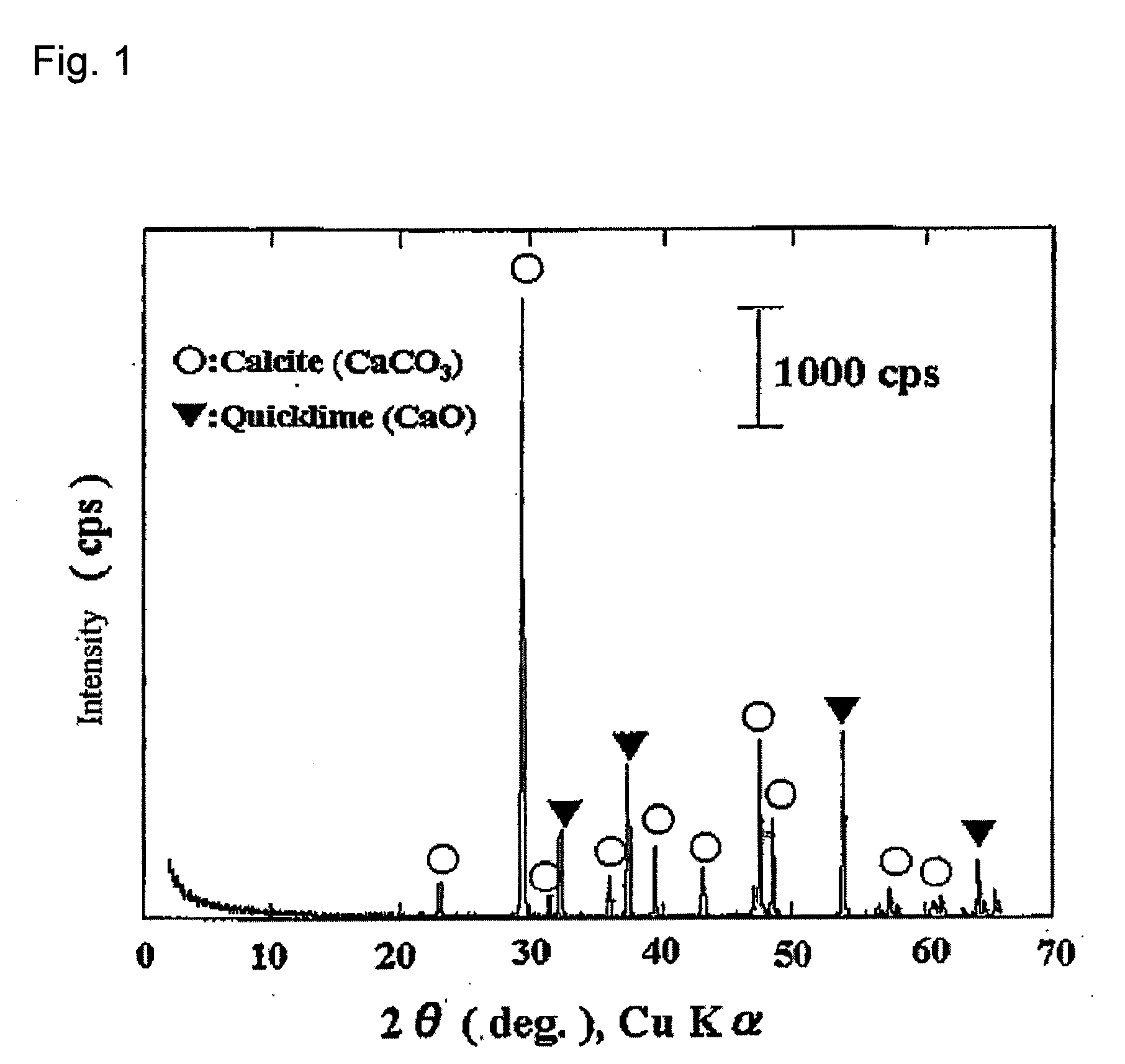
Figure 2 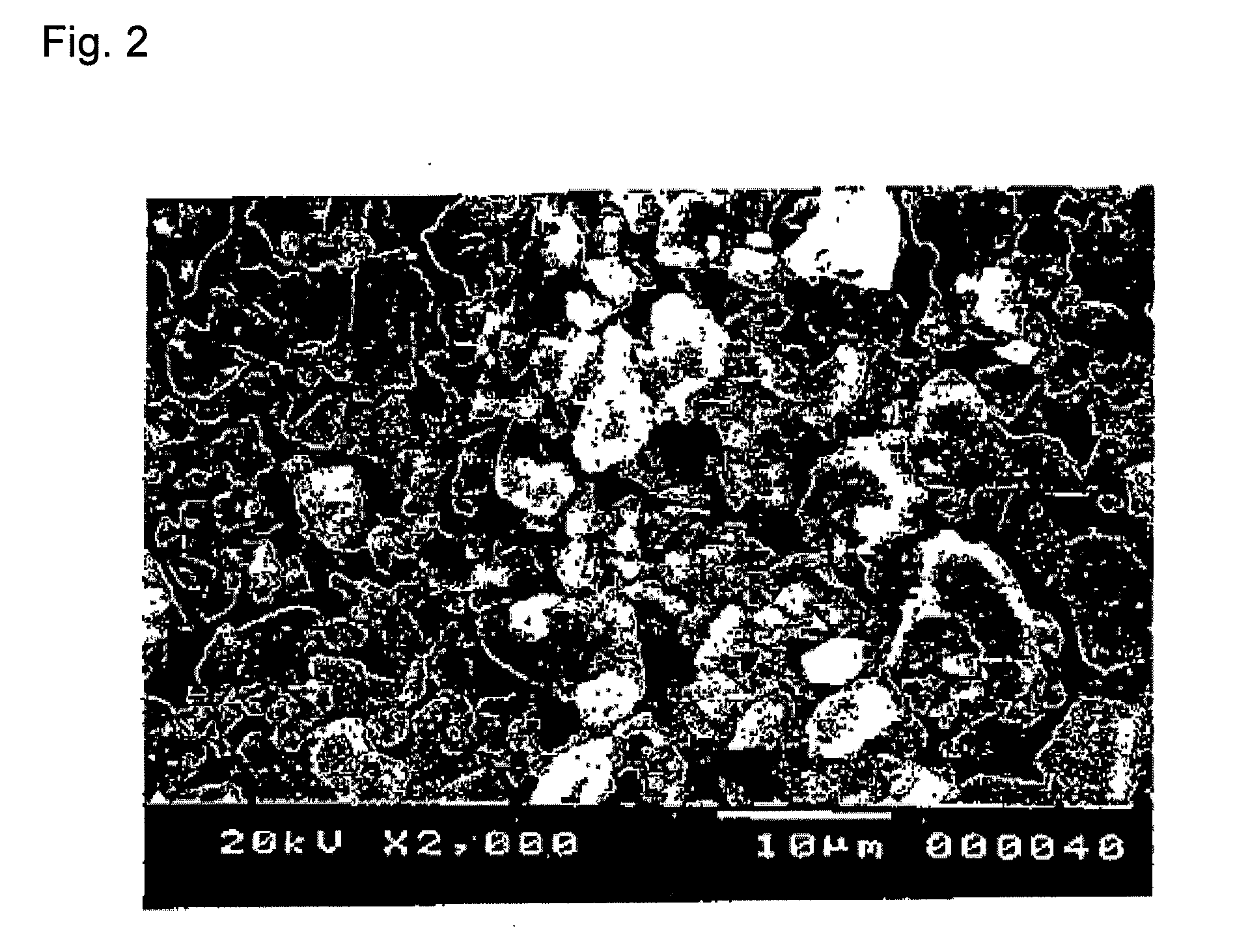
Figure 3
Abstract
Description
TECHNICAL FILED
[0001] The present invention relates to an antimold / antibacterial agent comprising two-step baked shell powder. More specifically, the invention relates to an inorganic complex-based antimold agent comprising shell powder obtained by subjecting crudely crushed scallop shells consisting mainly of calcite-type calcium carbonate to two-step baking treatment while changing baking atmosphere and then pulverizing the crushed shells.
[0002] The antimold agent of the present invention, when blended in a small amount in material such as synthetic resin, synthetic rubber, wood-based plywood, nonwoven textile or paper, can suppress proliferation of fungi such as black mold, red mold, blue mold, Alternaria and aspergillus in an effective and enduring manner.BACKGROUND ART
[0003] Amid the recently increasing needs for healthy and comfortable life, demands for bacteria elimination and antimicrobial material are also rising, which has led to developments of many bactericidal agents and a...
Examples
example 1
[0040]Scallop shells from the Lake Saroma, Hokkaido, Japan, after washed with water and dried, were roughly crushed to an average particle size of 5 mm with a roller mill. The crushed substance was introduced to an electric furnace and subjected to a first-step baking in nitrogen atmosphere at 500° C. for 2 hours. The baked substance was further subjected to second-step baking in the air atmosphere at 700° C. for 2 hours. The baked shells were pulverized by using a jet mill to obtain a baked shell powder having an average particle size of about 5 μm. By analyzing components of the baked powder through X-ray diffraction, it was confirmed that the powder comprised mainly calcite-type calcium carbonate and also contained calcium oxide, as shown in FIG. 1. The BET specific surface area as measured was 27.8 m2 / g. Further, the baked shell powder was confirmed to be a porous body where a shell structure remained by electronic microscope observation (FIGS. 2 and 3) Furthermore, the baked sh...
example 2
[0041]Using the scallop shells of Example 1, baked shell powders (Sample No. 1-6) were produced according to production methods shown in Table 1. The baked shell powders were each blended at an amount of 0.3 to 1.0 wt % into FRP material and homogenously dispersed therein to thereby prepare Test Samples.
[0042]Mold-resistance test was conducted on the Test Samples. In the test, MS-45 method using 45 types of fungi was employed. The fungi, conditions and evaluation methods employed in the test are shown in Table 2. The test results are shown in Table 3. As shown in Table 3, in the Test Sample containing Sample No. A1 blended therein, no antimold effect was observed. In the Test Sample containing Sample No. A2 baked at a single-step treatment of low temperature, calcium carbonate was contained as its main ingredient and a significant antimold effect was observed at an early stage, but generation of molds was marked at a later stage. Its antimold effect lacked sustainability. In the Tes...
example 3
[0043]Scallop shells from Mutsu gulf, Aomori, Japan, after washed with water and dried, were roughly crushed to an average particle size of 10 mm with a roller mill. The crushed substance was introduced to an electric furnace and subjected to a first-step baking in nitrogen atmosphere at 500° C. for 2 hours. The baked substance was further subjected to second-step baking in the air atmosphere at 650° C. for 3 hours. The baked shells were pulverized by using a jet mill to obtain a baked shell powder having an average particle size of about 7 μm. By analyzing components of the baked powder through X-ray diffraction, it was confirmed that the powder had almost the same composition as shown in FIG. 1. The BET specific surface area of the baked shell powder was 25.9 m2 / g. Further, by electronic microscope observation, the baked shell powder was observed to be a porous body where a shell structure remained and fine particles of calcium oxide were present inside, similarly with FIG. 2. Fur...