
Electromagnetic wave shield with vacuum deposited metal using water dispersed polyurethane
Patent Information
- Authority / Receiving Office
- US · United States
- Current Assignee / Owner
- Publication Date
- 2010-03-18
- Estimated Expiration
- Not applicable · inactive patent
Smart Images
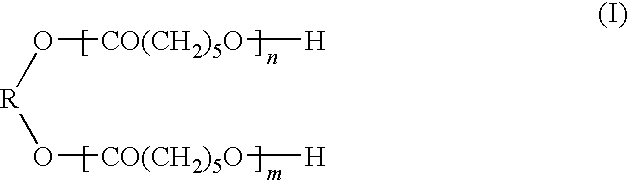
Figure 1 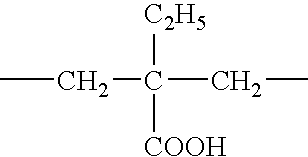
Figure 2
Abstract
Description
TECHNICAL FIELD
[0001] The present invention relates to a novel electromagnetic wave shield, and more particularly, to an electromagnetic wave shield for vacuum deposition employing water-dispersed polyurethane, in which a water-dispersed polyurethane composition is coated as a primer on a surface of a device, and a metal deposited layer is formed thereon for shielding an electromagnetic wave.BACKGROUND ART
[0002] Presently, electronic devices such as an electronic range, TV, a radio, a computer and a mobile phone emit much electromagnetic wave.
[0003] The emission of an electromagnetic wave occurs as a phenomenon such a noise or a communication error, and affects a human body. Concern about the electromagnetic wave shielding is growing and the need thereabout is increasing as the electromagnetic wave is more seriously recognized in the present day. Further, conventionally, a metal has been used as a device case; however, plastic is now used according to miniaturization of a device and in...
Examples
examples 1 to 6
[0040]Preparation of a Polyurethane Prepolymer
[0041]A cooling apparatus, a thermometer, a stirrer and a mantle were prepared in 1 L cleaned 4-neck flask, and 406 g of polytetramethylether glycol (PTMEG) (MW: 2000), 105 g of Placcel 205BA (MW: 500), 0.5 g of dibutyltin dilauriate (DBTDL), 130 g of n-methyl pyrollidone (NMP) and 153 g of 4,4′-dicyclohexylmethane diisocyanate were poured into the flask, and reacted for 4 hours to provide a polyurethane prepolymer.
[0042]While 420 g of ion exchanged water, 12.3 g of triethylamine and 50 g of isopropyl alcohol were mixed in a separate 2 L beaker and agitated vigorously, 350 g of the polyurethane prepolymer prepared as above were poured slowly to solubilize in water. After vigorous agitation and solubilization in water for about 30 minutes, 80 g of ion exchanged water and 1.7 g of ethylene diamine were mixed and poured slowly, and after pouring and then vigorous agitation for about 20 minutes, the temperature was elevated to 70° C., and sl...
example 7
[0054]Cleaned 4 L flask, a stirrer, a mantle, a cooling tube and moisture separator were equipped, 229 g of ethylene glycol, 136 g of neopentyl glycol, 365 g of 1,6-hexanediol, 413 g of isophthalic acid, 363 g of adipic acid and 234 g of azellic acid were poured and 0.3 g of TBT (tributyltin) were poured, and when the temperature was elevated to around 130° C., melting and dehydration are slowly initiated. Then nitrogen is slowly added, and the temperature is continuously elevated to 250° C., and while maintaining 250° C., reaction is performed until acid value reaches below 0.1. After reaction is completed, a transparent polyester diol having average molecular weight of 3600 and acid value below 0.1 was prepared.
[0055]A stirrer, a mantle and a cooling tube were equipped in separate 1 L flask, 350 g of diol (molecular weight of 3600) prepared as above, 249 g of normal methyl pyrollidone and 39 g of dimethylol propionic acid were poured and stirred, and 208 g of isophorone diisocyana...
example 8
[0057]170 g of ethylene glycol, 570 g of neopentyl glycol, 208 g of terephthalic acid, 138 g of isophthalic acid and 611 g of adipic acid were poured and 0.3 g of TBT (tributyltin) were poured, and when the temperature was elevated to around 130° C., melting and dehydration are slowly initiated. Then nitrogen is slowly added, and the temperature is continuously elevated to 250° C., and while maintaining 250° C., reaction is performed until acid value reaches below 0.1. After reaction is completed, a transparent polyester diol having average molecular weight of 1950 and acid value below 0.1 was prepared.
[0058]A stirrer, a mantle and a cooling tube were equipped in separate 1 L flask, 110 g of diol (molecular weight of 1950) prepared as above, 42 g of acrylpolyol (molecular weight of 1000) UMM-1001 (Japan Soko Chemistry), 37 g of dimethyl propionic acid and 210 g of normal methyl pyrollidone were poured and stirred, and 208 g of isophorone diisocyanate and again 0.1 g of dibutyltin di...