
Novel Compositions and Methods of Treating Diseases Using the Same
Patent Information
- Authority / Receiving Office
- US · United States
- Current Assignee / Owner
- Publication Date
- 2012-02-09
- Estimated Expiration
- Not applicable · inactive patent
Smart Images
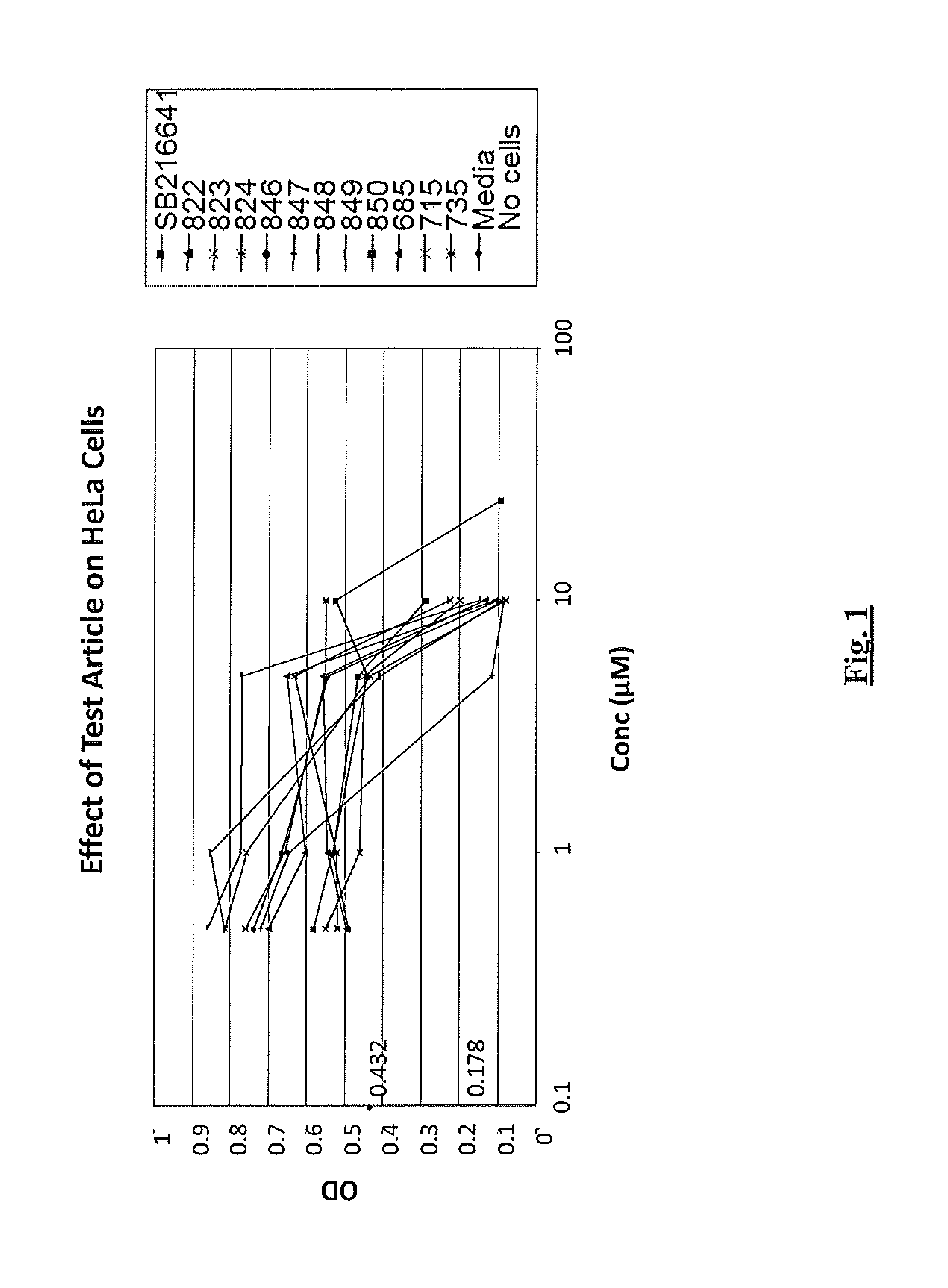
Figure 1 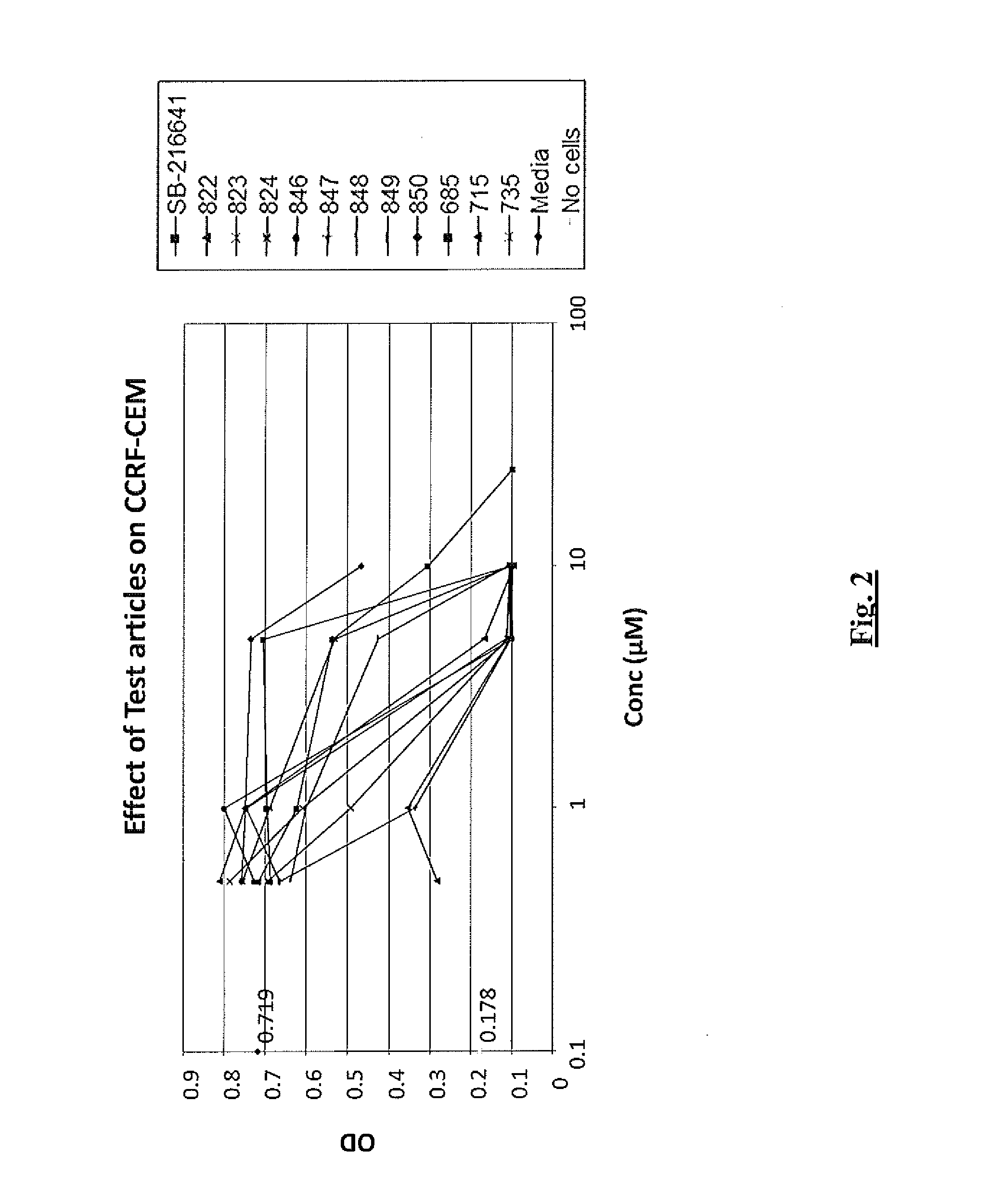
Figure 2 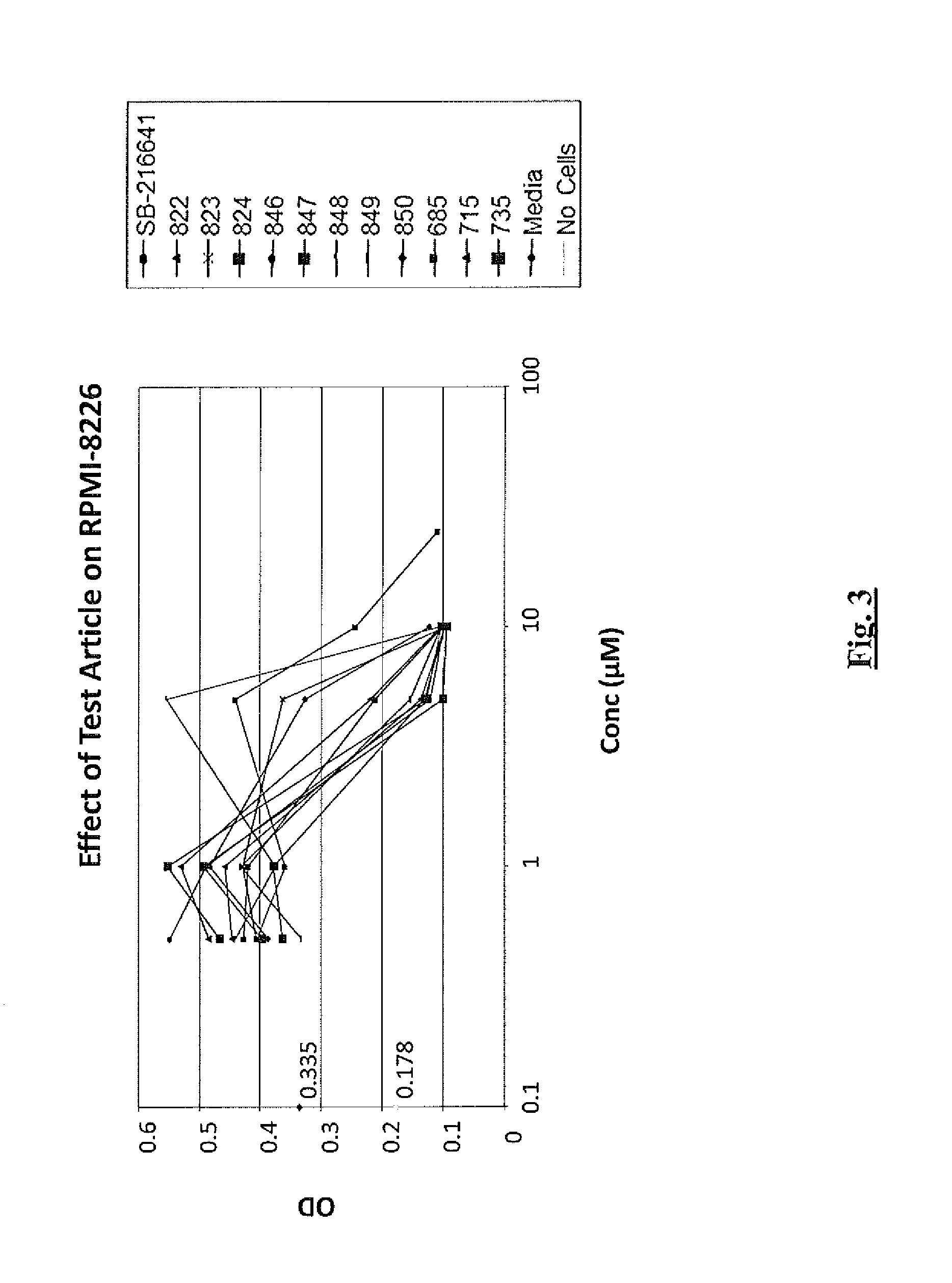
Figure 3
Abstract
Description
CROSS-REFERENCE TO RELATED APPLICATION
[0001] The present application is a continuation-in-part of and claims priority to U.S. patent application Ser. No. 11 / 897,598, filed Aug. 31, 2007, which issued as U.S. Pat. No. 7,981,885 on Jul. 19, 2011, which is entitled to priority under 35 U.S.C. §119(e) to U.S. Provisional Application No. 60 / 841,771, filed Sep. 1, 2006, which applications are incorporated by reference herein in their entireties.BACKGROUND OF THE INVENTION
[0002] Serotonin (also referred to as 5-hydroxytryptamine or 5-HT) is a neurotransmitter that has been strongly implicated in the pathophysiology and treatment of a wide variety of neuropsychiatric disorders. Serotonin exerts its effects through a diverse family of serotonin receptor molecules (referred to herein as “5-HT receptors” or “5-HTRs”). Classically, members of the serotonin receptor family have been grouped into seven (7) subtypes pharmacologically, i.e., according to their specificity of various serotonin antagon...
Examples
example 1
Efficacy of 5-HT Receptor Antagonists in Cell Lines
Cell Lines
[0312]Cell lines used in these studies were obtained from the American Type Culture Collection (ATCC; Manassas, Va.) or were otherwise obtained as indicated and were maintained under standard laboratory growth conditions. The neoplastic T-cell lines used in the studies included CCRF-CEM cells, a CD4+ lymphoblastic T-cell leukemia line (Foley et al., 1965, Cancer 18: 522-529). The B-cell neoplastic cell lines used were as follows: RPMI 8226 (a plasmacytoma derived from a multiple myeloma patient (Matsuoka, et al., 1967, Proc. Soc. Exp. Biol. Med. 125: 1246-1250), U266 (established from an IgE-secreting myeloma patient (Nilsson, et al., 1970, Clin. Exp. Immunol., 7: 477-489) and ARH77 (an EBV transformed plasma cell leukemia (Burk, et al., 1978, Cancer Res, 38: 2508-2513). The MM1S cells, a dexamethasone sensitive cell line derived from the MM1 cell clone, isolated from an IgA-secreting myeloma patient in the leukemic phase,...
example 2
10-(3-Chloropropyl)-2-trifluoromethylphenothiazin (Compound 2)
[0328]To a stirred solution of 2-trifluoromethyl phenothiazine (compound 1) (2 g, 7.49 mmol) and sodium hydride (0.5 g, 10.42 mmol) in dry toluene (30 mL) was added 1-bromo-3-chloropropane (1.57 g, 10 mmol). The reaction mixture was stirred for 18 hours at 110° C. under an atmosphere of argon. The solution was cooled to room temperature and poured into an ice-water mixture, the crude product was extracted with ethyl acetate (3×50 mL) and the combined organic phase dried over anhydrous sodium sulphate. Final purification was performed by column chromatography (9:1 hexane:ethyl acetate) on silica gel to give 10-(3-chloropropyl)-2-trifluoromethylphenothiazine (1.5 g, 58%) as a solid.
example 3
10-[3-(4-N-Boc-1-piperazinyl)propyl)]-2-trifluoromethylphenothiazine Compound 3)
[0329]To a stirred solution of chloro compound 2 (2.57 g, 7.5 mmol) and 1-Boc-piperazine (1.4 g, 7.5 mmol) in methyl ethyl ketone (40 mL) was added sodium iodide (1.5 g, 10 mmol). The reaction mixture was stirred for 24 h at reflux under an atmosphere of argon. The reaction mixture was filtered and the filtrate concentrated under vacuum. The residue was partitioned between ethyl acetate (100 mL) and brine (50 mL). The organic layer was dried over anhydrous sodium sulphate, filtered and evaporated. The resulting residue was purified by silica gel column chromatography (9:1 CH2Cl2:MeOH) to give Compound 3 (2.7 g, 73%) as a solid. MS (ESI): m / z 494 (M+H).