
Methods of treating solid or lymphatic tumors by combination therapy
Patent Information
- Authority / Receiving Office
- US · United States
- Current Assignee / Owner
- Publication Date
- 2018-11-08
- Estimated Expiration
- Not applicable · inactive patent
Smart Images
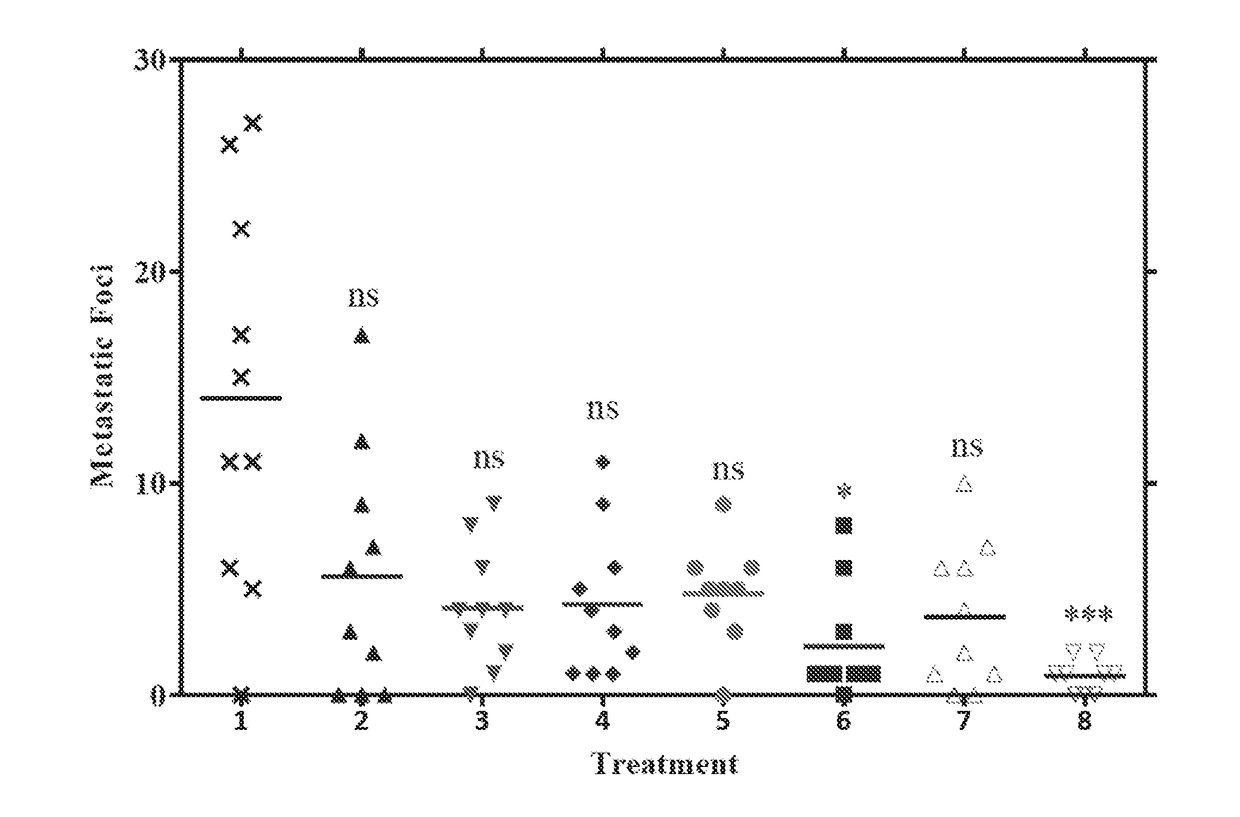
Figure 1 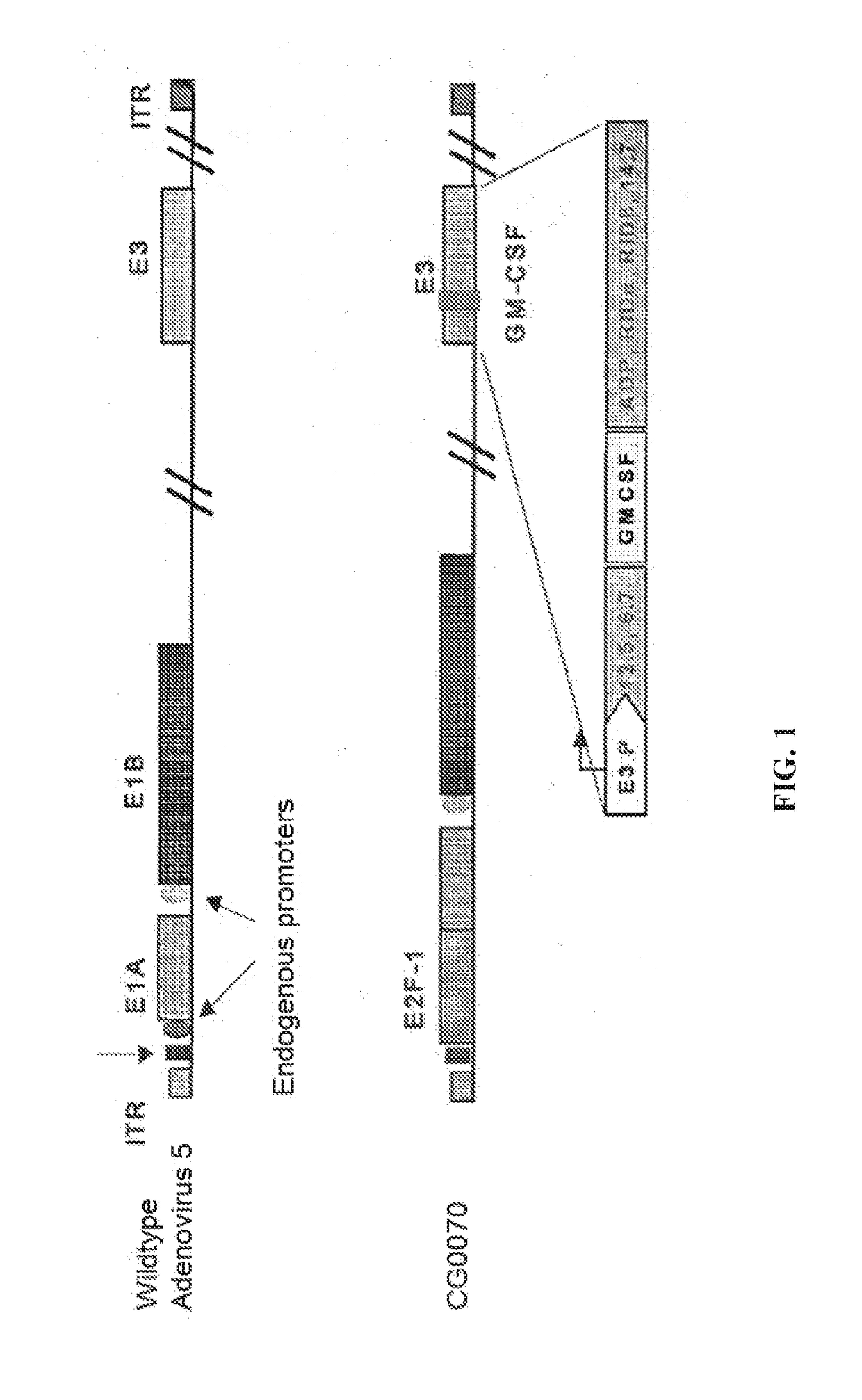
Figure 2 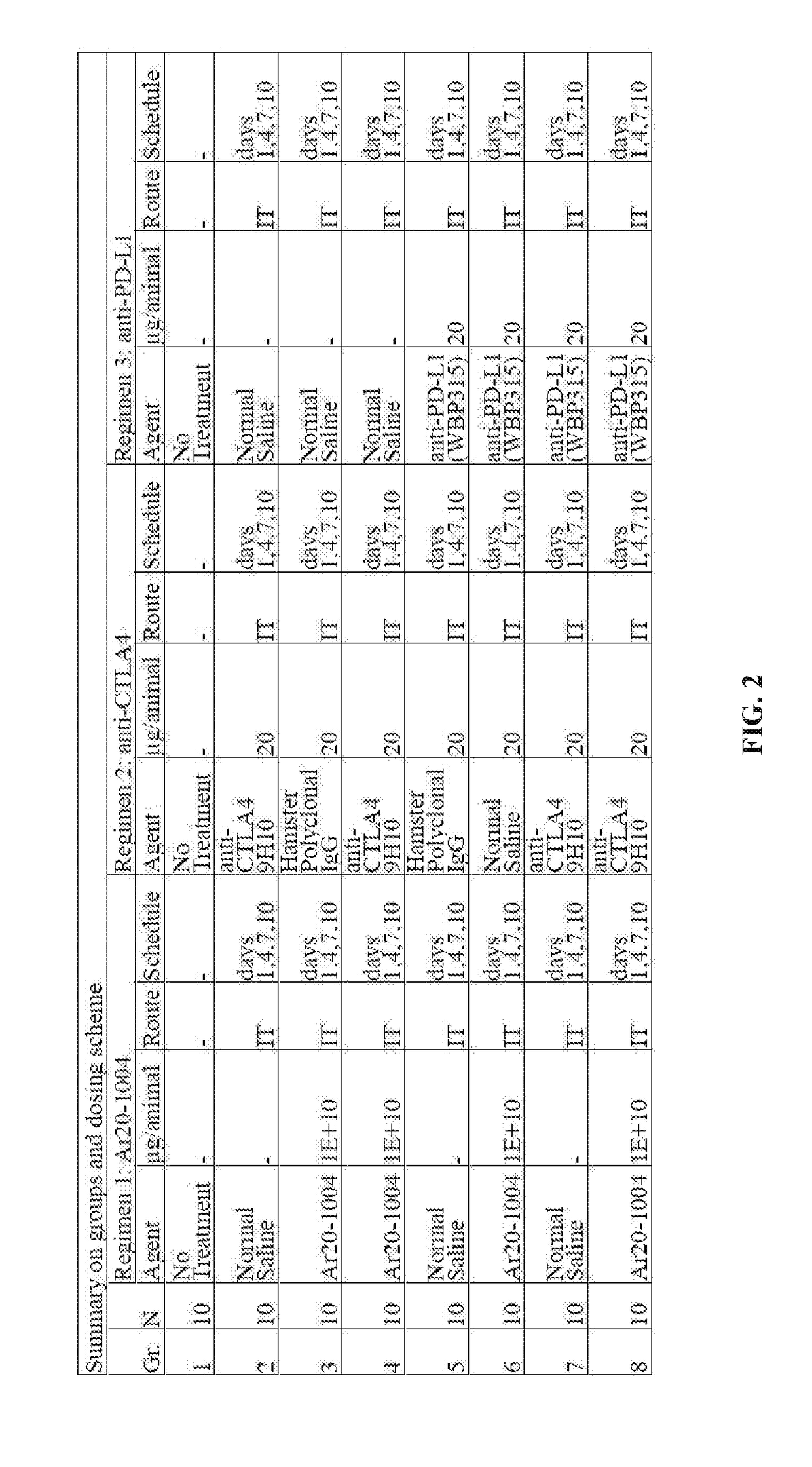
Figure 3
Abstract
Description
CROSS REFERENCE TO RELATED APPLICATIONS
[0001] This application claims priority benefit of U.S. Provisional Patent Application No. 62 / 243,512 filed on Oct. 19, 2015, the contents of which are incorporated herein by reference in their entirety.SUBMISSION OF SEQUENCE LISTING ON ASCII TEXT FILE
[0002] The content of the following submission on ASCII text file is incorporated herein by reference in its entirety: a computer readable form (CRF) of the Sequence Listing (file name: 744442000140SEQLIST.txt, date recorded: Oct. 14, 2016, size: 3 KB).FIELD OF THE INVENTION
[0003] The present invention relates to local administration of a combination of an infectious agent and one or more immunomodulators for cancer immunotherapy.BACKGROUND OF THE INVENTION
[0004] The human immune system of innate and adaptive immunity is an extremely complex system which has not yet been successfully utilized to fight against cancer. One explanation is that, since cancers are usually developed within the later part of...
Examples
example 1
/ II Clinical Study of Intravesical Administration of CG0070 in Combination with a CTLA-4 Inhibitor in Patients with Muscle Invasive Bladder Cancer
[0337]This example describes a clinical study of intravesical administration of CG0070 in combination with an anti-CTLA-4 antibody in patients with muscle invasive bladder cancer (MIBC). Muscle invasive bladder cancer is chosen herein as an example because CG0070 has shown to be active in bladder cancer. Furthermore all muscle invasive bladder cancer patients need to have a cystectomy, thus providing a good tumor specimen to prepare the tumor cells needed for this vaccine system. In addition the prognosis of muscle invasive bladder cancer patients (T3-4) has been poor despite the use of neo-adjuvant chemotherapy. Most of these patients are over 60 years of age and few can undergo the serious side effects of chemotherapy. An effective agent that can minimize the risk of disease recurrence in this patient population is an unmet need.
[0338]Th...
example 2
/ H Clinical Study of Intratumoral Administration of CG0070 in Combination with a CTLA-4 Inhibitor for Patients with Refractory Injectable Solid Tumors
[0372]This example describes a Phase I / II clinical study of CG0070 in combination with a CTLA-4 inhibitor (such as an anti-CTLA-4 monoclonal antibody or blocker) for patients with refractory injectable solid tumors. This study is a multi-center, single-arm, open-label, interventional study aimed at evaluating the safety and efficacy of the combination therapy comprising intratumoral administration of CG0070 and a CTLA-4 inhibitor in patients with solid tumor, including cutaneous or visceral lesions, such as head and neck squamous cell cancer, breast cancer, colorectal cancer, pancreatic adenocarcinoma, ovarian cancer, non-small cell lung cancer, prostate cancer, and melanoma. The CG0070 administration can include a pretreatment with a transducer, such as DDM.
[0373]The clinical study in Phase I is divided into three stages. In Stage 1, ...
example 3
/ II Clinical Study of Intratumoral Administration of CG0070 in Combination with a CTLA-4 Inhibitor and a CD40 Agonist for Patients with Advanced Stage Solid Tumor (Such as Melanoma)
[0409]This example describes a Phase I / II clinical study of CG0070 in combination with a CTLA-4 inhibitor (such as an anti-CTLA-4 monoclonal antibody or blocker) and a CD40 agonist (such as an agonistic anti-CD40 antibody) for patients with solid or lymphatic tumors. Phase I study is a dose escalation study for patients with refractory solid tumors. Phase II study is a single-arm, open-label, interventional study aimed at evaluating the efficacy, safety and tolerability of repeated intratumoral injections of CG0070, the CTLA-4 inhibitor, and the CD40 agonist in patients with solid tumor, such as refractory unresectable, or metastatic stage III / IV malignant melanoma. The CG0070 administration can include a transduction enhancing agent, such as DDM.
[0410]The clinical study in Phase I is divided into three s...