
Pharmaceutical composition comprising polypeptide
a technology of pharmaceutical composition and polypeptide, which is applied in the direction of drug composition, peptide/protein ingredients, metabolic disorders, etc., can solve the problems of reduced physical activity, poor eating habits, and excessive calorie intake, so as to suppress gastric emptying, reduce food intake, and enhance insulin secretion
Patent Information
- Authority / Receiving Office
- US · United States
- Patent Type
- Applications(United States)
- Current Assignee / Owner
- Publication Date
- 2021-10-14
Smart Images
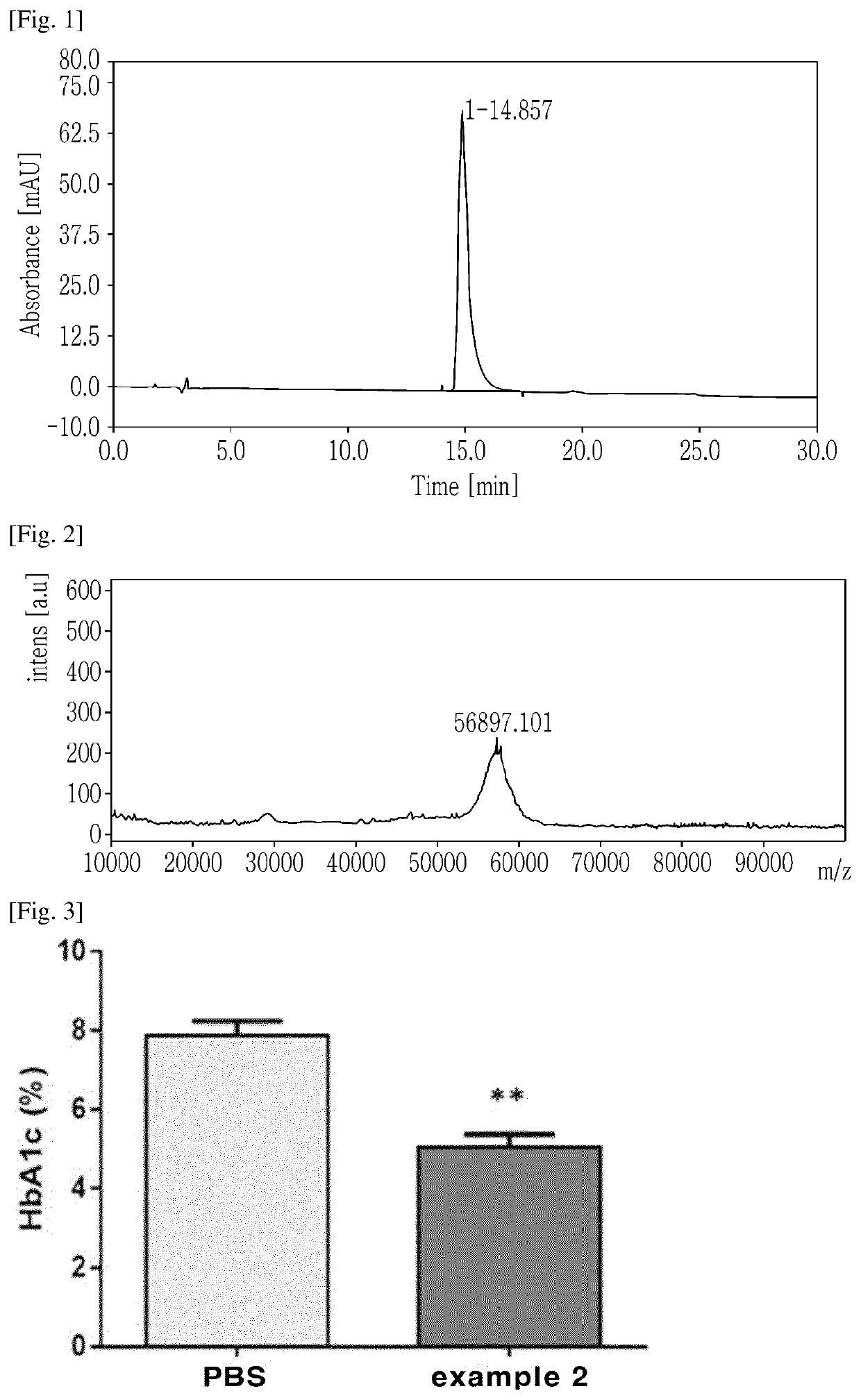
Figure 1 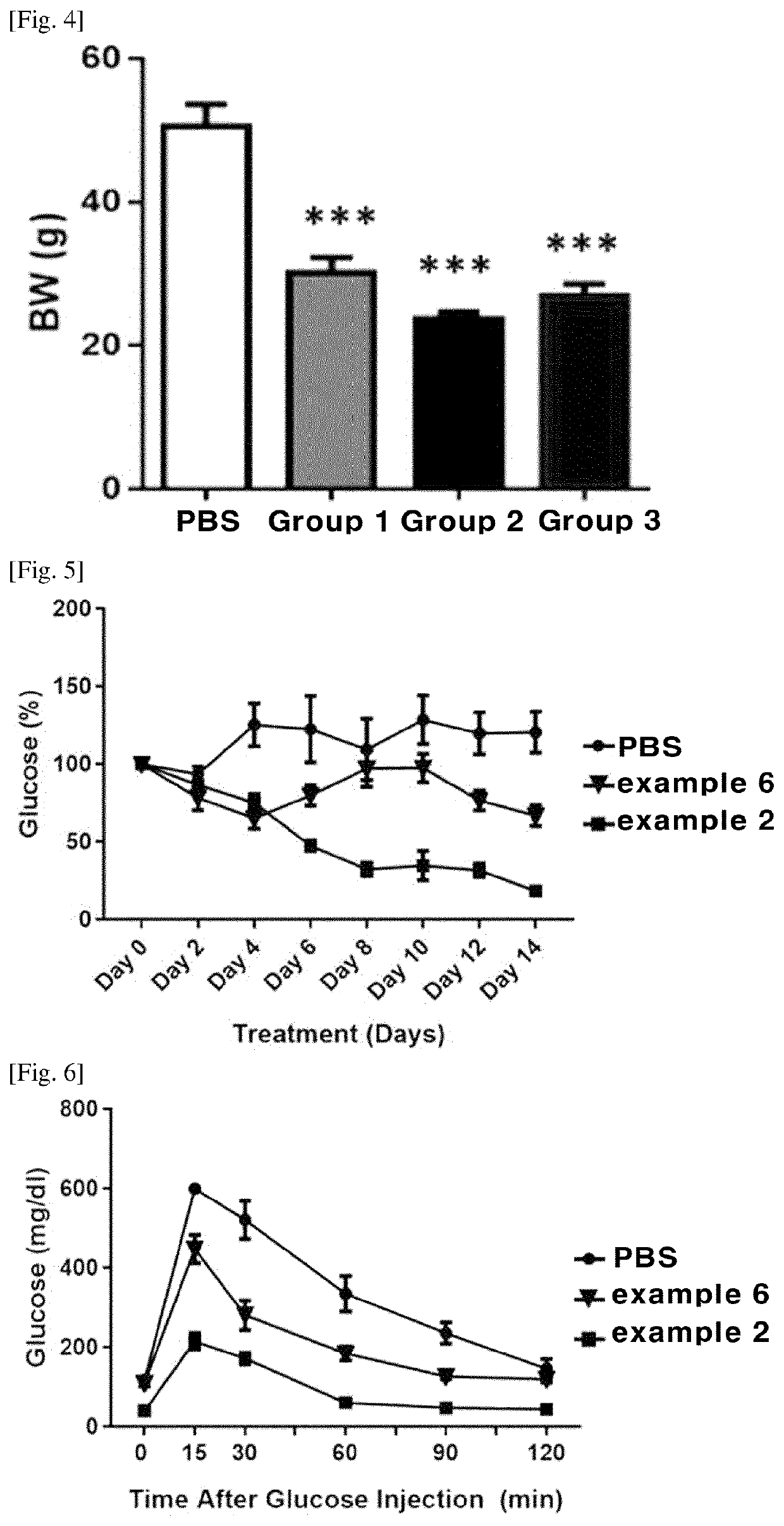
Figure 2 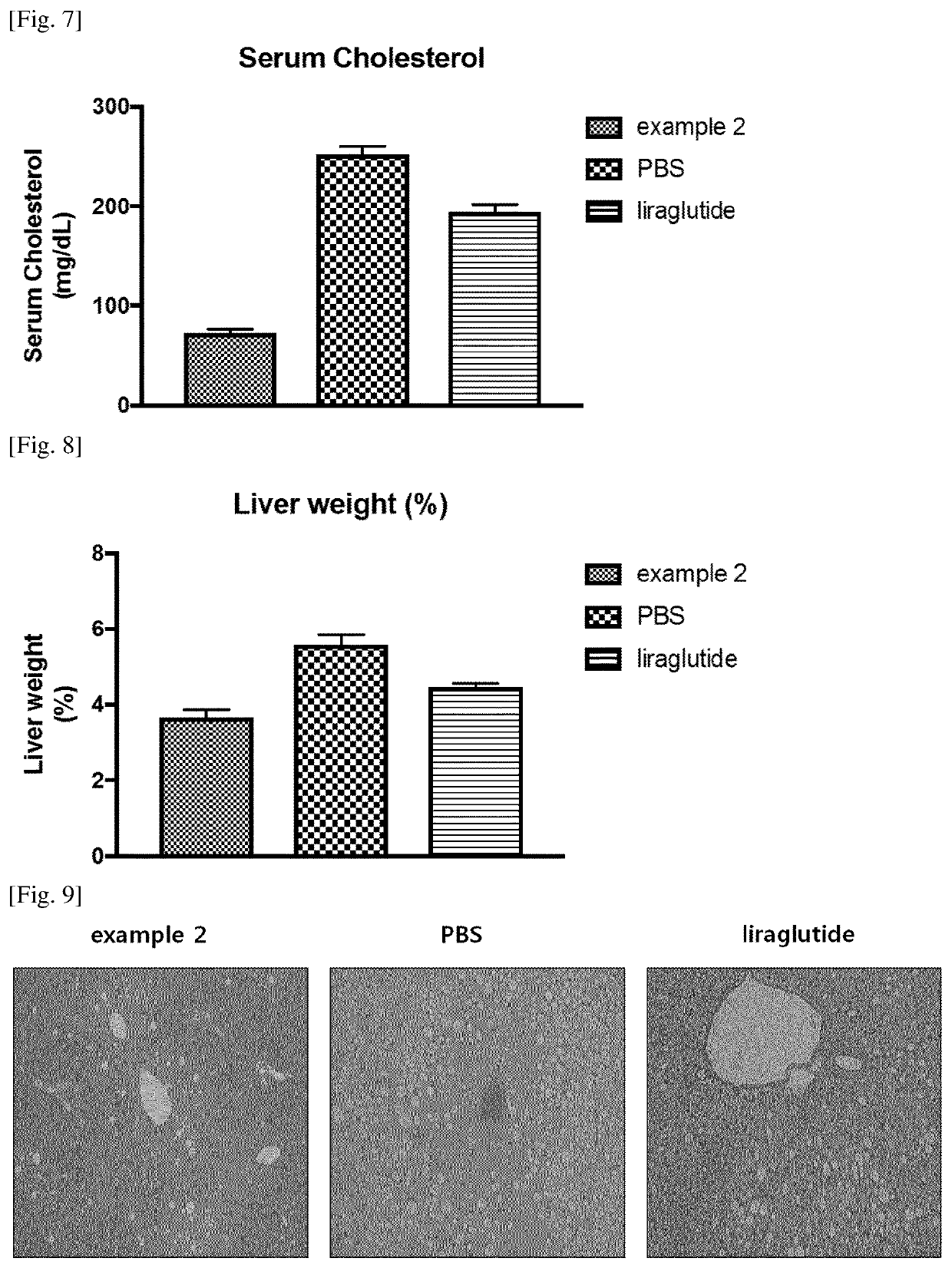
Figure 3
Abstract
Description
TECHNICAL FIELD
[0001] The present invention relates to a pharmaceutical composition including a polypeptide and their medical use, for example in the treatment or prevention of obesity, diabetes, or non-alcoholic fatty liver disease. The polypeptide has effects of reducing food intake, enhancing insulin secretion, suppressing gastric emptying, promoting lipolysis, and lowering a level of triglycerides without side effects such as vomiting or nausea.BACKGROUND ART
[0002] Recently, with economic development and the high growth of scientific technology, aging populations are growing and adult diseases are rapidly increasing. This is caused by stress, poor eating habits, excessive calorie intake, and reduced physical activity. Mortality rates of heart and cerebrovascular diseases, which are complications accompanying obesity, are ranked as first and second, and obesity is suggested as a cause of various adult diseases such as diabetes, non-alcoholic fatty liver disease, and the like.
[0003] ...
Examples
example 1
[0132]A polypeptide, into which cysteine was introduced (molecular weight: 3,509 Da; SEQ ID NO. 2: H(Aib)QGTFTSDYSKYLDEQAAKEFVQWLMNTC).
[0133]Here, the residues underlined and highlighted in bold in the amino acid sequence of SEQ ID NO. 2 represents that a covalent ring is formed between the residues.
Preparative Example 1: Synthesis of Conjugate Including Polypeptide and Non-Peptidic Polymer
[0134]To prepare a conjugate including a polypeptide and a non-peptidic polymer, a polypeptide in which cysteine was introduced into the C-terminal region (at position 30) (molecular weight: 3,509 Da; SEQ ID NO. 2: H(Aib)QGTFTSDYSKYLDEQAAKEFVQWLMNTC) was used as the polypeptide.
[0135]Meanwhile, maleimide-activated monomethoxy PEG (mPEG-MAL, NOF (Japan)) was used as the non-peptidic polymer, as listed in the following Table 2.
[0136]To prepare conjugates of Examples 2 to 7, the polypeptides were prepared as listed in the following Table 2. In this case, each of the polypeptides was dissolved in dime...
experimental example 1
o Activity of Example 2
[0140]To check a prophylactic or therapeutic effect of the conjugate of Example 2 on obesity, diabetes, and non-alcoholic fatty liver disease, this experiment was performed using a cell line expressing a GLP-1 (glucagon derivative) receptor and a glucagon receptor (GCGR).
[0141]To determine the activity on the GLP-1 receptor, HEK293 / CRE-Luc cells expressing a human glucagon GLP-1 receptor were purchased from GenScript and used. The cells were seeded in a 96-well plate at 5×10⁴ cells / well, and each of the wells was then treated with the polypeptide of Example 1 (0.001 to 300 nM), the conjugate of Example 2 (0.001 to 300 nM), natural glucagon (SEQ ID NO. 1: HSQGTFTSDYSKYLDSRRAQDFVQWLMNT, 0.013 to 300 nM), and GLP-1 (SEQ ID NO. 6: HAEGTFTSDVSSYLEGQAAKEFIAWLVKGR, 0.001 to 300 nM). Thereafter, the cells were incubated for 4 hours under conditions of a temperature of 37° C. in a CO2 incubator. Subsequently, an amount of the generated cAMP (a luciferase reporter) was ...
experimental example 2
vo Activity of Example 2
[0147]To check a preventing or therapeutic effect of the conjugate of Example 2 on obesity or diabetes, the conjugate of Example 2 was administered to C57BL / 6 mice to measure changes in food intake, blood glucose, and body weights. The results are listed in Table 5.
[0148]First, an obesity animal model was prepared by feeding a 60% high-fat diet to normal C57BL / 6 mice (approximately 6 weeks old) for approximately 24 weeks, and increasing the body weights of the mice to approximately 50 g on average. Thereafter, the conjugate of Example 2 was administered by subcutaneous injection at a dose of 20 nmol / kg once every other day for 2 weeks. As the positive control, a GLP-1 agonist ‘liraglutide’ was also administered by subcutaneous injection at a dose of 100 nmol / kg once a day for 2 weeks. For 2 weeks when the drug was administered, the food intake, the blood glucose, and the body weights were measured once every other day at given points of time. The results are ...