
Peptide nucleic acids
a technology of peptides and nucleic acids, applied in the field of peptide nucleic acids, can solve the problems of difficult preparation in more than, unphysiologically high ionic strength and low ph, and less routine synthesis of oligoribonucleotides, etc., and achieves low loading of immobilized molecules, low surface capacity of materials, and easy attachment.
Patent Information
- Authority / Receiving Office
- US · United States
- Patent Type
- Patents(United States)
- Current Assignee / Owner
- Publication Date
- 2002-05-28
- Estimated Expiration
- Not applicable · inactive patent
Smart Images
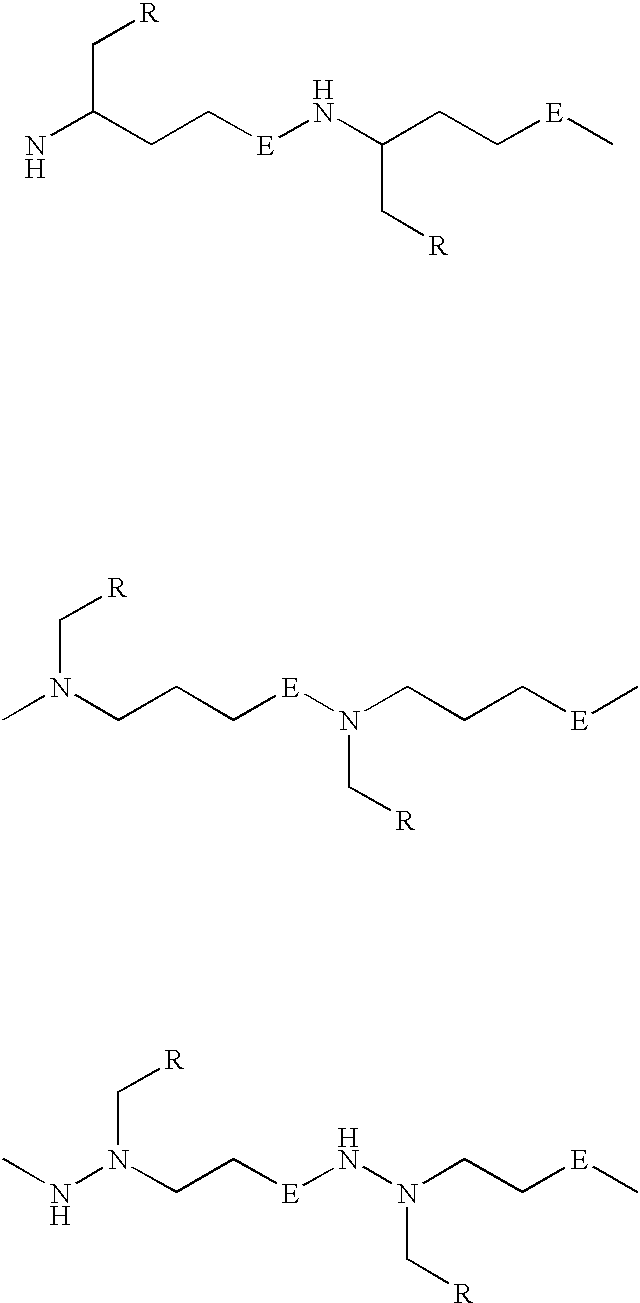
Figure 1 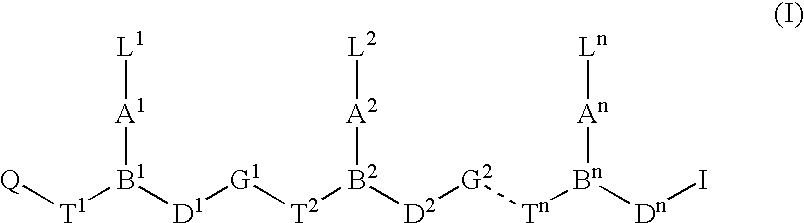
Figure 2 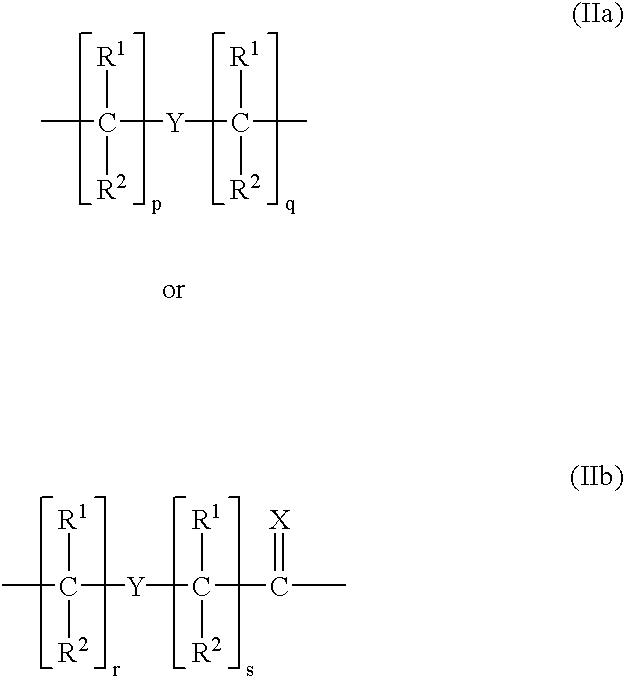
Figure 3
Abstract
Description
This invention is directed to compounds that are not polynucleotides yet which bind to complementary DNA and RNA strands more strongly the corresponding DNA. In particular, the invention concerns compounds wherein naturally-occurring nucleobases or other nucleobase-binding moieties are covalently bound to a polyamide backbone.Oligodeoxyribonucleotides as long as 100 base pairs (bp) are routinely synthesized by solid phase methods using commercially available, fully automatic synthesis machines. The chemical synthesis of oligoribonucleotides, however, is far less routine. Oligoribonucleotides also are much less stable than oligodeoxyribonucleotides, a fact which has contributed to the more prevalent use of oligodeoxyribonucleotides in medical and biological research directed to, for example, gene therapy or the regulation of transcription or translation.The function of a gene starts by transcription of its information to a messenger RNA (mRNA) which, by interaction with the ribosomal...
Examples
example 1
tert-Butyl 4-nitrophenyl carbonate
Sodium carbonate (29.14 g; 0.275 mol) and 4-nitrophenol (12.75 g; 91.6 mmol) were mixed with dioxane (250 ml). Boc-anhydride (20.0 g; 91.6 mmol) was transferred to the mixture with dioxane (50 ml). The mixture was refluxed for 1 h, cooled to 0.degree. C., filtered and concentrated to 1 / 3, and then poured into water (350 ml) at 0.degree. C. After stirring for 1 / 2 h., the product was collected by filtration, washed with water, and then dried over sicapent, in vacuo. Yield 21.3 g (97%). M.p. 73.0-74.5.degree. C. (litt. 78.5-79.5.degree. C.). Anal. for C.sub.11 H.sub.13 NO.sub.5 found(calc.) C: 55.20(55.23) H: 5.61(5.48) N: 5.82(5.85).
example 2
(N'-Boc-2'-aminoethyl)glycine (2)
The title compound was prepared by a modification of the procedure by Heimer, et al. Int. J. Pept., 1984, 21, 203-211 N-(2-Aminoethyl)glycine (1, 3.00 g; 25.4 mmol) was dissolved in water (50 ml), dioxane (50 ml) was added, and the pH was adjusted to 11.2 with 2 N sodium hydroxide. tert-Butyl-4-nitrophenyl carbonate (7.29 g; 30.5 mmol) was dissolved in dioxane (40 ml) and added dropwise over a period of 2 h, during which time the pH was maintained at 11.2 with 2 N sodium hydroxide. The pH was adjusted periodically to 11.2 for three more hours and then the solution was left overnight. The solution was cooled to 0.degree. C. and the pH was carefully adjusted to 3.5 with 0.5 M hydrochloric acid. The aqueous solution was washed with chloroform (3.times.200 ml), the pH adjusted to 9.5 with 2N sodium hydroxide and the solution was evaporated to dryness, in vacuo (14 mmHg). The residue was extracted with DMF (25+2.times.10 ml) and the extracts filtered to r...
example 3
N-1-Carboxymethylthymine (4)
This procedure is different from the literature synthesis, but is easier, gives higher yields, and leaves no unreacted thymine in the product. To a suspension of thymine (3, 40.0 g; 0.317 mol) and potassium carbonate (87.7 g; 0.634 mmol) in DMF (900 ml) was added methyl bromoacetate (30.00 ml; 0.317 mmol). The mixture was stirred vigorously overnight under nitrogen. The mixture was filtered and evaporated to dryness, in vacuo. The solid residue was treated with water (300 ml) and 4 N hydrochloric acid (12 ml), stirred for 15 min at 0.degree. C., filtered, and washed with water (2.times.75 ml). The precipitate was treated with water (120 ml) and 2N sodium hydroxide (60 ml), and was boiled for 10 minutes. The mixture was cooled to 0.degree. C., filtered, and the pure title compound was precipitated by the addition of 4 N hydrochloric acid (70 ml). Yield after drying, in vacuo over sicapent: 37.1 g (64%). .sup.1 H-NMR: (90 MHz; DMSO-d.sub.6): 11.33 ppm (s,1H...