
CD40-L Inhibitory Peptides
a technology of inhibitory peptides and cd40l, which is applied in the field of peptide-based compositions and analogs, can solve the problems of ineffective modulation of protein interactions between small molecules and short peptides, adverse effects, and prognosis of an increased risk of thrombosis and cardiac ischemia
Patent Information
- Authority / Receiving Office
- US · United States
- Patent Type
- Patents(United States)
- Current Assignee / Owner
- Publication Date
- 2014-08-12
- Estimated Expiration
- Not applicable · inactive patent
Smart Images
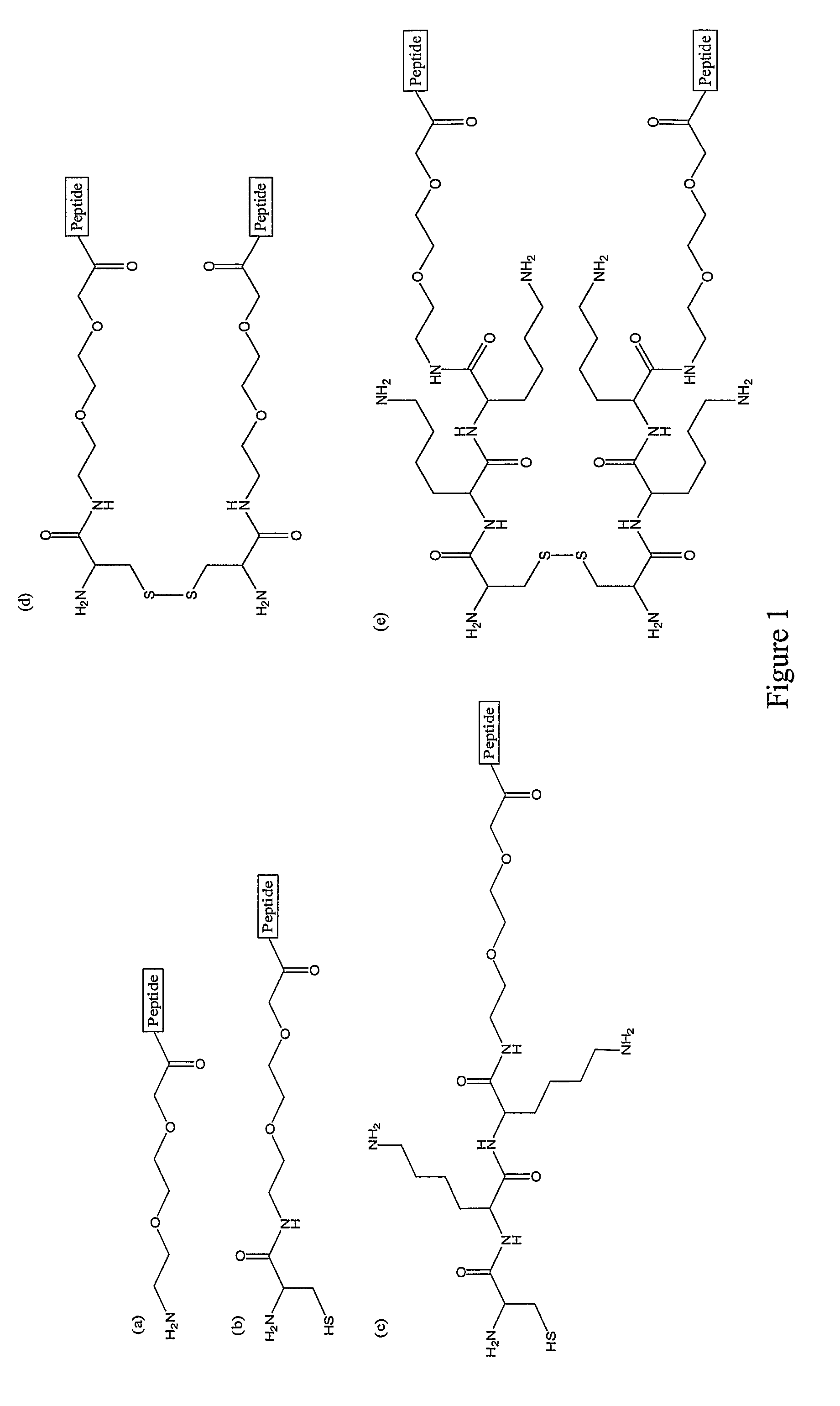
Figure 1 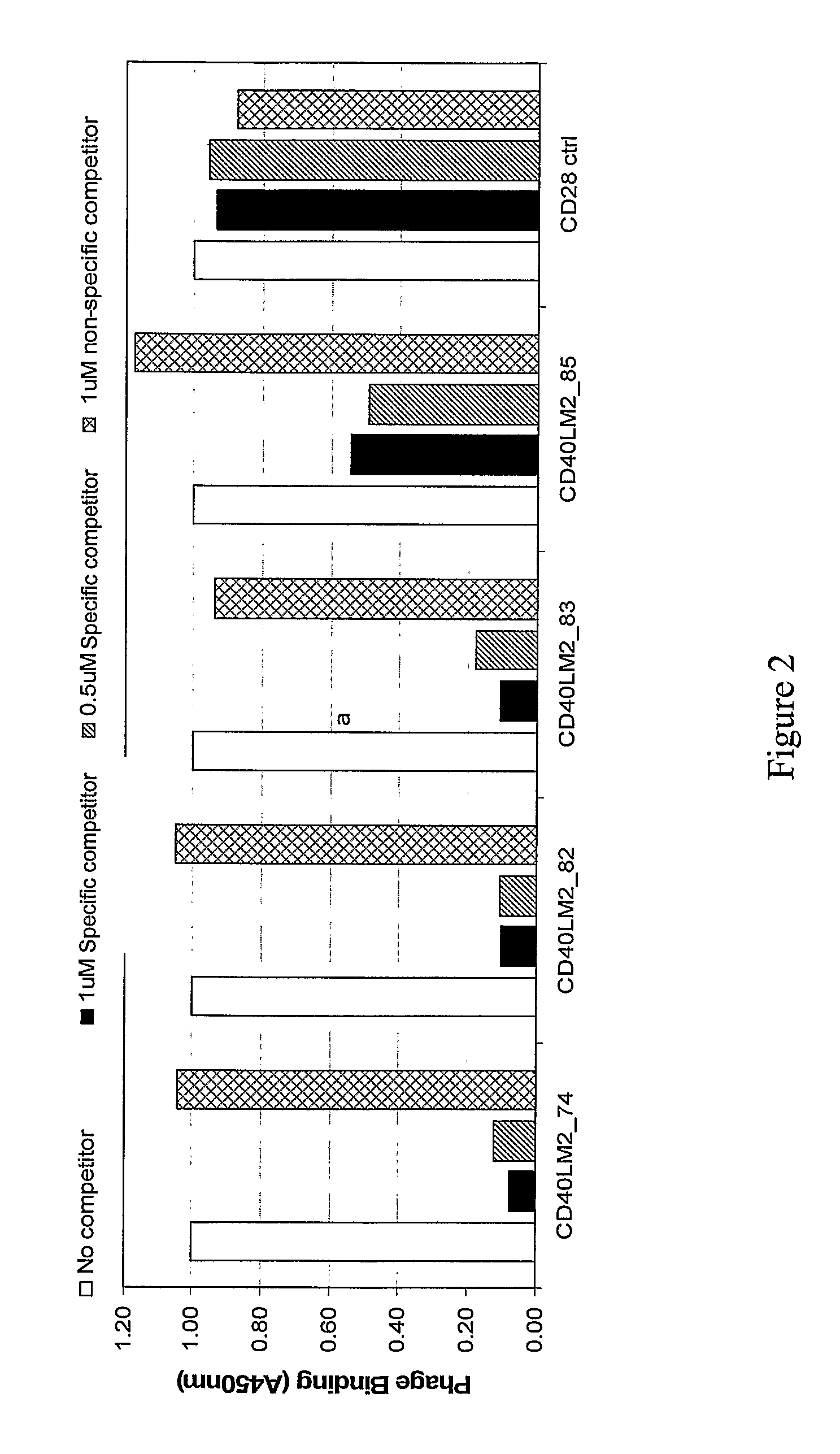
Figure 2 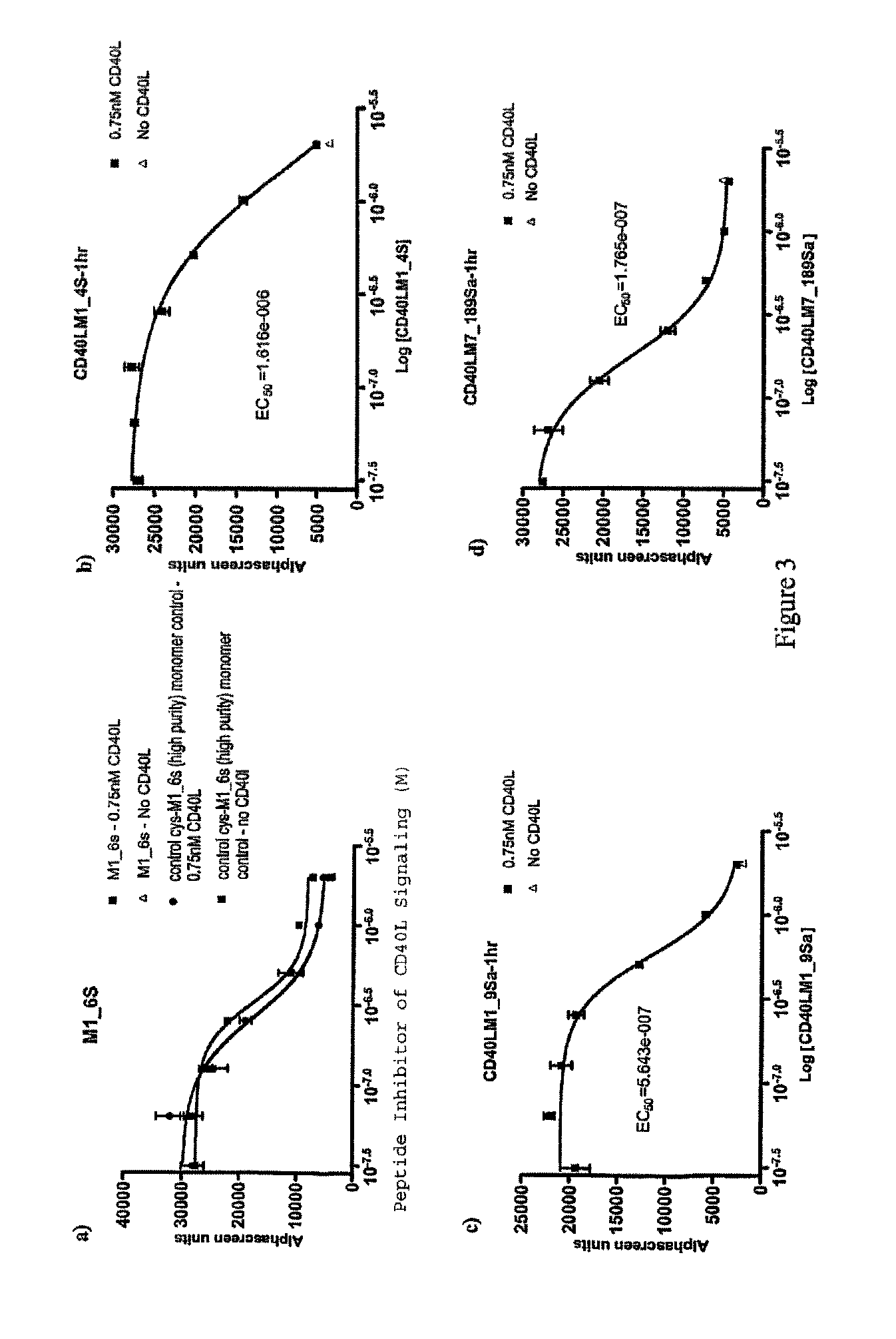
Figure 3
Abstract
Description
CROSS-REFERENCE TO RELATED APPLICATIONS
[0001] This application is a §371 national stage application of PCT International Application No. PCT / AU2009 / 000896, filed Jul. 13, 2009, designating the United States and claims priority of Australian Patent Application No 2008903552, filed Jul. 11, 2009, the contents of all of which are hereby incorporated by reference into this application.REFERENCE TO SEQUENCE LISTING
[0002] This application incorporates-by-reference nucleotide and / or amino acid sequences which are present in the file named “110721—2251—82422_Sequence_Listing_GC.txt,” which is 17.8 kilobytes in size, and which was created Jul. 18, 2011 in the IBM-PC machine format, having an operating system compatibility with MS-Windows, which is contained in the text file filed Jul. 21, 2011 as part of this application.FIELD OF THE INVENTION
[0003] The present invention relates to peptide-based compositions, analogs thereof and their use in medicine, for example in a method of diagnosis and / or...
Examples
example 1
Isolation and Characterization of Representative Peptidyl Inhibitors
[0354]This example provides representative peptidyl inhibitors of the present invention and describes methods for their isolation and validation. Additional peptidyl inhibitors of the invention are provided in the basic application, incorporated herein by reference.
Peptide Display
[0355]Using phage display, expression libraries produced from fragments of prokaryote and eukaryote compact genomes, including Salmonella enterica, Bacillus subtilis, Listeria innocua, Neisseria meningitidis, Escherichia coli, Thermotoga maritima, Sulfolobus solfataricus, Borrelia burgdorferi, Deinococcus radiodurans, Campylobacter jejuni, Geobacter sulfurreducens, Pseudomonas aeruginosa, Bordetella pertussis, Haloarcula marismortui and Chlorobium tepidum. The genome fragments inserted into the phage display libraries encode peptides, including natural open reading frames, capable of forming secondary structures or super-secondary structure...