
Line-focusing ultrasonic probe used for Lamb wave velocity measurement on anisotropic materials
An anisotropic, ultrasonic probe technology, applied in the use of sound waves/ultrasonic waves/infrasonic waves for material analysis, measuring devices, and analysis of materials, etc., can solve the problem of low transducer frequency
- Summary
- Abstract
- Description
- Claims
- Application Information
AI Technical Summary
Problems solved by technology
Method used
Image

Examples
Embodiment Construction
[0014] The specific implementation will be described in detail by taking a transducer with an opening angle of θ=90° and a focusing radius of R=10 mm as an example.
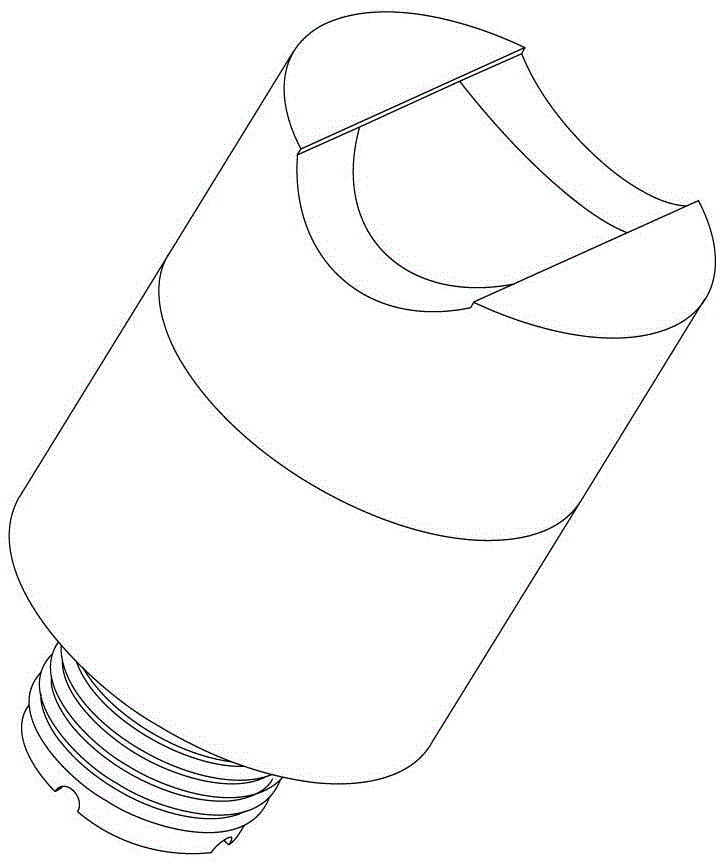
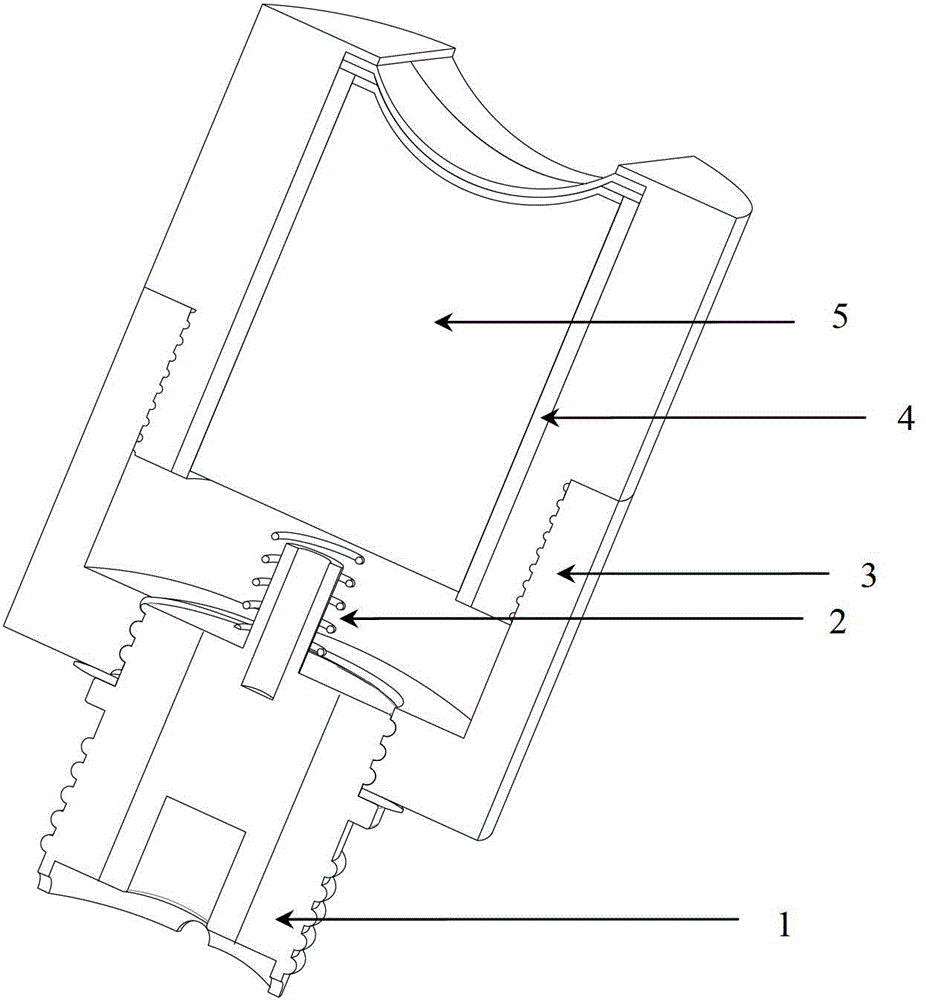
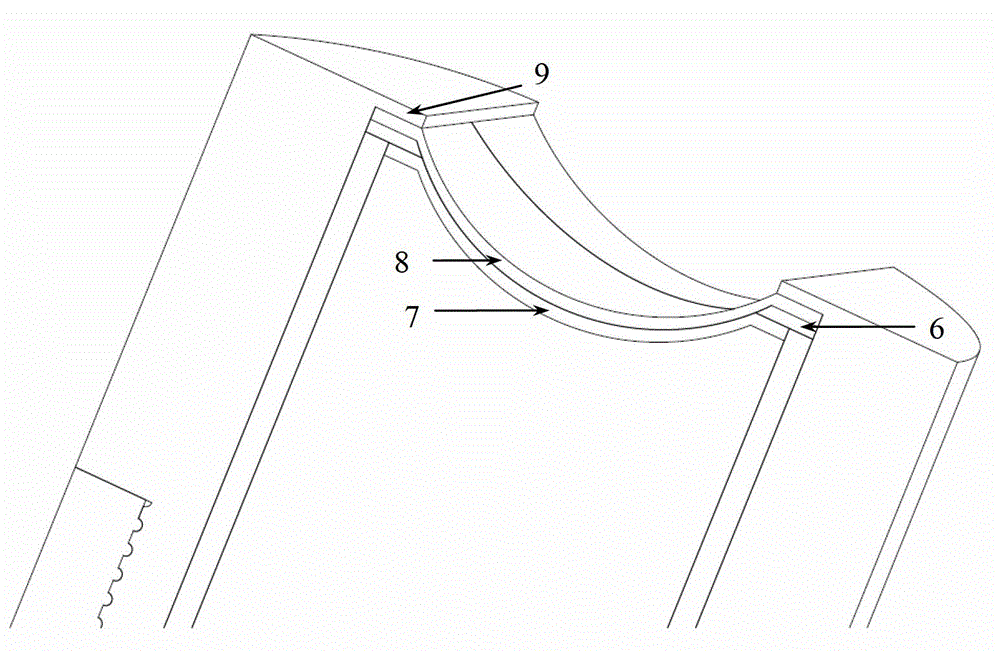
[0015] Such as figure 1 As shown, the transducer includes: joint 1, metal spring 2, upper metal shell 3A, lower metal shell 3B, insulating sleeve 4, backing 5, insulating glue 6, P (VDF-TrFE) piezoelectric film 7, Evaporation electrodes 8 and the like. The backing is used as the supporting structure and negative electrode of the P(VDF-TrFE) piezoelectric film 7, and it needs to be finished. The axis of the concave cylinder is in the same plane, and the radian and opening angle of the concave cylindrical surface determine the radian and opening angle of the P(VDF-TrFE) piezoelectric film. By finely grinding the concave cylindrical surface, the surface can reach the mirror level, the roughness Ra≤0.2μm. Prepare a polymer piezoelectric film with a thickness of 10-12 μm on the finished concave cylindrical surface....
PUM
| Property | Measurement | Unit |
|---|---|---|
| angle | aaaaa | aaaaa |
| angle | aaaaa | aaaaa |
| thickness | aaaaa | aaaaa |
Abstract
Description
Claims
Application Information
 Login to View More