
Device and method for detecting cold damage of peach fruits based on hyperspectral images
A hyperspectral image and hyperspectral imaging technology, applied in the field of post-harvest quality inspection and control of agricultural products, can solve the problems of low detection accuracy, weak indication effect, and inability to monitor early chilling damage, saving time, avoiding the use of chemical reagents, Novel effects of techniques and methods
- Summary
- Abstract
- Description
- Claims
- Application Information
AI Technical Summary
Problems solved by technology
Method used
Image

Examples
specific Embodiment approach
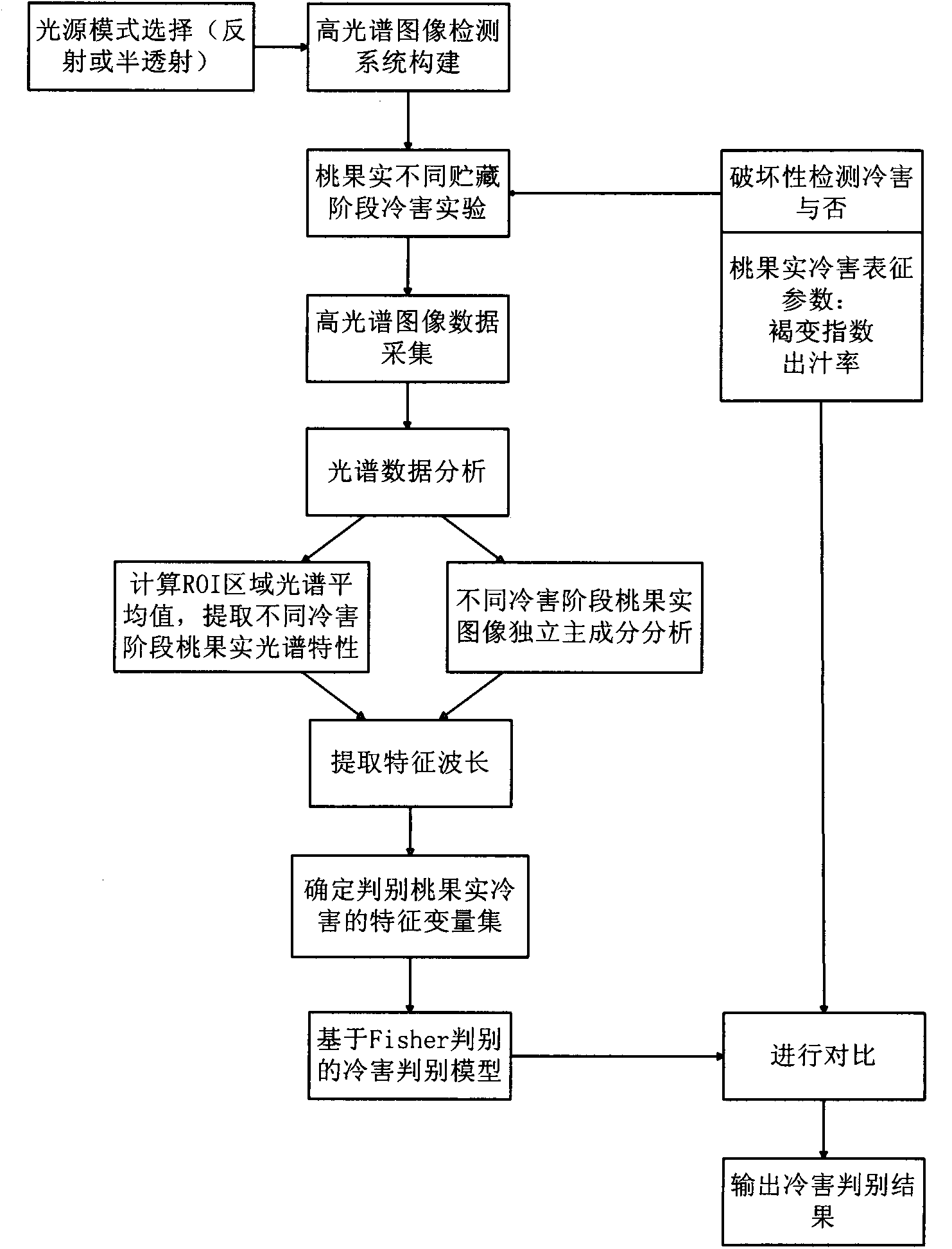
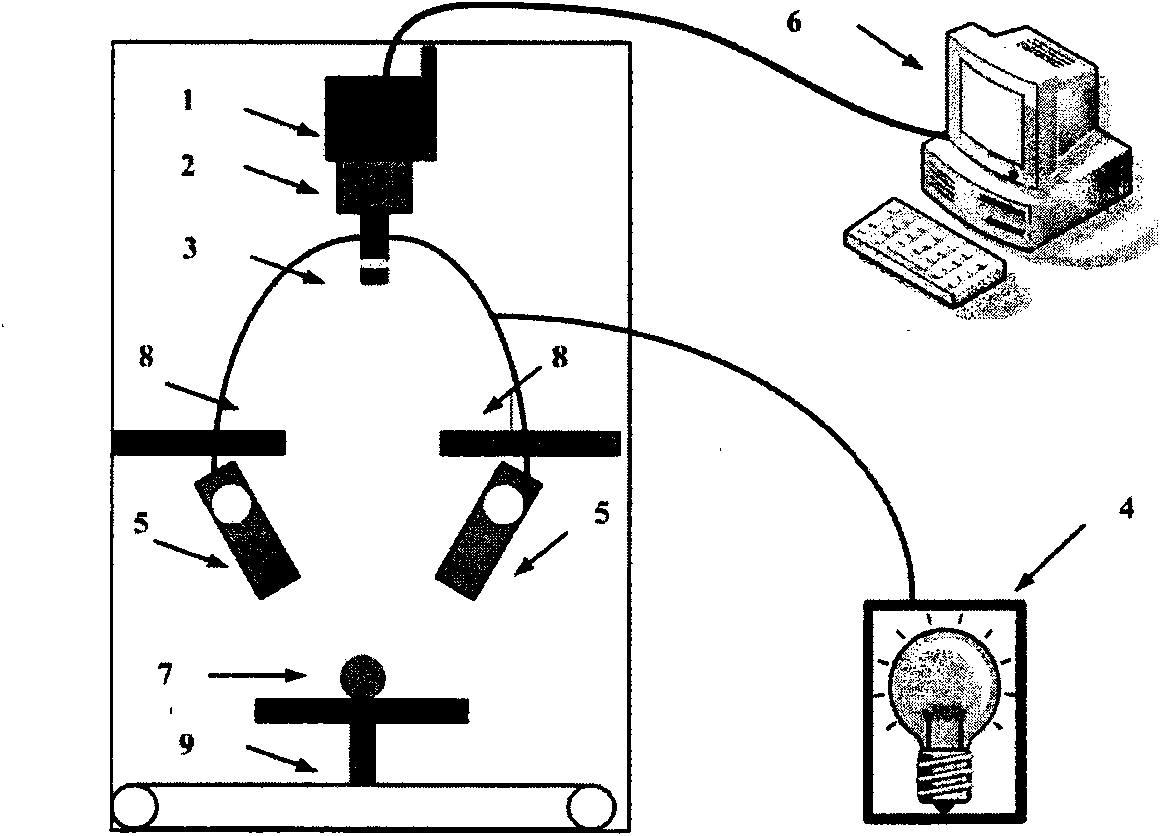
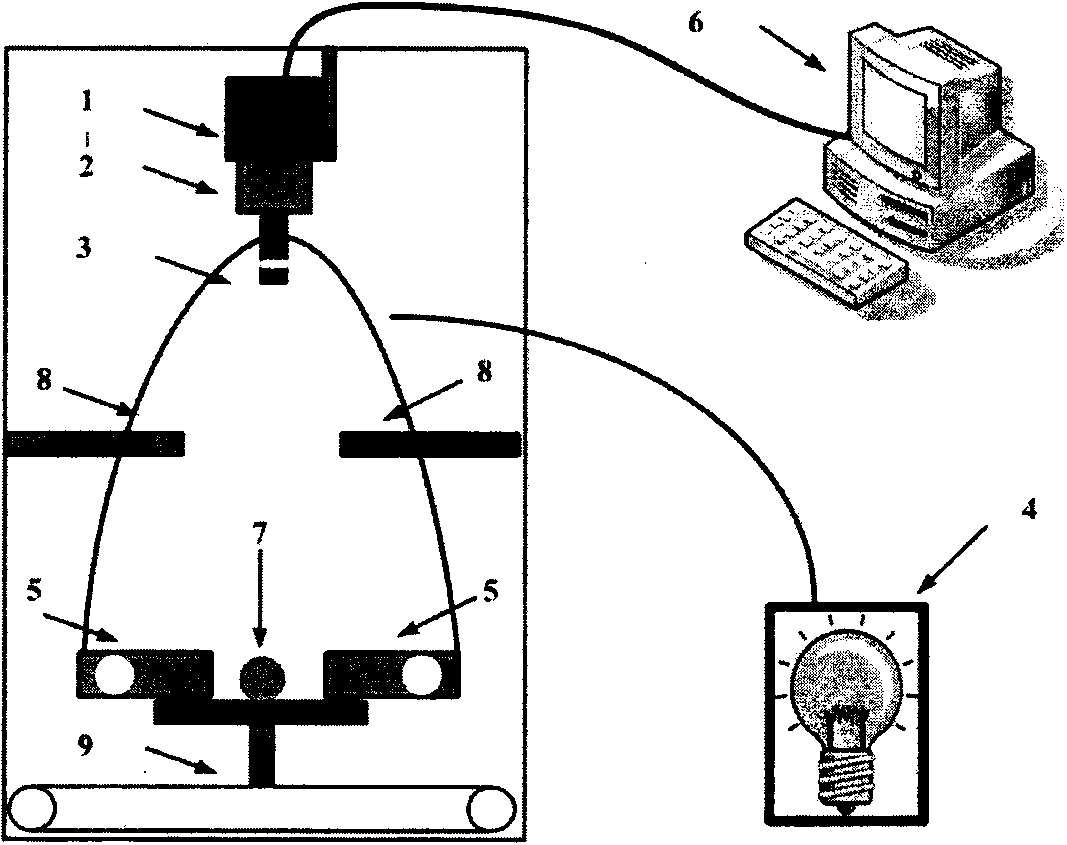
[0041] A device and method for detecting chilling injury of peach fruit based on reflection and semi-transmission hyperspectral images, taking juicy peaches as an example, the specific implementation is as follows:
[0042] 1. Test material
[0043] The experimental material is eight mature "Xiahui No. 5" peaches, which were collected in Jiangsu Academy of Agricultural Sciences in August 2012. The fruits with similar color, no pests and diseases, and no mechanical damage were selected.
[0044] Among them, 225 were used for non-destructive experiments of hyperspectral property detection, put them into a refrigerated environment (5°C, RH ~ 90%), and stored them for 0 weeks, 1 week, 2 weeks, 3 weeks, and 4 weeks respectively. After being placed in shelf conditions (20°C, RH ~ 90%) for 3 days, hyperspectral reflectance and semi-transmission information were collected. The remaining fruits were stored in the same way as above, and 15 pieces were taken out each time. After 3 days ...
PUM
 Login to View More
 Abstract
Description
Claims
Application Information
 Login to View More