[0003] The belt-driven continuously variable transmission mainly relies on variable-
diameter driving and driven gears and
metal belts to achieve stepless change in speed ratio. Obtain the best match between the
transmission system and the engine operating conditions, and improve the fuel economy of the vehicle; in the last ten years, CVT (Continuously Variable Trans-mission) technology has made great progress and has been widely used In the field of low-power vehicles, however, it is limited by the material and technology of the
metal strip, making the manufacturing cost very high
[0004]The bevel wheel type continuously variable transmission is mainly driven by the
contact friction and lubricating
oil film traction of the main and driven rigid elements (or through the intermediate element), and can be changed by changing its The working
radius of the contact point is continuously variable. It has the advantages of stable transmission,
low noise, simple structure, overload protection effect, and various forms. At present, there are more cone-disk ring-disk types, multi-disk types, and
steel ball-cone types. Wheel type,
diamond cone type, planetary cone disc type and
planetary ring cone type continuously variable transmission, etc.; in the cone wheel friction type continuously variable transmission, when the cone wheel and the contacted transmission elements are under load and friction work, due to the cone wheel and the contacted transmission element Due to the geometric shape of the contacting transmission elements, the speed distribution in the contact area of the two rolling elements is different, resulting in geometric slippage between the two rolling elements. The geometric slippage in the mechanism will increase the temperature of the traction oil and reduce the traction coefficient, resulting in transmission transmission of the transmission. Power and efficiency decline, etc., and at the same time, it will accelerate the wear of the traction surface and reduce the life of the transmission
[0005]In the prior art, in order to reduce the spin phenomenon in the contact area of the friction transmission in the bevel wheel type continuously variable transmission, many designers will try their best according to the size of the transmission power Reduce the contact area between the bevel wheel and the contacted transmission element to reduce the geometric
slip rate; however, to minimize the geometric
slip rate in the bevel friction continuously variable transmission, only when the bevel wheel and the contacted When the contact area between the transmission elements is
point contact, theoretically no geometric slip will occur, and the transmission efficiency at this time is also the highest; however, the smaller the contact area between the bevel wheel and the contacted transmission element, the lower the load-
carrying capacity. The worse the transmission power is, the smaller the transmission power is; there is a contradiction between the above two
[0006]In recent years, a long taper-roller type continuously variable transmission has received extensive attention and research in the field of transmission, and there have been great innovations and breakthroughs in structure. The shape of the roller is such that the first
conical surface on the intermediate roller is in the same direction as the conical surface of the active long bevel wheel and is in contact with the drive, and the second conical surface on the intermediate roller is also in the same direction as the conical surface of the driven long bevel wheel. , and contact the transmission, the continuously variable transmission significantly reduces the geometric
slip rate generated by the transmission, and improves the transmission efficiency and power; however, the intermediate roller in the continuously variable transmission is parallel to the conical When the surface is adjusted to change speed, a large axial resistance or
axial thrust will be generated, resulting in a reduction in
mechanical efficiency and life
How to solve the above, there is no
ideal solution in this field at present


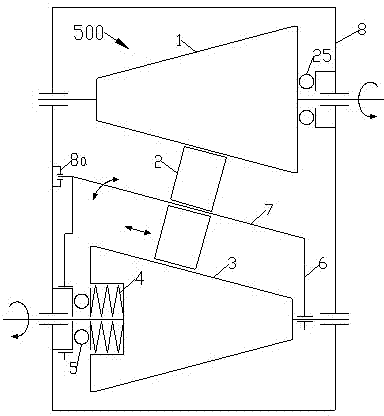
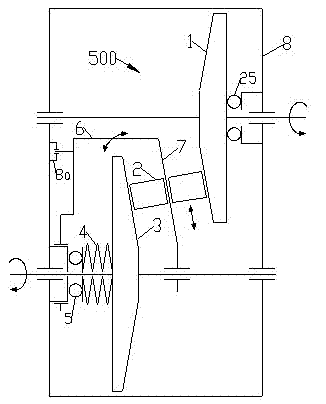
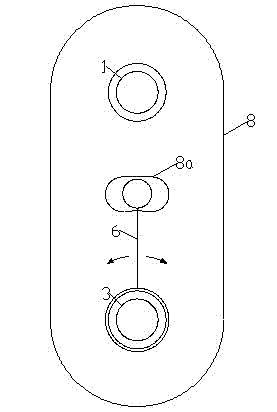
 Login to View More
  Login to View More