Prediction Method of Rock P-wave Velocity Based on Ellipsoidal Double Porosity Model
What is AI technical title?
AI technical title is built by PatSnap AI team. It summarizes the technical point description of the patent document.
A dual-porosity, longitudinal-wave velocity technology, applied in the field of seismic rock physics, can solve complex problems and achieve the effect of velocity prediction flexibility
Active Publication Date: 2017-02-15
TSINGHUA UNIV +1
View PDF5 Cites 0 Cited by
Summary
Abstract
Description
Claims
Application Information
AI Technical Summary
This helps you quickly interpret patents by identifying the three key elements:
Problems solved by technology
Method used
Benefits of technology
Problems solved by technology
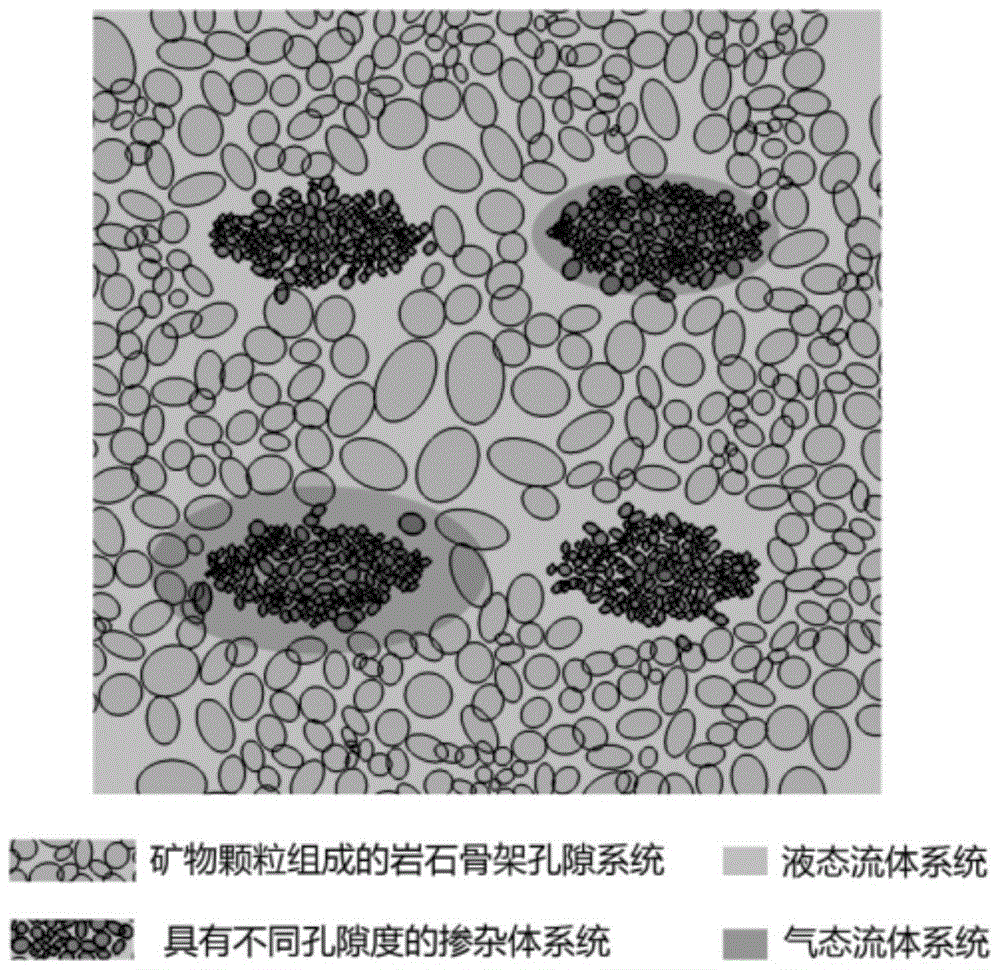
[0007] Compared with the prior art, the present invention introduces the ellipsoidal plaque saturation model, and includes the spatial heterogeneity of the solid skeleton and the fluid, so its velocity prediction is more flexible and close to reality, and can solve complex problems. Prediction of P-wave in multi-fluid and multi-porous rock
Method used
the structure of the environmentally friendly knitted fabric provided by the present invention; figure 2 Flow chart of the yarn wrapping machine for environmentally friendly knitted fabrics and storage devices; image 3 Is the parameter map of the yarn covering machine
View more
Image
Smart Image Click on the blue labels to locate them in the text.
Viewing Examples
Smart Image
Click on the blue label to locate the original text in one second.
Reading with bidirectional positioning of images and text.
Smart Image
Examples
Experimental program
Comparison scheme
Effect test
Embodiment 1
[0085] Example 1 Prediction of velocity of low-frequency compressional waves in low-porosity sandstone by partially saturated ellipsoidal patch model
[0086] This embodiment adopts the wave velocity observation data (Murphy, Acoustic Measures of Partial Gas Saturation in Tight Sandstones, JOURNAL OFGEOPHYSICAL RESEARCH, 1984) published in 1984 of the low-frequency low-porosity unsaturated sandstone, and compares and analyzes with the result predicted by the present invention. The results were compared with the predictions of three other partial saturation models for spherical plaques.
[0087]Fort Union sandstone is fluvial graywacke, which contains approximately from 65 to 95% quartz. These rocks contain more than 25% unstable material (ie, feldspar and rock fragments), more gravel than feldspar, with more interstices or mineral rubble (usually carbonates). The grain diameter of Fort Union sandstone is between 0.125 and 0.15mm. The rock parameters are: matrix bulk modulus 3...
Embodiment 2
[0093] Example 2 Prediction of Seismic Wave, Sound Wave and Ultrasonic Velocity of High Permeability North Sea Sandstone
[0094] In this example, the wave velocity observation data of North Sea sandstone (Pride and others2004; White1975) was used to calculate the wave velocity in different frequency ranges, and compared with the prediction results of three patch partial saturation models including the present invention.
[0095] The mineral composition of this North Sea sandstone sample consists of 80% quartz, 15% feldspar, and 5% clay. The sandstone grain diameter is about 0.1, and the rock parameters are (Boruah and Chatterjee2010): matrix bulk modulus 39.47GPa, skeleton bulk modulus 5.33Gpa, skeleton shear modulus 3.54Gpa, brine bulk modulus 2.48GPa, air bulk modulus Volume 0.01MPa, water viscosity 0.0011Pa s, air viscosity 1.81x10 -5 Pa·s, the average density of matrix is 2.63g / cm3, the density of salt water is 1.06g / cm3, and the density of air is 1.2x10 -3 g / cm3, the...
the structure of the environmentally friendly knitted fabric provided by the present invention; figure 2 Flow chart of the yarn wrapping machine for environmentally friendly knitted fabrics and storage devices; image 3 Is the parameter map of the yarn covering machine
Login to View More
PUM
Login to View More
Abstract
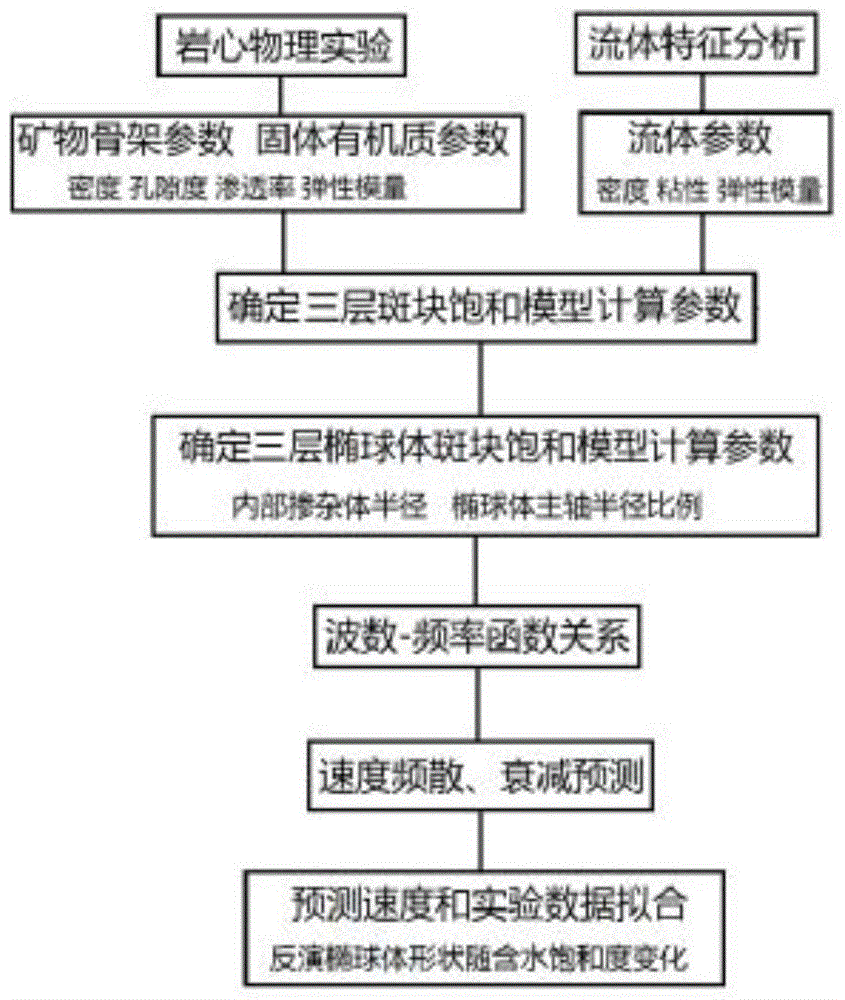
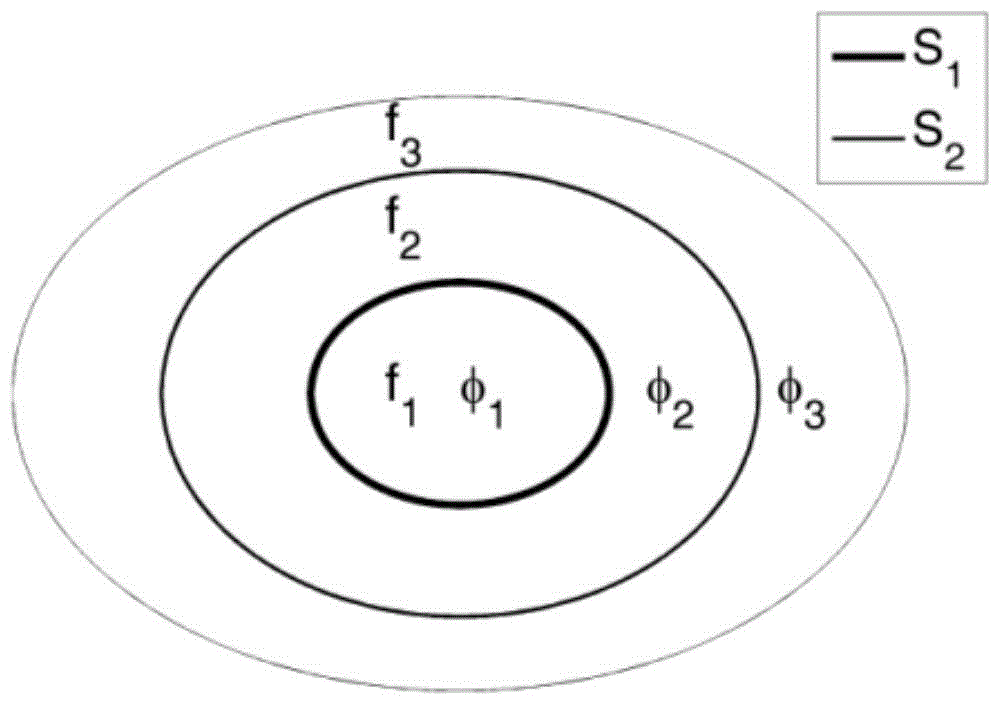
The invention provides a rock longitudinal wave speed prediction method based on an ellipsoid double porosity model. The method comprises the following steps: rock physical parameters are obtained by acquiring well-logging data and experimental observation data, and a dry skeleton model and a porosity fluid model of the rock are generated; a double porosity medium ellipsoid plaque saturation model is established, the potential energy / kinetic energy of the porosity medium and kinetic energy and dissipative equation of the fluid in an inner embedded body are calculation, an Lagrange equation system is derived, and the longitudinal wave and transverse wave speeds are solved; according to the plane wave analysis method, the dispersion relationship of the wave equations is obtained, and the longitudinal wave speed dispersion and attenuation computational formula is obtained. According to the invention, the rock longitudinal wave speed prediction accuracy can be improved.
Description
technical field [0001] The invention relates to a method for predicting velocity dispersion and attenuation in the field of seismic rock physics, in particular to a method for predicting compressional wave velocity of a patch model of a porous medium containing an ellipsoidal non-uniform doped body / fluid saturated region. Background technique [0002] In recent years, with the rapid development of industry and the increasing demand for oil and gas resources, finding new resources and exploring oil areas has become our primary goal. With the large-scale exploitation of oil and gas resources, the underground oil is in a state of "highly dispersed overall and relatively enriched locally", which brings great difficulties to the exploitation. This puts forward higher requirements for exploration technology, and it is necessary to improve the resolution of acoustic wave exploration to provide a basis for optimal well location deployment. Using acoustic waves to trap oil and gas r...
Claims
the structure of the environmentally friendly knitted fabric provided by the present invention; figure 2 Flow chart of the yarn wrapping machine for environmentally friendly knitted fabrics and storage devices; image 3 Is the parameter map of the yarn covering machine
Login to View More
Application Information
Patent Timeline
Application Date:The date an application was filed.
Publication Date:The date a patent or application was officially published.
First Publication Date:The earliest publication date of a patent with the same application number.
Issue Date:Publication date of the patent grant document.
PCT Entry Date:The Entry date of PCT National Phase.
Estimated Expiry Date:The statutory expiry date of a patent right according to the Patent Law, and it is the longest term of protection that the patent right can achieve without the termination of the patent right due to other reasons(Term extension factor has been taken into account ).
Invalid Date:Actual expiry date is based on effective date or publication date of legal transaction data of invalid patent.



 Login to View More
  Login to View More