
Method for recognizing rotor crack fault of steam turbine generator unit
A technology for steam turbine generator set and rotor cracks, which is applied in the field of diagnosing crack faults and identifying rotor crack faults of steam turbine generator sets, and can solve problems that affect the accuracy of flaw detection results of flaw detection instruments, are difficult to detect on-site flaw detection, and affect the safe operation of units, etc. , to achieve the effect of preventing catastrophic accidents, avoiding huge economic losses, and avoiding deviations
Patent Information
- Authority / Receiving Office
- CN · China
- Patent Type
- Applications(China)
- Current Assignee / Owner
- Publication Date
- 2014-11-05
- Estimated Expiration
- Not applicable · inactive patent
Smart Images
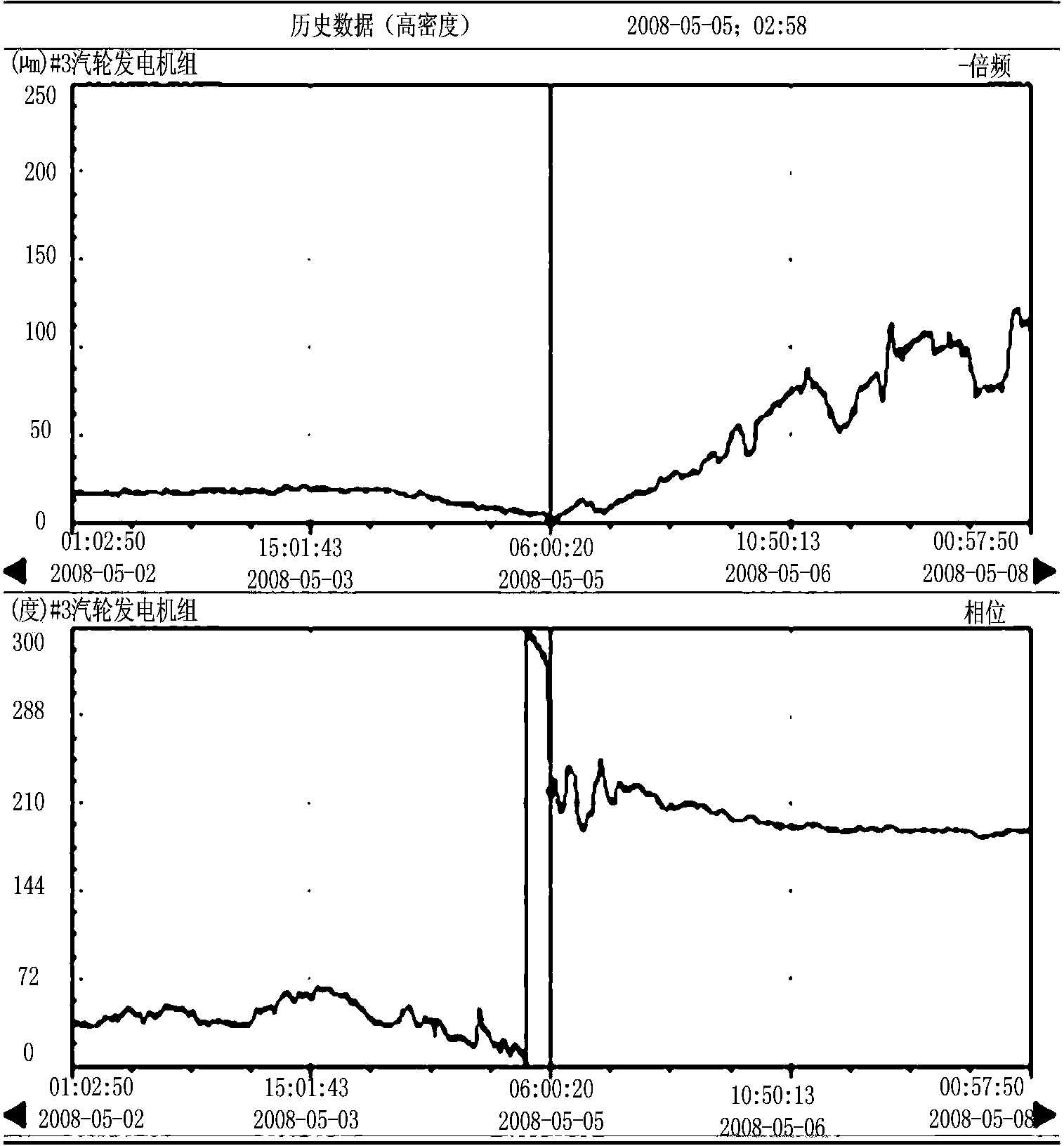
Figure 1 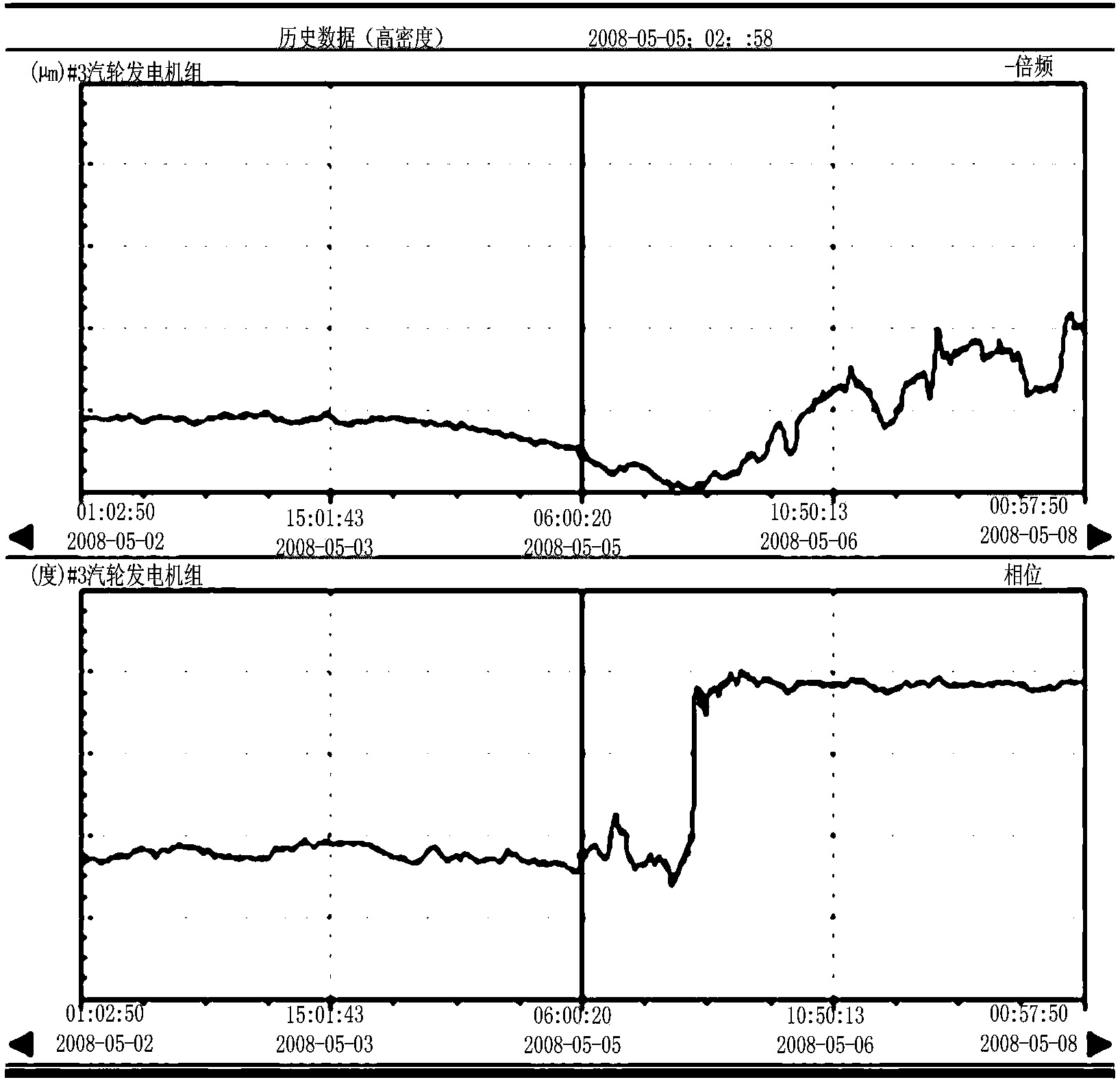
Figure 2 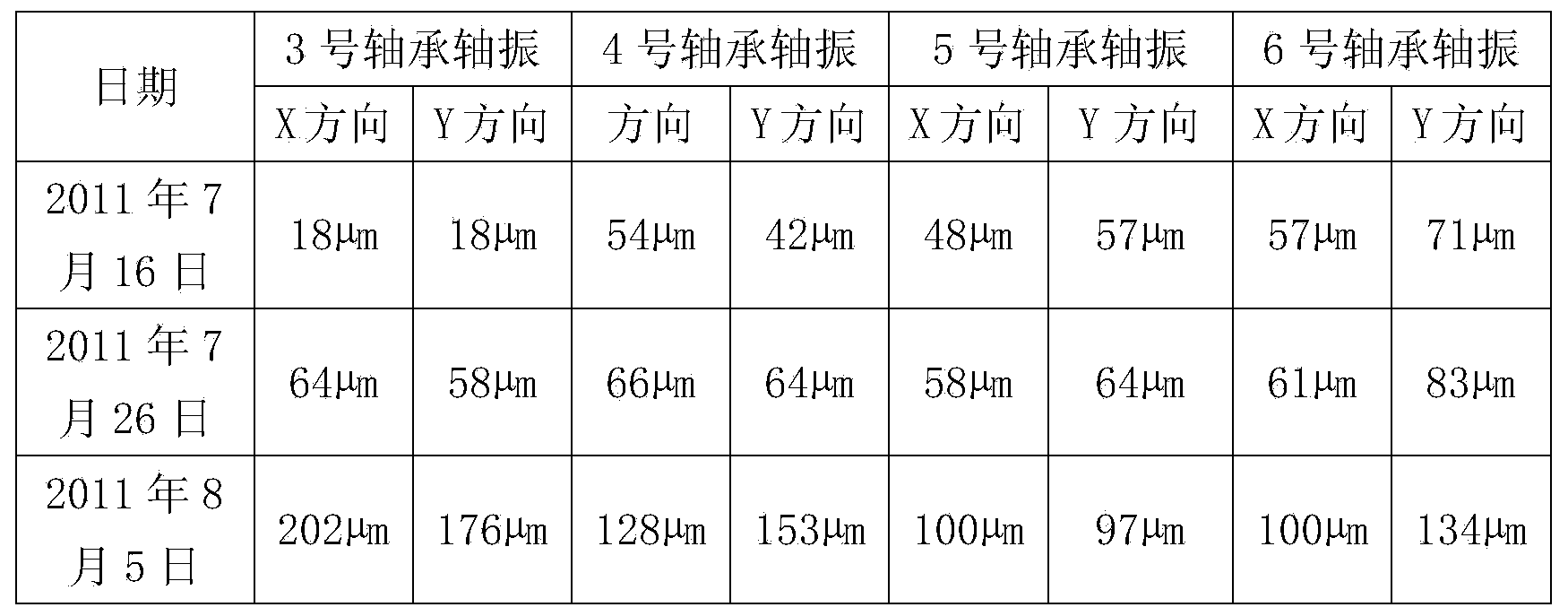
Figure 3
Abstract
Description
technical field
[0001] The invention belongs to the technical field of fault diagnosis of rotating mechanical equipment, and relates to a method for diagnosing crack faults, in particular to a method for identifying crack faults in the rotor of a steam turbine generator set. Background technique
[0002] Rotor cracks are major faults that threaten the safe and stable operation of rotating machinery such as turbogenerators. If it is not discovered in time, when the rotor crack develops to the final stage, it will lead to a catastrophic shaft breaking accident during the operation of the unit, resulting in huge economic losses and bad social impact. The current method of detecting rotor cracks is usually to conduct ultrasonic, magnetic particle and infrared flaw detection inspections on the rotor during the overhaul of the unit. If cracks appear on the surface of the rotor, the existing cracks can generally be detected by these conventional flaw detection methods. However, i...
Examples
Embodiment 1
[0026] Since May 6, 2008 in a subcritical 600MW unit, the vibration of two bearings of the generator has climbed from the vibration trend. The vibration characteristics are as follows: (1) The vibration has nothing to do with the sealing oil temperature, hydrogen temperature and hydrogen pressure; (2) The vibration has nothing to do with the excitation current; (3) The vibration is related to the active load, the active load increases, the vibration increases, but even if the active load decreases, the vibration base continues to increase; (4) The vibration is mainly 1 times the frequency component ; (5) When the shaft vibration of No. 7 bearing and No. 8 bearing increases, the tile vibration also increases synchronously, but the shaft vibration and tile vibration of No. 6 bearing decrease; (6) When the vibration is at a high level, the controllable series compensation of the power grid exits During operation, the axial vibration of the No. 7 bearing in the X and Y directions d...
Embodiment 2
[0031] Referring to Table 1, the vibration of the two low-pressure rotors of a supercritical 660MW steam turbine has always been good. However, after July 18, 2011, it was found that the shaft vibration of the No. 3 bearing showed an increasing trend. Before the unit shut down on August 5, the maximum Shaft vibration has reached above 200μm.
[0032] Table 1
[0033]
[0034] The vibration of this unit is mainly in the 1-fold frequency component, and the vibration change is shown as a small increase in the shaft vibration of the No. The vibration exceeds 80μm, but when it passes near the low-pressure critical speed during shutdown, the shaft vibration of No. 3-6 bearings is very small, and the maximum does not exceed 75μm, and at low speed (about 300r / min) the journal of No. 3-6 bearings shakes The shaft vibration of the No. 3 bearing has a strong correlation with the steam seal system. When the desuperheating water is put in, the vibration will rise rapidly. In this case,...