
Artificial emasculation and hybrid control pollination method of robinia pseudoacacia L.
A technology for artificial emasculation and control of pollination, applied in the fields of botanical equipment and methods, plant genetic improvement, application, etc., can solve the problems of artificial pollination, low seed setting rate, natural seed setting rate, limited success rate of locust breeding, flower damage, etc. The effect of improving pollination seed setting rate, natural seed setting rate and success rate
- Summary
- Abstract
- Description
- Claims
- Application Information
AI Technical Summary
Problems solved by technology
Method used
Image

Examples
Embodiment 1
[0043] The invention provides a method for artificial detasseling and hybridization control pollination of Robinia pseudoacacia, comprising the following steps:
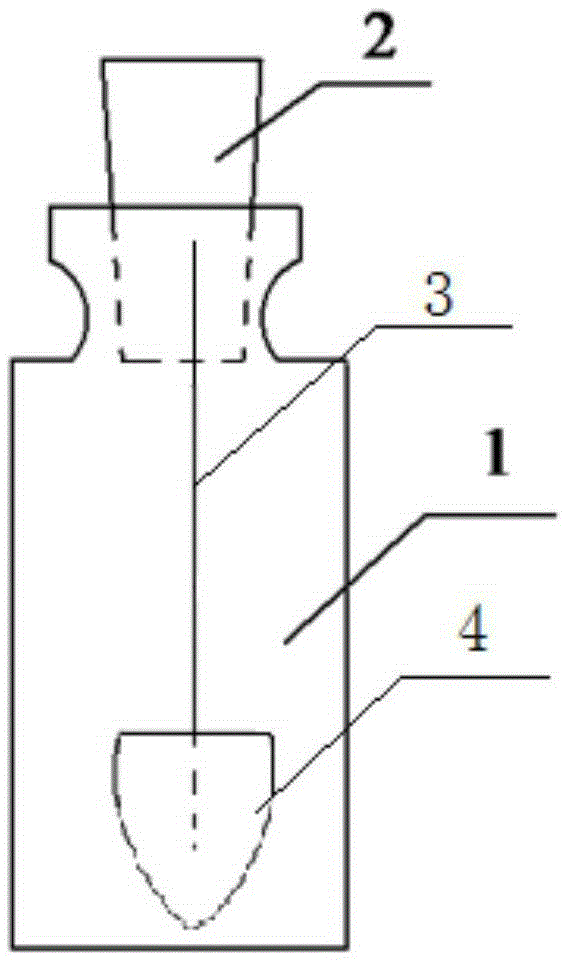
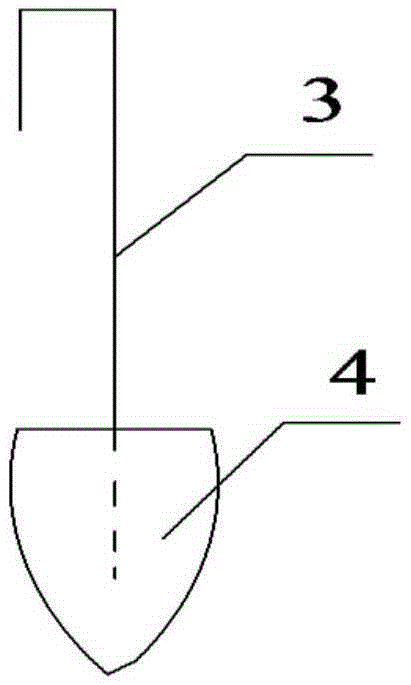
[0044] (1) Make a pollinator: Cut the rubber 4 into a cylinder with a length of 2 cm and a diameter of 1 cm, sharpen one end for sticking pollen, flatten the other end, insert a thin iron wire 3 in the middle, and use it with the glass bottle Rubber bottle stopper 2 connections, the length of the thin iron wire is about 10cm, see figure 1 and figure 2 ; Among them, the height of the glass bottle is 5cm, the diameter is 2cm, and the cylindrical rubber stopper.
[0045] (2) Select the hybrid male parent and female parent plant, and select the robust tree of 6-20 years old in the middle and young forest of Robinia pseudoacacia fine variety that has entered the reproductive growth stage as the hybrid parent plant. Prune the mother tree properly in early spring, thin out the inner hall branches, and cut off the dead b...
Embodiment 2
[0051] The conventional artificial pollination method of Robinia pseudoacacia is to select inflorescences suitable for pollination of the mother plant, emasculate the flowers, cut off the petals in the upper and middle parts of the corolla with scissors, expose the stamens and pistils, then cut off the stamens, or remove the anthers by hand, and dip them in with a brush. A little pollen smears the stigma to pollinate the stigma. After the pollination of the entire inflorescence is complete, bag and hang tags.
experiment example 1
[0053] In 2014, the method of Example 1 was used to form a hybrid combination of different clones of Robinia pseudoacacia, and artificially controlled pollination was implemented. The result was that the seed setting rate of the Luci 57×Xingci 15 hybrid combination was 21.28%, and the seed setting rate of Xingci 1×Luci 68 was 16.82%, and that of Luci 152×Jinci 4 was 13.05%. See Table 1.
PUM
| Property | Measurement | Unit |
|---|---|---|
| Length | aaaaa | aaaaa |
Abstract
Description
Claims
Application Information
 Login to View More