
2',7'-dichlorofluorescein and application of derivative thereof in protein detection
A dichlorofluorescein and protein detection technology, which is applied in the preparation of test samples, measuring devices, sampling, etc., can solve the problems of poor mass spectrometry compatibility, cumbersome operation, and poor reproducibility, achieving good reproducibility and simple operation Fast, low-cost results
Active Publication Date: 2017-01-04
WENZHOU MEDICAL UNIV
View PDF3 Cites 1 Cited by
- Summary
- Abstract
- Description
- Claims
- Application Information
AI Technical Summary
Problems solved by technology
Although many new staining techniques have been developed in recent years, there are still one or several disadvantages as follows: low sensitivity, poor reproducibility, high toxicity, poor compatibility with mass spectrometry, high price, cumbersome operation, etc.
Method used
the structure of the environmentally friendly knitted fabric provided by the present invention; figure 2 Flow chart of the yarn wrapping machine for environmentally friendly knitted fabrics and storage devices; image 3 Is the parameter map of the yarn covering machine
View moreImage
Smart Image Click on the blue labels to locate them in the text.
Smart ImageViewing Examples

Examples
Experimental program
Comparison scheme
Effect test
Embodiment 12
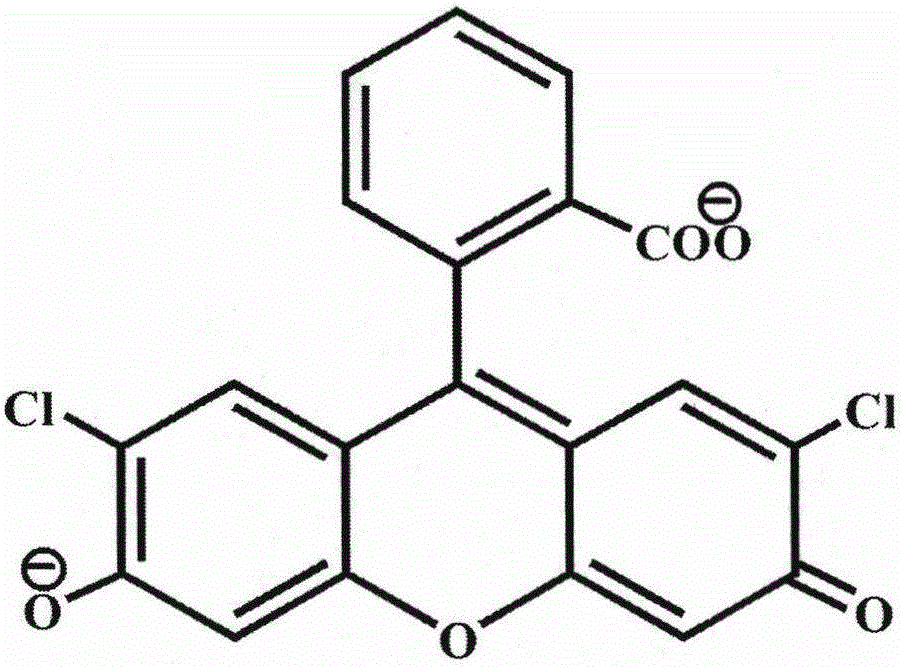
[0026] Example 12', 7'-dichlorofluorescein negative staining
[0027] figure 1 is the chemical structural formula of 2',7'-dichlorofluorescein.
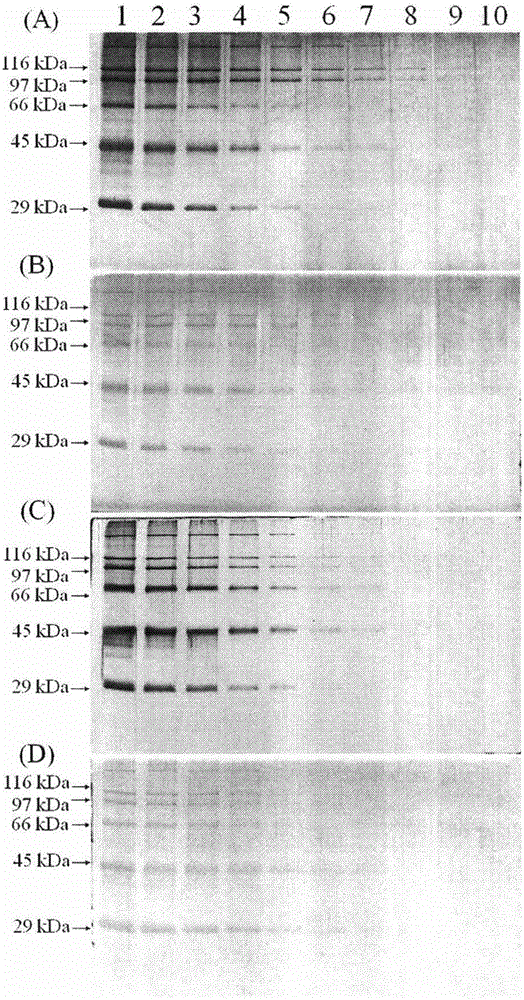
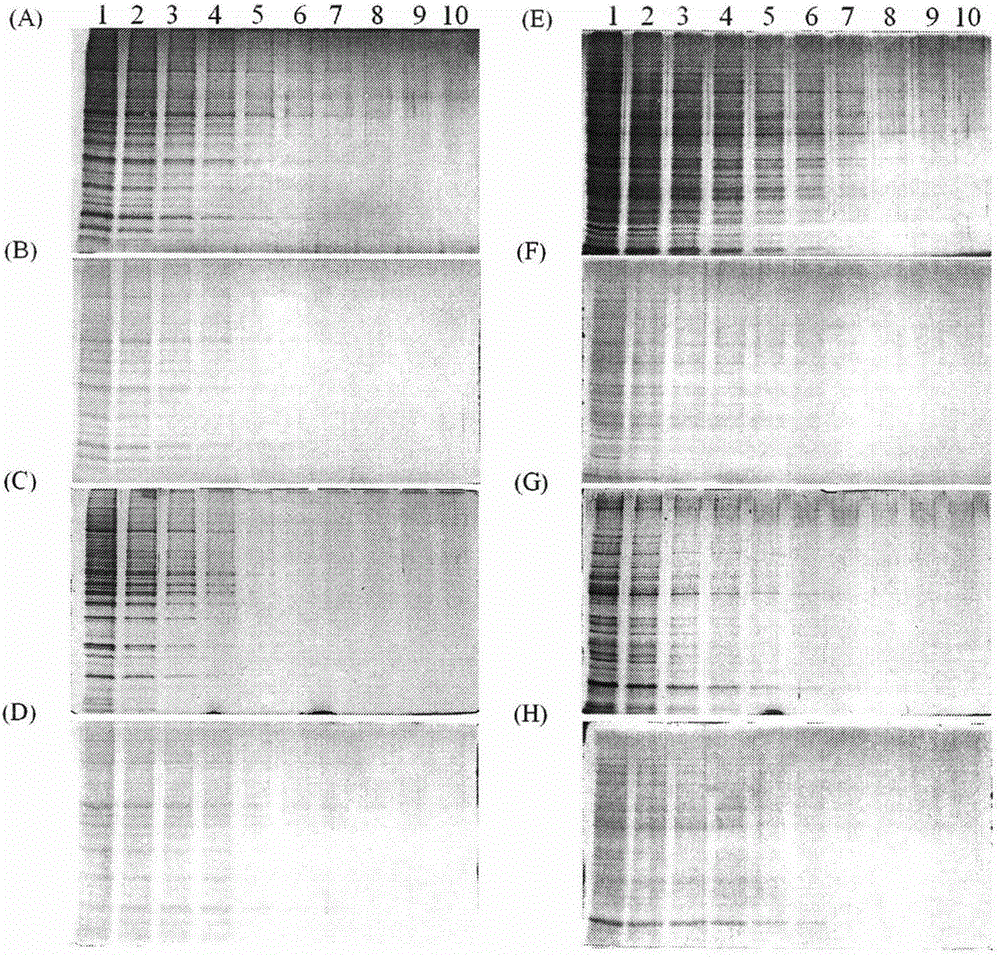
[0028] Figure 2-5 The 2′,7′-dichlorofluorescein protein negative staining experiment was performed using the following steps:
[0029] 1) The gel after electrophoresis was stained in 0.3% 2',7'-dichlorofluorescein / 0.1% sodium carbonate / 50% methanol staining solution for 10 min.
[0030] 2) Discard the staining solution, and develop for 2 minutes in a developing solution of 1.4% citric acid / 1% trisodium citrate (pH=4).
[0031] 3) After gel staining, scan in reverse scanning mode on Epson V700 scanner.
the structure of the environmentally friendly knitted fabric provided by the present invention; figure 2 Flow chart of the yarn wrapping machine for environmentally friendly knitted fabrics and storage devices; image 3 Is the parameter map of the yarn covering machine
Login to View More PUM
 Login to View More
 Abstract
The invention relates to a protein negative staining detection technology, in particular to 2',7'-dichlorofluorescein and application of a derivative thereof in protein negative staining detection. The invention further provides a method for performing protein negative staining detection by applying the 2',7'-dichlorofluorescein. The method comprises the steps that direct dyeing is performed after protein gel electrophoresis is finished; then, developing is performed. The 2',7'-dichlorofluorescein has the advantages of being high in sensitivity, easy and rapid to operate, good in reproducibility, good in linear relation, good in mass spectrum compatibility, safe to use, low in cost and the like, an can be well applicable to research on high-throughput proteomics.
Description
technical field [0001] The invention relates to protein negative stain detection technology, in particular to a new negative dye for protein detection. Background technique [0002] In proteomics research, gel protein staining technology is a key technology connecting two-dimensional electrophoresis and downstream mass spectrometry analysis. Current advanced mass spectrometers are capable of analyzing trace proteins at the pg level. Conventional gel protein staining techniques include Coomassie brilliant blue staining, silver staining, and fluorescent staining. The Coomassie Brilliant Blue staining method has low sensitivity, the silver staining method is complicated to operate, has poor compatibility with mass spectrometry, and the fluorescent staining method is expensive. These factors seriously restrict the development of high-throughput proteomics. Although many new staining techniques have been developed in recent years, there are still one or several disadvantages a...
Claims
the structure of the environmentally friendly knitted fabric provided by the present invention; figure 2 Flow chart of the yarn wrapping machine for environmentally friendly knitted fabrics and storage devices; image 3 Is the parameter map of the yarn covering machine
Login to View More Application Information
Patent Timeline
 Login to View More
 IPC IPC(8): G01N1/30G01N27/447
CPCG01N1/30G01N27/447G01N2001/302
Inventor朱忠欣孙佳郁冬冬陈志伟丛维涛金利泰
OwnerWENZHOU MEDICAL UNIV