
Three-dimensional Trajectory Tracking Control Method for Underactuated Auv Based on Biological Velocity Regulation
A technology of speed adjustment and three-dimensional trajectory, which is applied in non-electric variable control, vehicle position/route/height control, attitude control, etc., and can solve problems such as parking, limited practical application value, and reduced system control performance
- Summary
- Abstract
- Description
- Claims
- Application Information
AI Technical Summary
Problems solved by technology
Method used
Image

Examples
Embodiment Construction
[0069] The following examples describe the present invention in more detail.
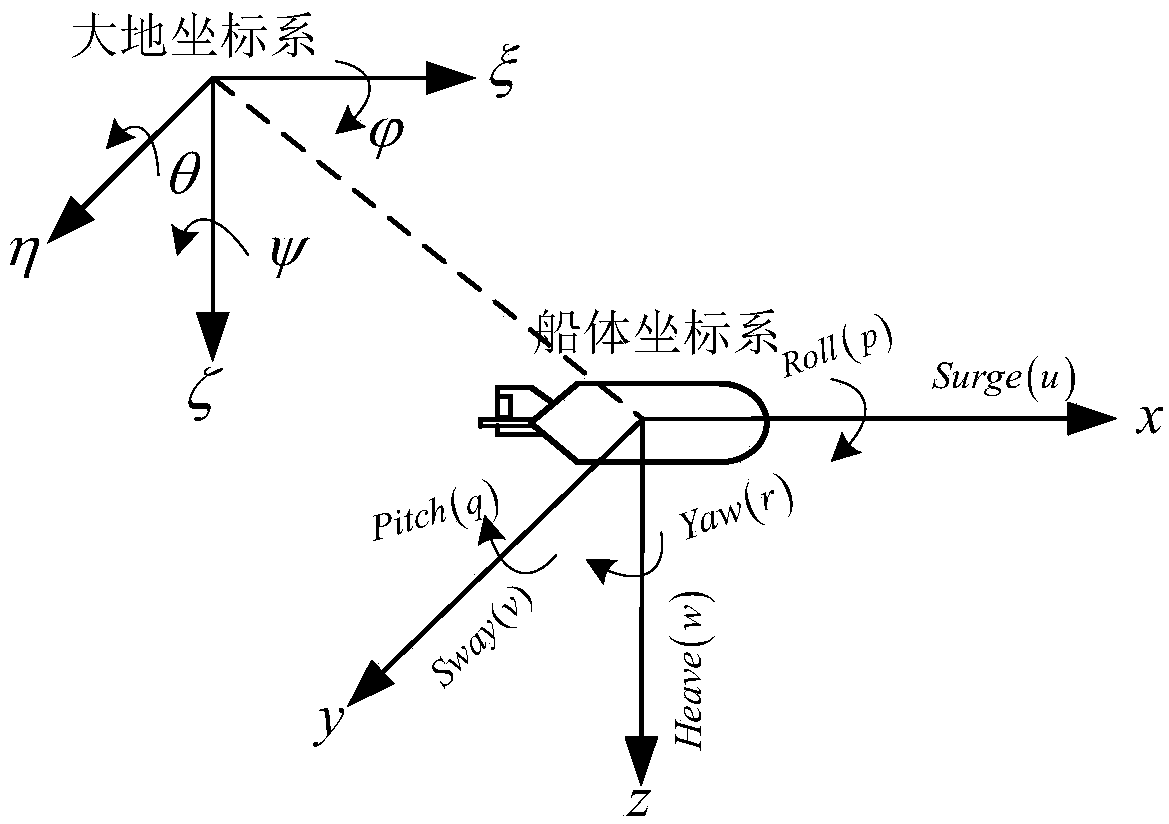
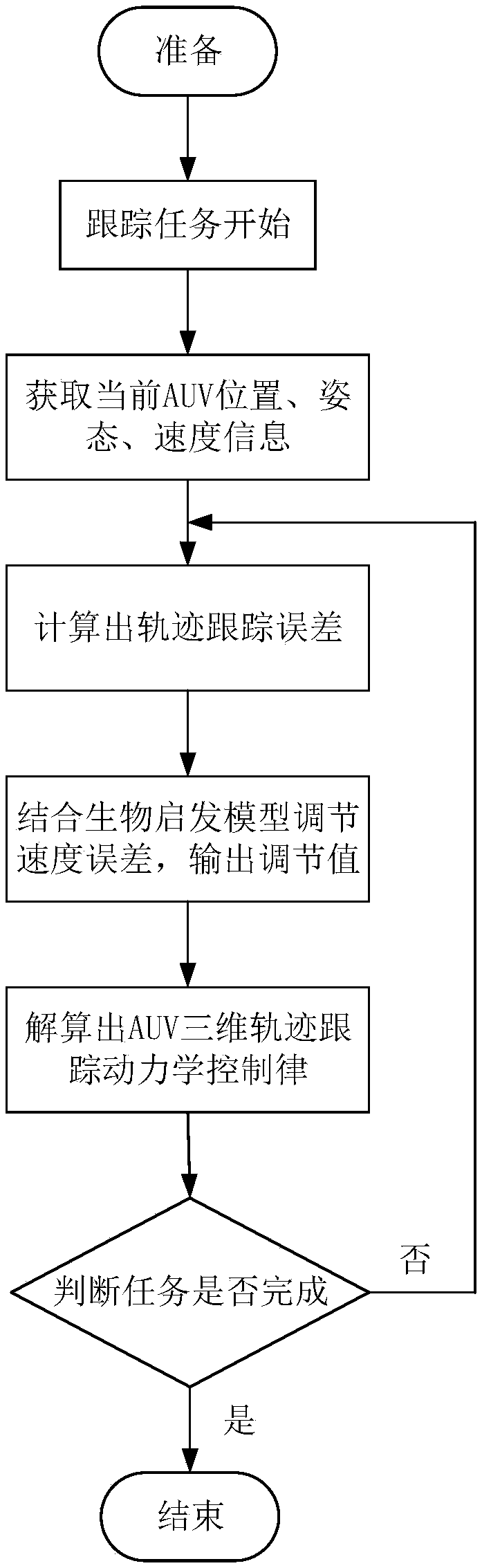
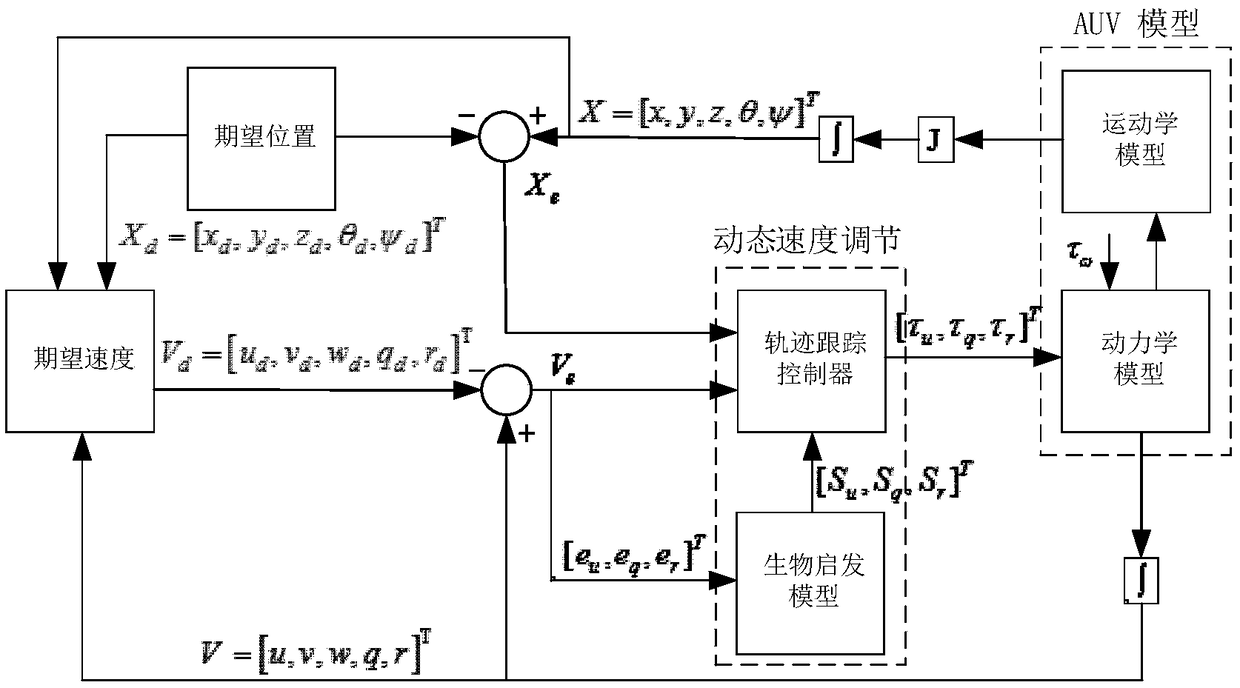
[0070] In step 1, the AUV gives the expected trajectory position information to the AUV according to the current task, and collects data through the equipped navigation equipment and sensors to obtain the current position X(t)=[x(t),y(t),z (t)] T Information, attitude [θ(t), ψ(t)] T Information, speed V(t)=[u(t),v(t),ω(t),q(t),r(t)] T information.
[0071] Then AUV obtains the initial position X(t)=[x(t),y(t),z(t)] in the ground coordinate system T , AUV initial heading angle ψ(t), pitch angle θ(t), AUV initial longitudinal velocity u r (t), lateral velocity v r (t) and yaw rate r(t), and given the desired trajectory position X d (t)=[x d (t),y d (t),z d (t)] T .
[0072] In step 2, the information in step 1 is used to calculate the position error between the actual trajectory and the expected trajectory and the expected attitude through the mathematical model of the underactuated AUV and...
PUM
 Login to View More
 Abstract
Description
Claims
Application Information
 Login to View More