Carbon emission space configuration method based on resource environmental element coupling analysis

A technology of environmental elements and coupled analysis, applied in the field of carbon emission spatial allocation based on the coupled analysis of resources and environmental elements, can solve problems such as immature technology, scattered planning and management, and difficulty in forming a sustainable development system.

CN108109073AInactive Publication Date: 2018-06-01江苏省信息中心
5 Cites 5 Cited by

Patent Information

Authority / Receiving Office
CN · China
Current Assignee / Owner
Publication Date
2018-06-01
Estimated Expiration
Not applicable · inactive patent

Smart Images

  • Figure 1
    Figure 1
  • Figure 2
    Figure 2
  • Figure 3
    Figure 3
Patent Text Reader

Abstract

The present invention discloses a carbon emission space configuration method based on resource environmental element coupling analysis. The method comprises the following steps of A analyzing an energy consumption system; B carrying out the atmospheric environment capacity constraint configuration; C carrying out the water resource bearing capacity constraint configuration; D carrying out the landresource bearing capacity constraint configuration; E carrying out the carbon emission space configuration on a multi-element coupling condition. By adopting a multi-element coupling and cooperativemanagement technology, the climate, energy and environment problems are planned integrally, and the multiple elements, such as the atmospheric environment capacity, the land resources, the water resources, etc., are coupled, thereby realzing the resource planning and control of the carbon emission space. Moreover, by bringing the carbon emission space resources in the scope of the natural resourceplanning and management, and establishing a resource bearing capacity monitoring and evaluating technical system under a view angle of the carbon emission space, an allocation technology and method of the carbon emission space is realized under the frame of the Paris climate agreement and the new situation promised by the carbon emission peak of China in 2030.
Need to check novelty before this filing date? Find Prior Art

Description

technical field

[0001] The present invention relates to a carbon emission allocation method, and more specifically, the present invention mainly relates to a carbon emission space allocation method based on coupling analysis of resource and environment elements. Background technique

[0002] At present, technologies related to carbon emission space allocation mainly include carbon emission space allocation technology, carbon emission monitoring and quantification technology, carbon emission optimization dispatching and control technology, among which the carbon emission space allocation technology is the emission rights allocation method at the national level , with the global warming target control as the bottom line, combined with the development stage, population, economy, emission history and emission status of countries and regions to determine the carbon emission space, there are many such models and methods. The second is the allocation of emission space at the region...

Examples

Embodiment Construction

[0061] The present invention will be further elaborated below in conjunction with the accompanying drawings.

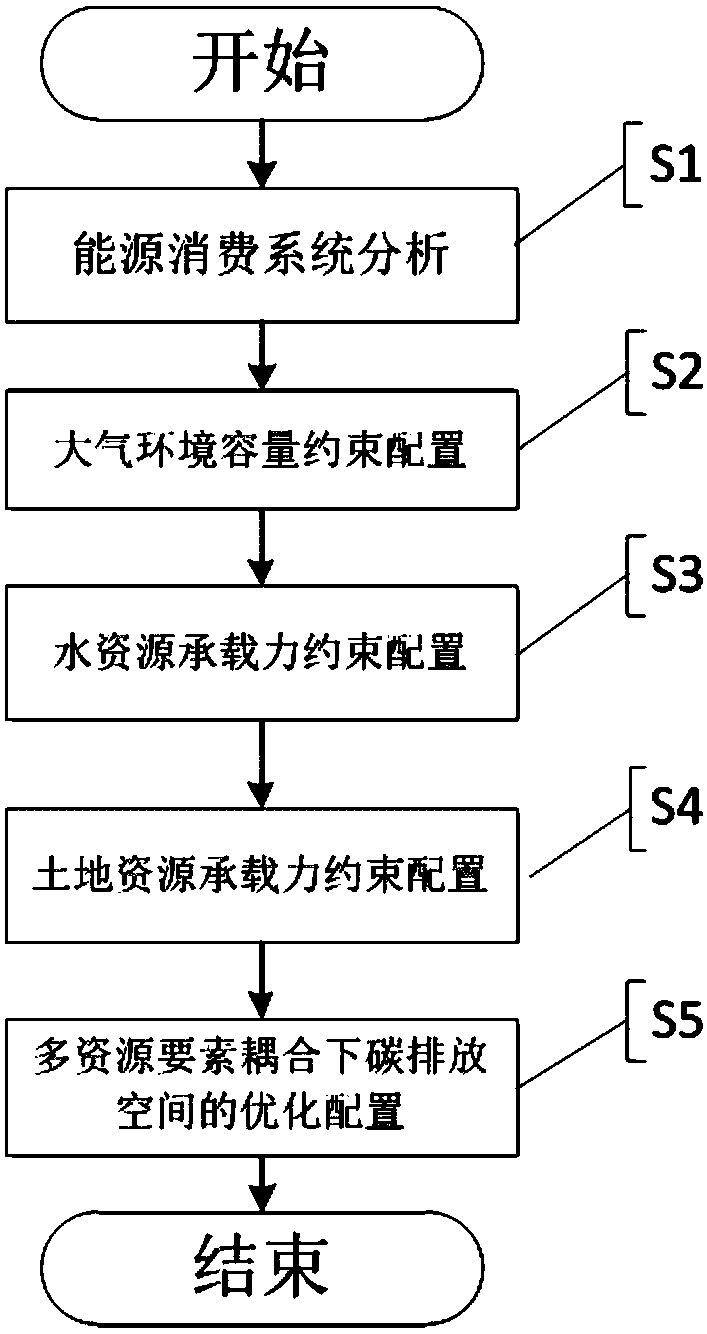
[0062] refer to figure 1 As shown, one embodiment of the present invention is a carbon emission spatial allocation method based on the coupled analysis of resource and environment elements. Generally speaking, this method needs to be executed by a computer, that is, the method should generally be embodied as computer software. Specifically, The method includes and is preferably performed according to the following steps:

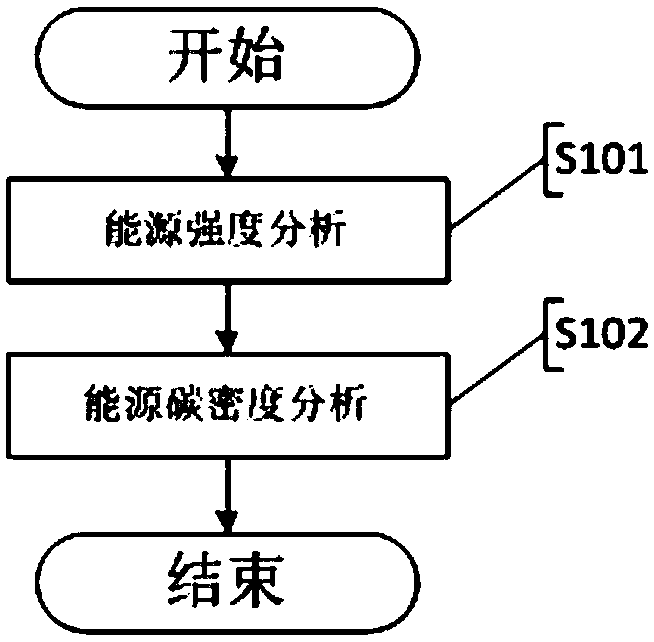
[0063] Step S1, analyze the energy consumption system, and draw the thematic map of energy consumption intensity and energy carbon density as a result;

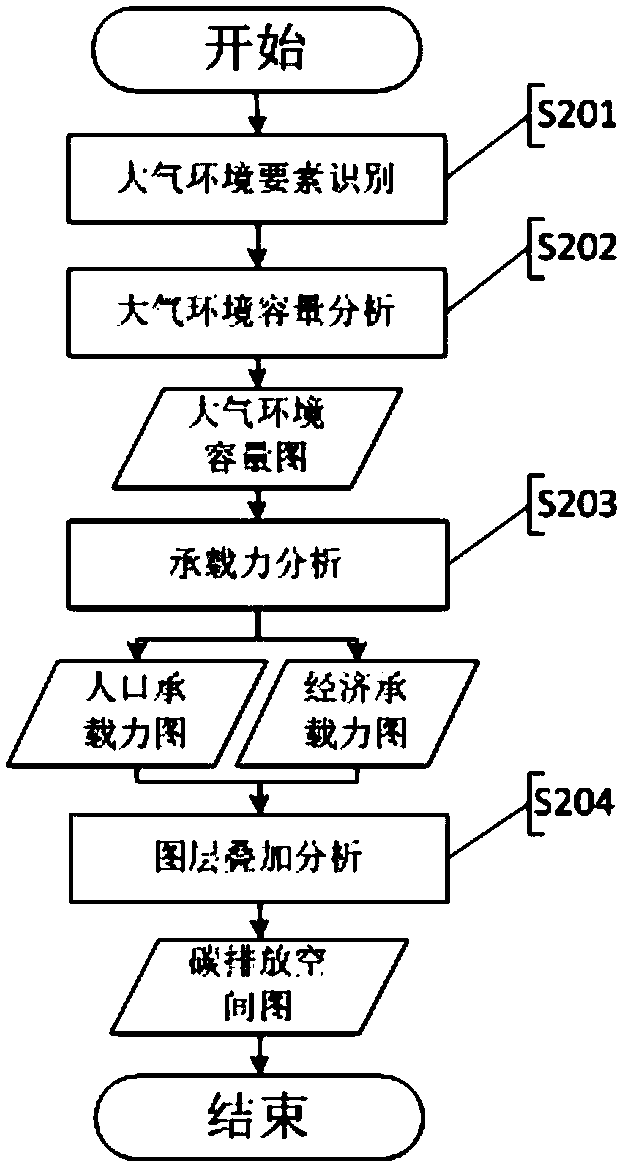
[0064] Step S2, configuration of atmospheric environmental capacity constraints, based on the population environmental capacity and economic environmental capacity of air pollutants, the result is the carbon emission space under the constraints of atmospheric environmental capacity conditions;

...