A user activity and multi-user joint detection method

A joint detection and multi-user technology, applied in the direction of climate sustainability, use of forward error control, advanced technology, etc., can solve the problem of inaccurate joint detection results and achieve the effect of improving performance accuracy and computing efficiency

CN113067667BActive Publication Date: 2022-05-20深圳市鑫悦汇网络科技有限公司
6 Cites 0 Cited by

Patent Information

Authority / Receiving Office
CN · China
Patent Type
Patents(China)
Current Assignee / Owner
Publication Date
2022-05-20

Smart Images

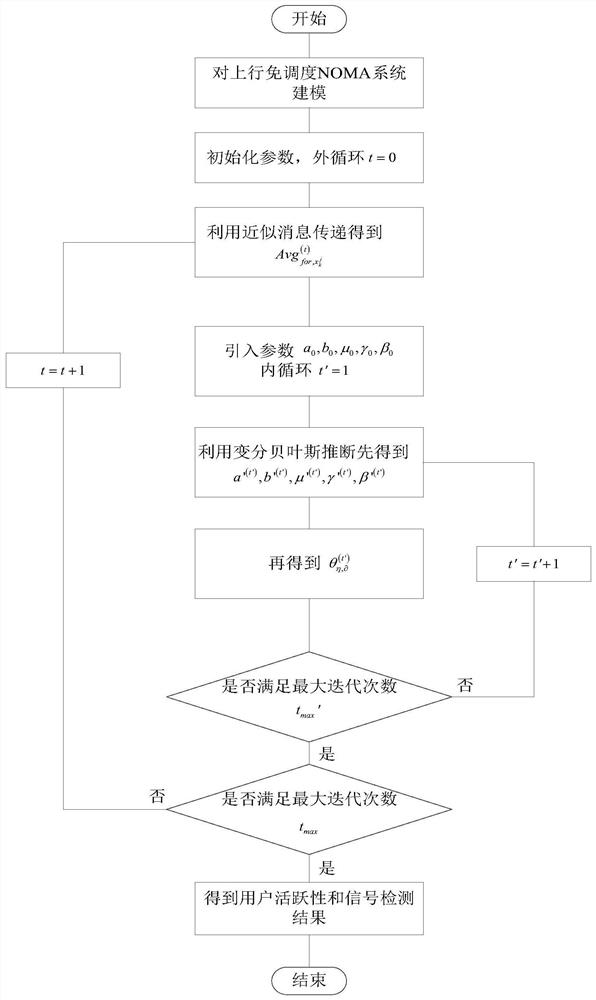
  • Figure 1
    Figure 1
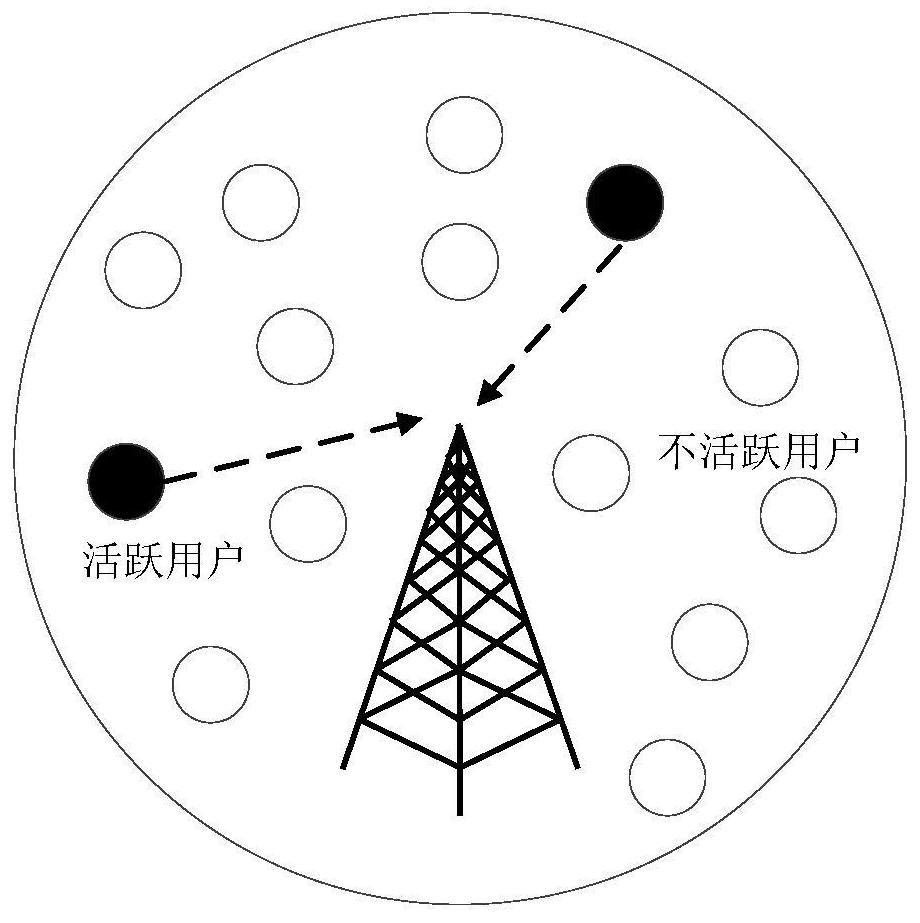
  • Figure 2
    Figure 2
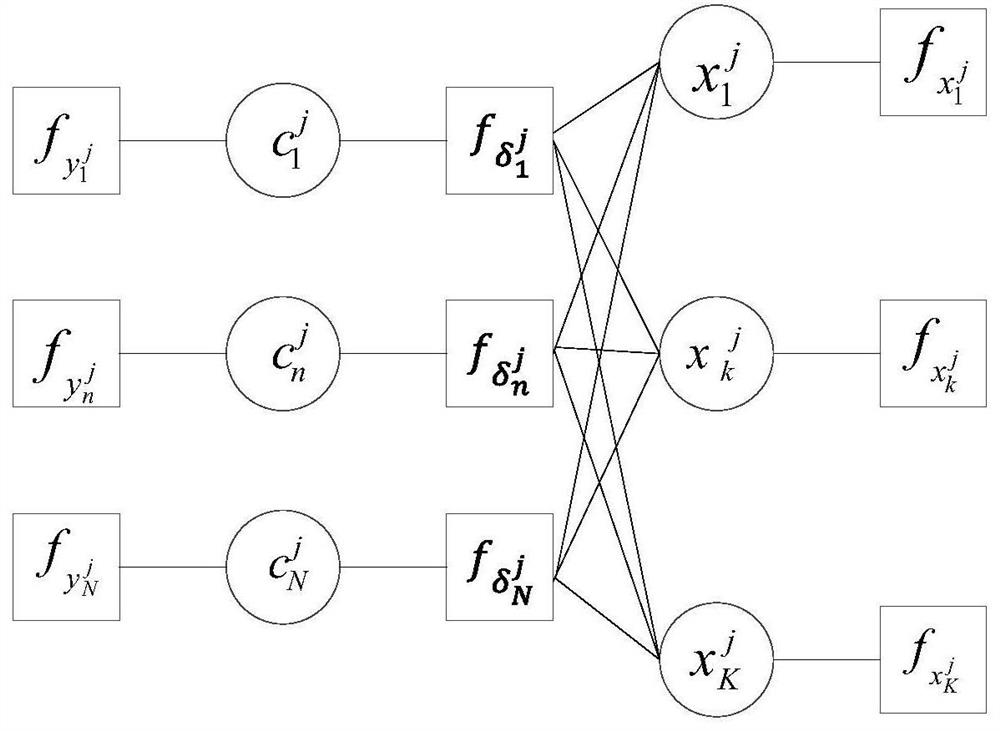
  • Figure 3
    Figure 3
Patent Text Reader

Abstract

The invention discloses a user activity and multi-user joint detection method. According to the Bayesian theorem, the matrix formed by the signals received by the base station on all sub-carriers of all time slots is obtained under the condition that all users at all times are known. The probability of the matrix formed by the symbols transmitted on the slot is introduced into the factor graph, and the factor graph model is obtained according to the relationship between the variables and the factors; on the basis of the factor graph model, the user activity and multi-user are jointly detected. During the joint detection process Approximate message passing algorithm and variational Bayesian inference algorithm are adopted; the advantage is that it can perform user activity and multi-user joint detection without knowing user sparsity; it combines approximate message passing algorithm and variational Bayesian inference algorithm The advantage of using Bayesian thinking is to introduce structured prior knowledge in the form of prior probability, which improves the performance accuracy of joint detection.
Need to check novelty before this filing date? Find Prior Art

Description

technical field

[0001] The invention relates to a joint detection technology, in particular to a user activity and multi-user joint detection method applied in an uplink scheduling-free non-orthogonal multiple access system. Background technique

[0002] With the development of mobile communication, multiple access technology, as the key technology of each generation of mobile communication system, has undoubtedly become one of the research hotspots of many scholars. With the increase in the number of users, in order to achieve the goal of being able to communicate in any form at any time, any place, mobile communication has undergone technological innovations again and again. To sum up, from the first generation mobile communication system to the fourth generation mobile communication system all use orthogonal multiple access technology. However, on the one hand, theoretical studies have shown that the orthogonal multiple access technology cannot always achieve the maximum...

Examples

Embodiment Construction

[0034] The present invention will be further described in detail below in conjunction with the accompanying drawings and embodiments.

[0035] A user activity and multi-user joint detection method proposed by the present invention, its overall realization block diagram is as follows figure 1 As shown, it includes the following steps:

[0036] Step 1: If figure 2As shown, in the uplink scheduling-free non-orthogonal multiple access system, it is assumed that there is only one base station configured with a single antenna on the base station side, and there are K users configured with a single antenna on the user side; in the uplink scheduling-free non-orthogonal multiple access system In the orthogonal multiple access system, considering the channel coding factor, each user transmits symbols on J time slots, and the base station receives signals on N subcarriers of each time slot, and the k-th user at the j-th time The symbols emitted on the slot are denoted as Denote the ...