

Stator assembly, motor and air conditioner
A component and stator technology, applied in the direction of electric components, windings, electrical components, etc., can solve the problems of small flow of cooling medium, poor cooling effect, and increase of local magnetic density, so as to ensure effective cooling, ensure cooling effect, and prevent iron The effect of consumption surge
- Summary
- Abstract
- Description
- Claims
- Application Information
AI Technical Summary
Problems solved by technology
Method used
Image

Examples
Embodiment Construction
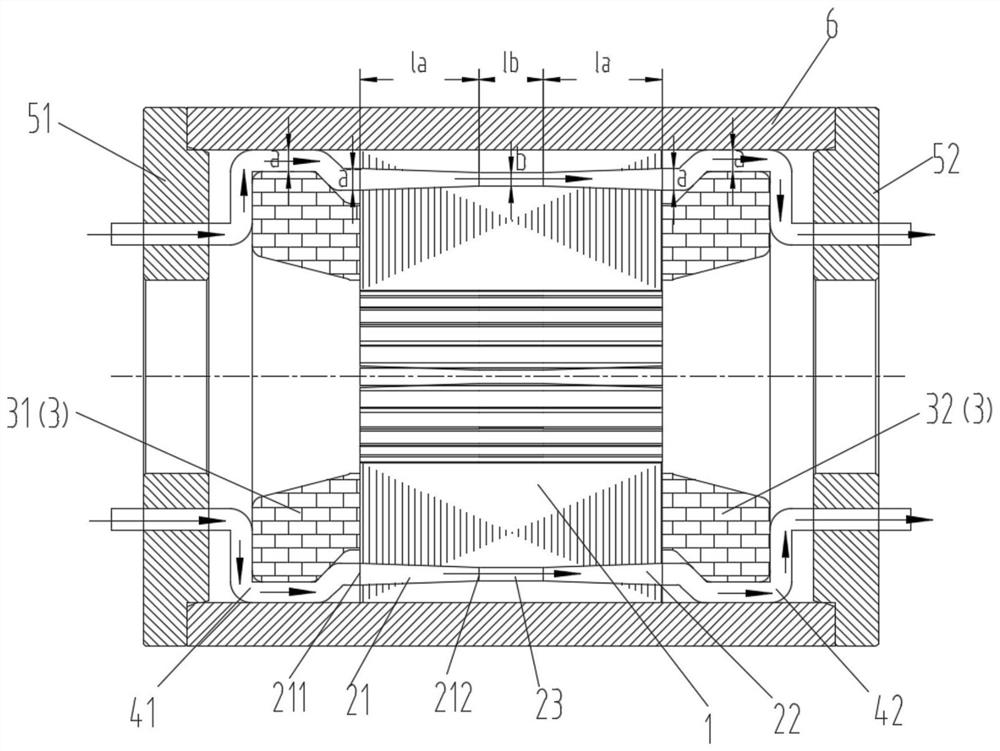
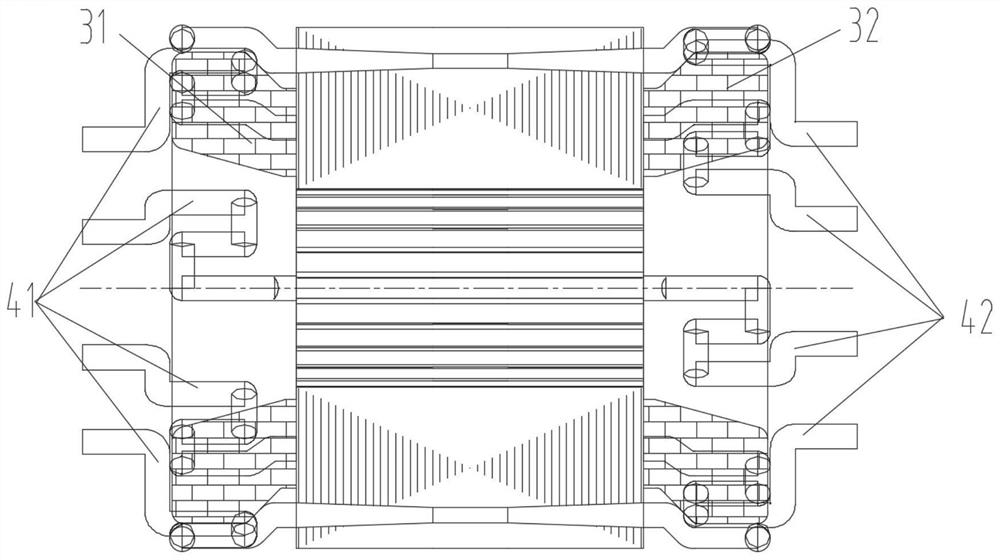
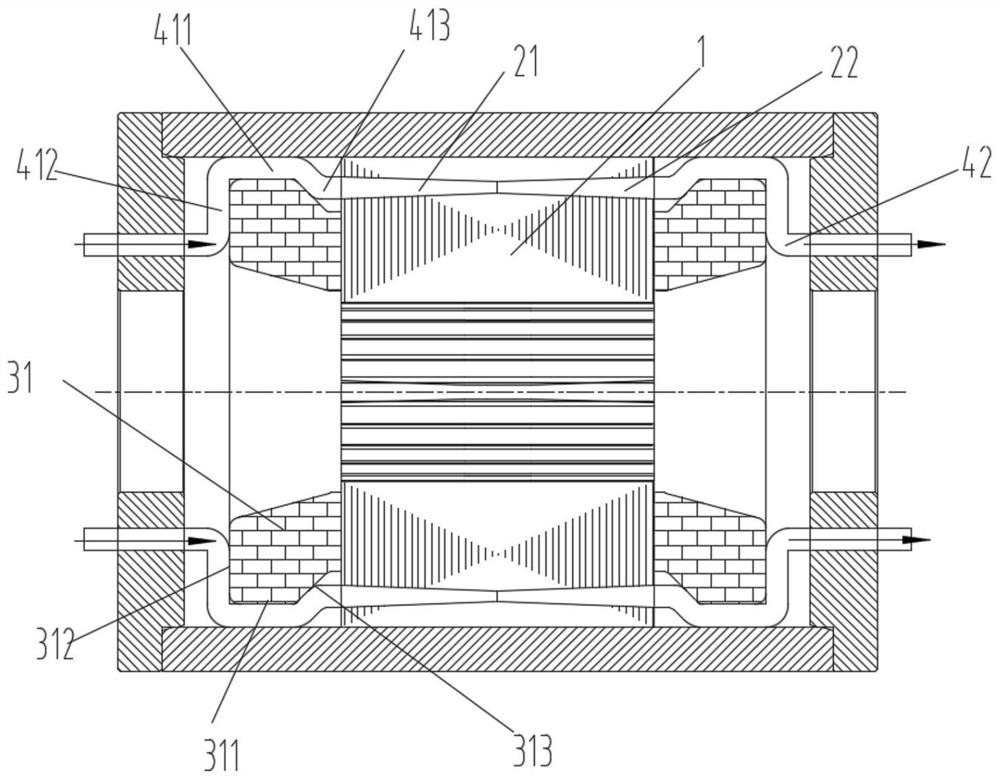
[0024] see in conjunction Figure 1 to Figure 3 As shown, according to an embodiment of the present invention, a stator assembly is provided, including a stator core 1, the yoke of the stator core 1 is configured with a plurality of cooling channels, and the cooling channels include a first flow section 21 , along the axial direction of the stator core 1, the area of the radial section of the first flow section 21 decreases gradually (specifically, for example, a conical hole). The first flow section 21 in this technical solution is no longer the same radial cross-sectional area along the axial direction of the stator core 1 as in the prior art, but a design with reduced area, that is, the first flow section The radial cross-sectional area of one end of 21 is larger than the radial cross-sectional area of the other end. In this way, in the area where the radial cross-sectional area of the first flow section 21 is small, that is, the opening of the stator core 1 is smal...
PUM
 Login to View More
 Abstract
Description
Claims
Application Information
 Login to View More