Intelligent textile industry electromechanical device capable of removing static electricity and automatically stretching

A textile industry, electromechanical device technology, applied in the field of electromechanical devices in the intelligent textile industry, can solve the problems of no stretching device, lack of static electricity removal device, etc., and achieve the effect of increasing tension

CN114197130AInactive Publication Date: 2022-03-18宁波精英纺织科技有限公司
0 Cites 0 Cited by

Patent Information

Authority / Receiving Office
CN · China
Patent Type
Applications(China)
Current Assignee / Owner
Publication Date
2022-03-18
Estimated Expiration
Not applicable · inactive patent

Smart Images

  • Figure 1
    Figure 1
  • Figure 2
    Figure 2
  • Figure 3
    Figure 3
Patent Text Reader

Abstract

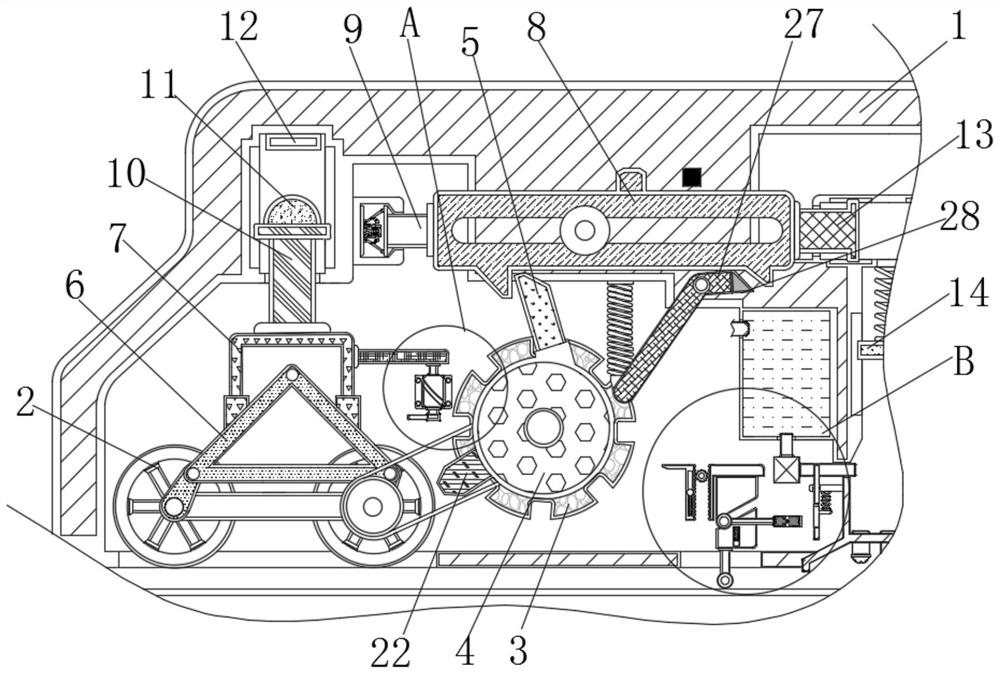
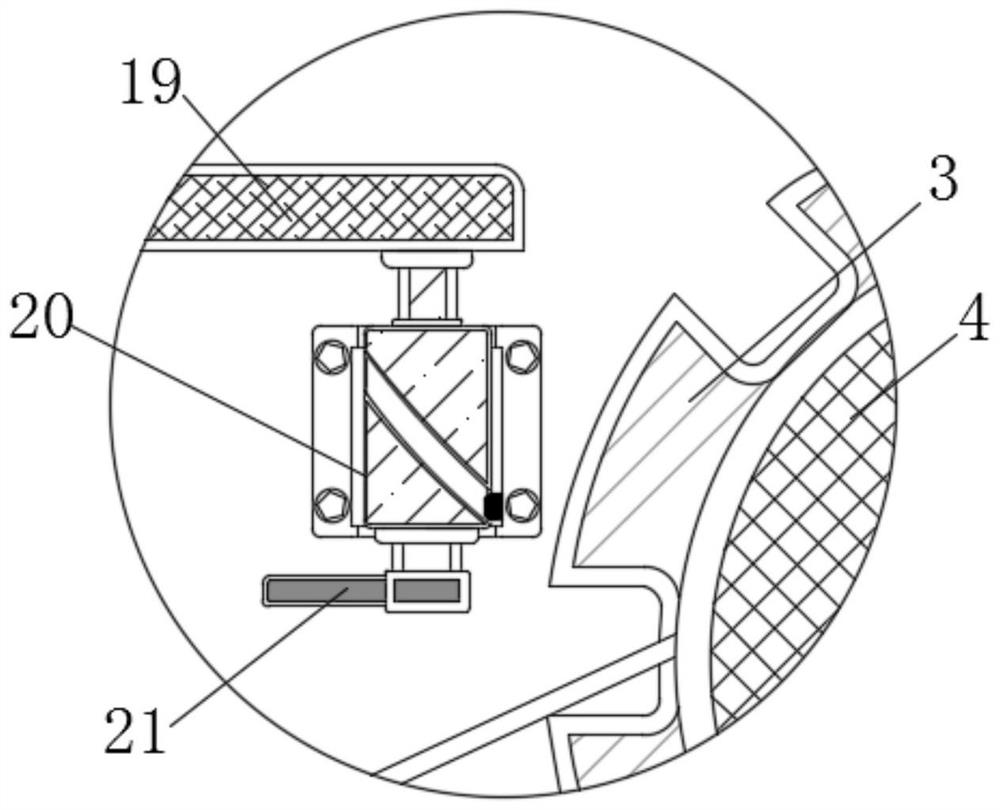
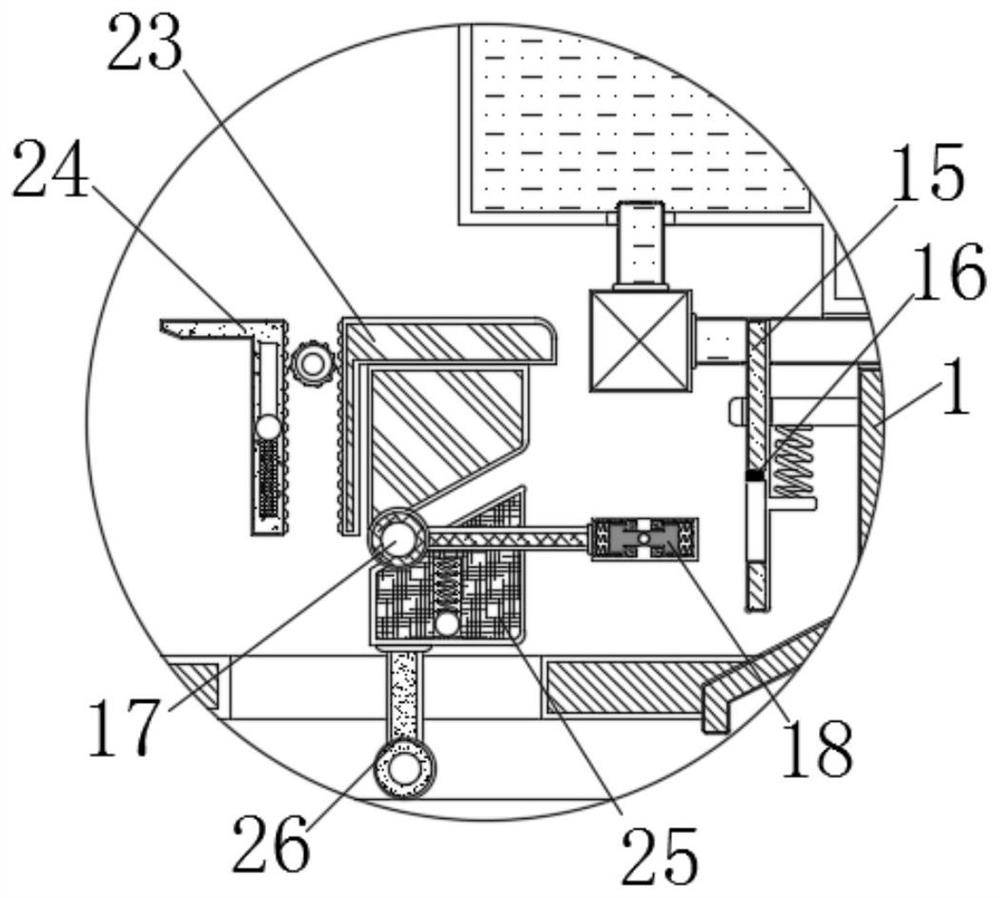
The invention discloses an intelligent textile industry electromechanical device capable of removing static electricity and automatically stretching, the intelligent textile industry electromechanical device comprises a machine shell and rollers, a control wheel is rotatably connected in the machine shell, a notch is formed in the surface of the control wheel, a first stop block corresponds to the notch in the surface of the control wheel, and an adjusting device is rotatably connected to the surface of the control wheel; the upper portion of the rolling wheel is fixedly connected with a connecting rod, and the upper end of the connecting rod is fixedly connected with a second push rod. According to the intelligent textile industry electromechanical device capable of removing static electricity and automatically stretching, a second check block loosens limitation on a first long plate clamping block, a reset device drives a first push block to slide through the first long plate, the first push block drives a sliding block to slide by extruding air, and therefore the first long plates on the two sides are intelligently controlled to slide, and the static electricity is removed; and the sliding block extrudes liquid to be sprayed to the surface of the textile material through the spray head, the surface of the textile material is wetted, and therefore the effect of removing static electricity on the surface of the textile material is achieved through water.
Need to check novelty before this filing date? Find Prior Art

Description

Technical field

[0001] The present invention relates to the technical field of electromechanical equipment, in particular a smart textile industry electromechanical device that can deriviate and automatically stretched. Background technique

[0002] With the continuous development of socio-economic conditions, electromechanical equipment has been widely used in the fields of industrial industries, information technology or civilian machinery, and electromechanical equipment has also begun to develop toward digital, automation or intelligence, and textile machinery is an industrial class. One of the electromechanical equipment, therefore promoted the development of textile machinery in the national economy, and also driven textile related mechanisms to continuously update and improve.

[0003] At present, there is a wide variety of textile machinery, and textiles are often caused by static electricity. It may cause the furface between the mechanical components due to static electr...

Examples

Embodiment Construction

[0022] Next, the technical solutions in the embodiments of the present invention will be described in connection with the drawings of the embodiments of the present invention, and it is understood that the described embodiments are merely the embodiments of the present invention, not all of the embodiments. Based on the embodiments of the present invention, all other embodiments obtained by those of ordinary skill in the art are in the range of the present invention without making creative labor premise.

[0023] See Figure 1-4 A smart textile industry electromechanical device that can be static and automatically stretched, including the casing 1 and the roller 2, and the inside of the casing 1 is rotated connected to the control wheel 3, and the control wheel 3 is opened, and the first stop block 21. The surface of the control wheel 3 is rotated in the surface of the control wheel 3, and the adjustment device 4 is fixed to the surface of the adjustment device 4, and the first pus...