Electric energy meter positive and negative identification method based on lightweight neural network model

A neural network model, positive and negative recognition technology, applied in the direction of character and pattern recognition, image analysis, instruments, etc., can solve the problems of sensitive environmental lighting requirements, reduce the efficiency of electric energy meters, and difficult to realize the duplication of projects, so as to improve the computing speed , Improve production efficiency, and prevent weights from being destroyed

CN114663708APending Publication Date: 2022-06-24元启工业技术有限公司
0 Cites 0 Cited by

Patent Information

Authority / Receiving Office
CN · China
Patent Type
Applications(China)
Current Assignee / Owner
Publication Date
2022-06-24

Smart Images

  • Figure 1
    Figure 1
  • Figure 2
    Figure 2
  • Figure 3
    Figure 3
Patent Text Reader

Abstract

The invention provides an electric energy meter positive and negative identification method based on a lightweight neural network model. The electric energy meter positive and negative identification method comprises the following steps: step 1, carrying out image acquisition on an electric energy meter in a meter box; step 2, preprocessing the acquired image, and constructing a data set; step 3, building a lightweight neural network model MobileNet-SSD, and training and testing the model by using the data set in the step 2; and step 4, using the trained MobileNet-SSD model to carry out electric energy meter positive and negative identification and outputting a result. The obverse and reverse recognition method for the electric energy meter based on the MobileNet-SSD model can be effectively applied to an electric energy meter feeding production line, a field computer is not required to have too high performance, the posture of the electric energy meter can be recognized more quickly and more accurately, grabbing and placing work can be completed in combination with a robot, and the production efficiency is greatly improved.
Need to check novelty before this filing date? Find Prior Art

Description

technical field

[0001] The invention belongs to the technical field of electric energy meter production and processing, and in particular relates to a positive and negative identification method of an electric energy meter based on a lightweight neural network model. Background technique

[0002] At present, the transmission process of the electric energy meter still relies on the auxiliary work of industrial robots. However, due to the characteristics of the electric energy meter structure, the robotic arm needs to complete the grasping from the bottom of the electric energy meter in the same direction, which makes the feeding of the electric energy meter before the transmission. The process requires the electric energy meter to be placed in the same direction, so manual inspection is required to correct the direction, which will greatly reduce the efficiency of the electric energy meter.

[0003] The traditional template matching technology can identify the direction of th...

Examples

Embodiment Construction

[0020] The invention will be further described below in conjunction with specific embodiments.

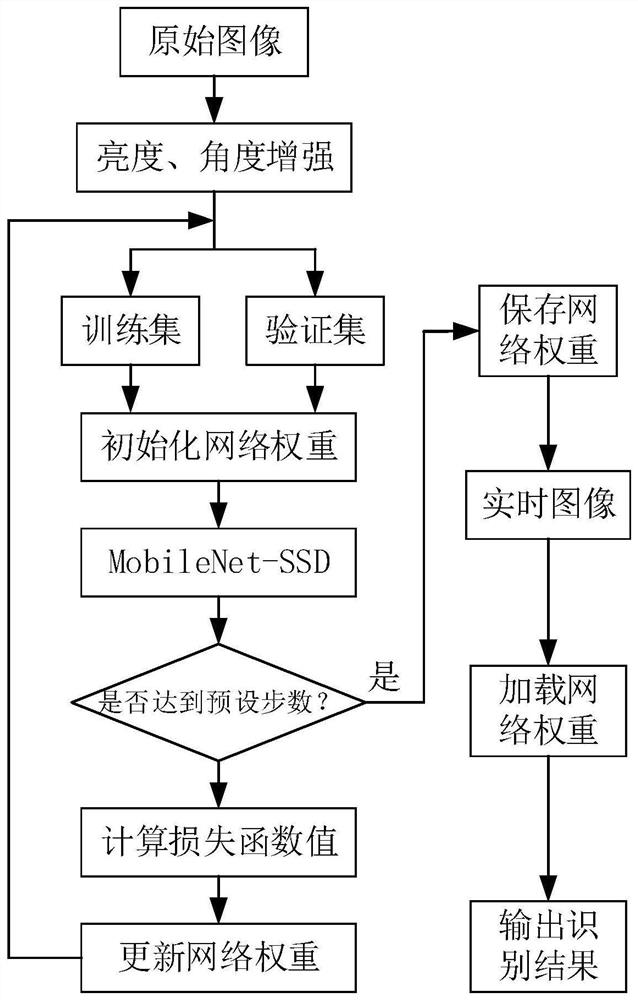
[0021] like figure 1 As shown in the figure, a method for recognizing the positive and negative power meters based on a lightweight neural network model includes the following steps:

[0022] Step 1, image acquisition of the electric energy meter in the meter box;

[0023] Step 2: Preprocess the collected images and construct a data set;

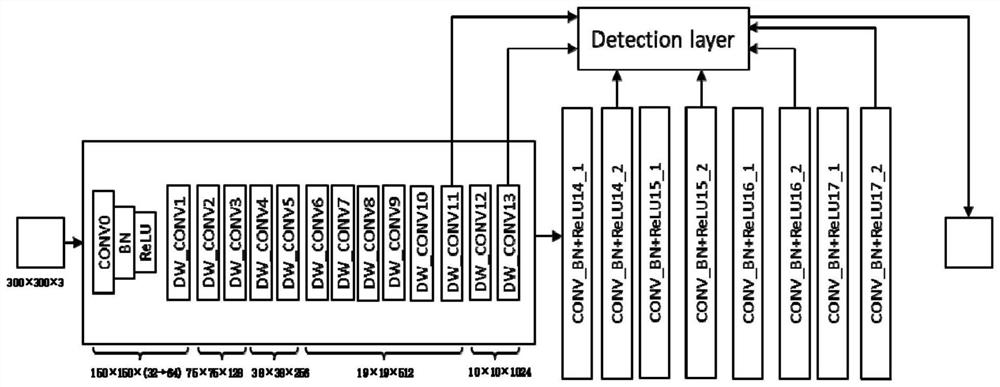
[0024] Step 3, build a lightweight neural network model MobileNet-SSD, use the data set in step 2 to train and test the model;

[0025] Step 4, use the trained MobileNet-SSD model to identify the positive and negative power meters and output the results.

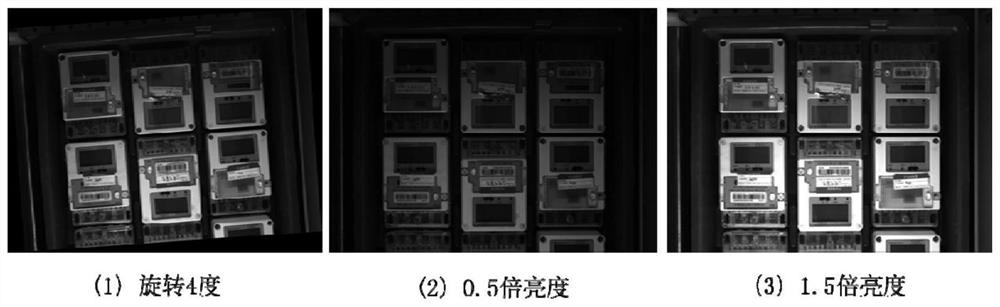
[0026] The present invention firstly collects the image of the electric energy meter in the meter box in the meter box, in order to prevent the network from overfitting in the training process, and at the same time, it also takes into account the inevitable occurrence of camera posture in th...