
Simulative operation system human-computer interaction implementation method based on browser
An operating system and human-computer interaction technology, applied in the field of browser-based imitation operating system human-computer interaction implementation, can solve problems such as unintuitive operation, needing page refresh, slow response speed, etc., and achieve low hardware configuration requirements and intuitive display. and operation, interactive and flexible effects
- Summary
- Abstract
- Description
- Claims
- Application Information
AI Technical Summary
Problems solved by technology
Method used
Image

Examples
Embodiment Construction
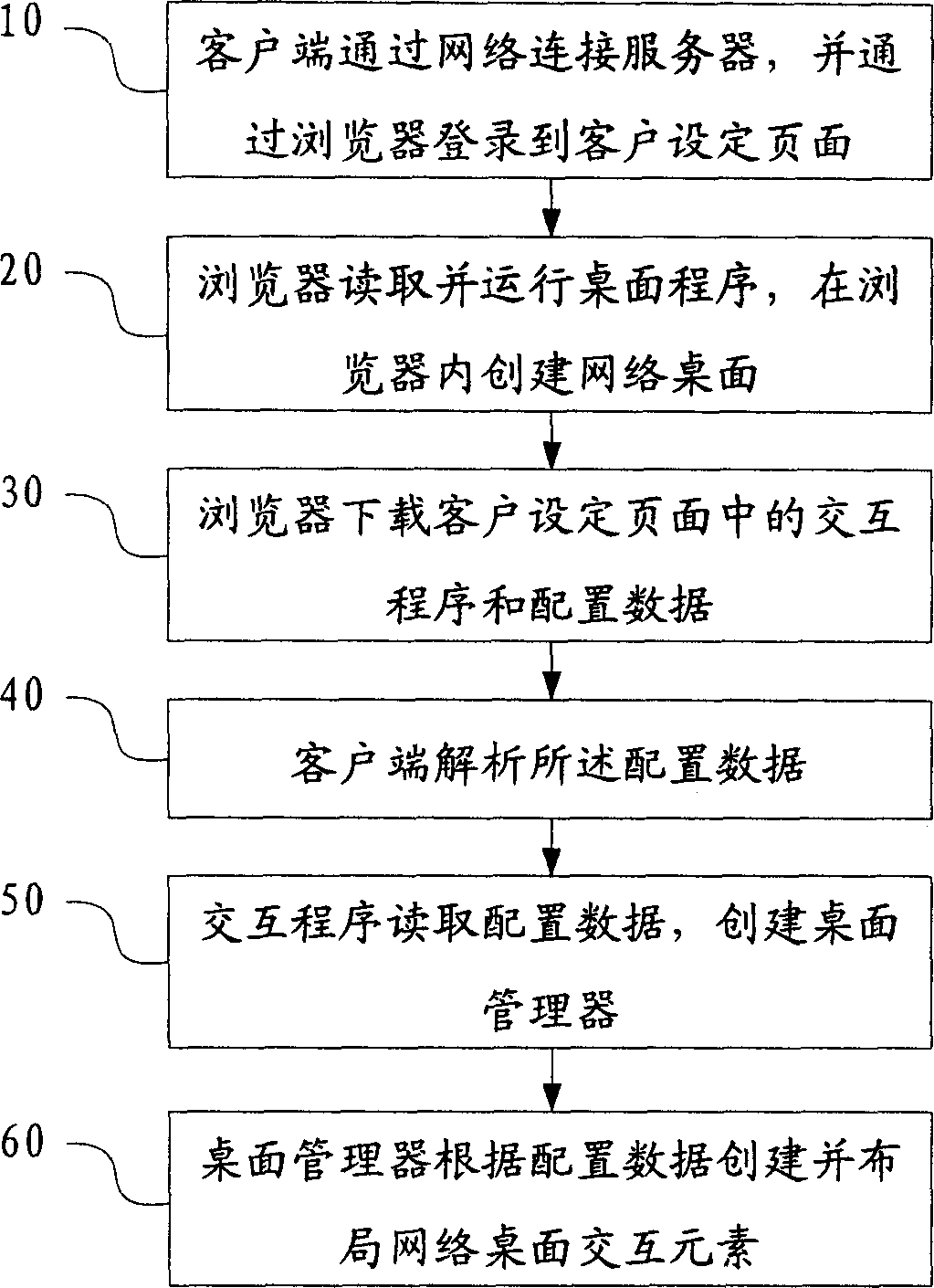
[0054] figure 1 Generate the flow chart of imitation operating system human-computer interaction interface in browser for the present invention, comprise:
[0055] Step 10, the client connects to the server through the network, and logs in to the client setting page set in the server through a browser;
[0056] Step 20, the browser reads and runs the desktop program in the client setting page, and creates a web desktop in the browser;
[0057] Step 30, the browser downloads the interactive program and configuration data in the client setting page;
[0058] Step 40, the client parses the configuration data;
[0059] Step 50, the interactive program reads the configuration data and creates a desktop manager;
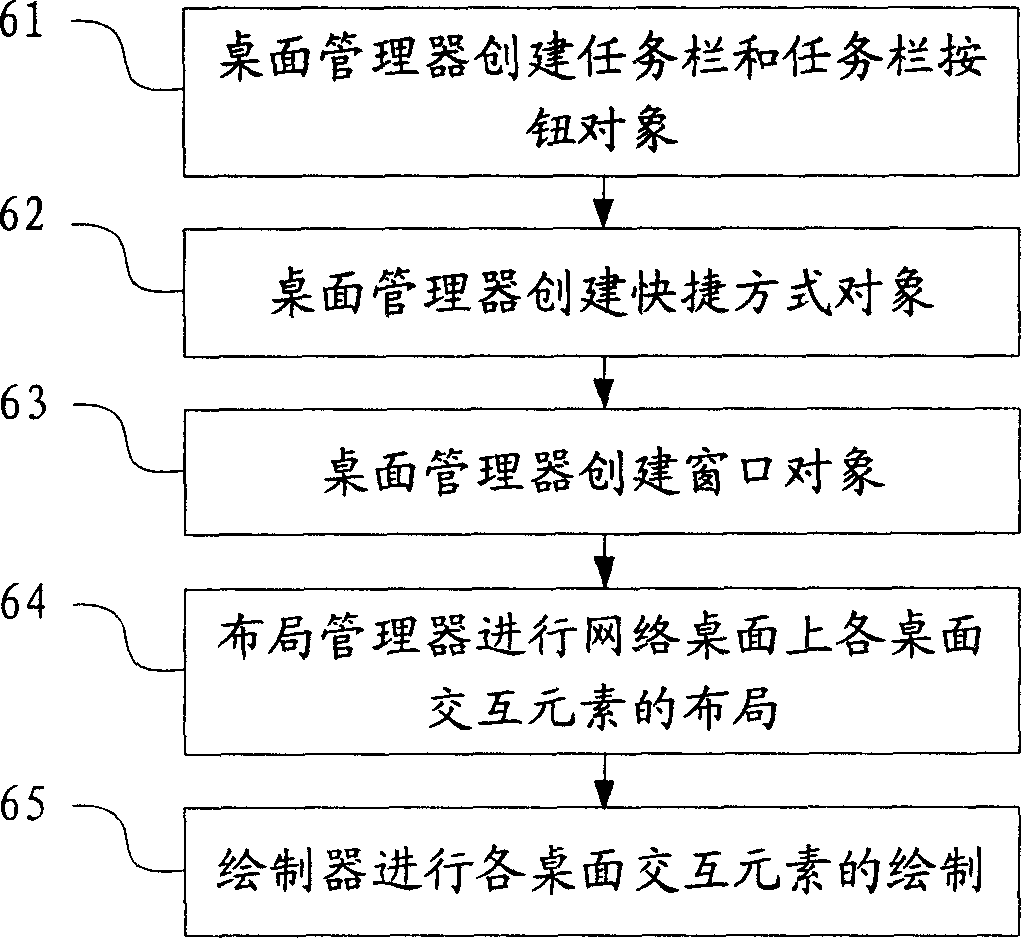
[0060] Step 60, the desktop manager creates and layouts the interactive elements of the network desktop according to the configuration data.
[0061] In the above technical solution, the client refers to any client or client cluster configured with a network interface ...
PUM
 Login to View More
 Abstract
Description
Claims
Application Information
 Login to View More