
Compositions and methods for packaging produce
a technology applied in the field of compositions and methods for packaging produce, can solve the problems of inability to manufacture nylon bags the packaging of high respiration fruits and vegetables cannot be done in polyolefin-based films without the risk of decay and peeling/skin damage or other physiological damage, so as to reduce moisture loss, physical damage and/or microbial decay, and reduce the risk of rot or
- Summary
- Abstract
- Description
- Claims
- Application Information
AI Technical Summary
Benefits of technology
Problems solved by technology
Method used
Image

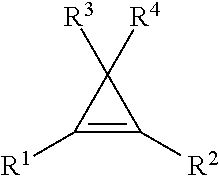
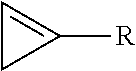
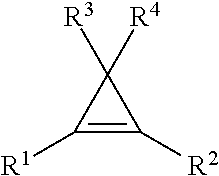
Examples
example 1
n-Based Packaging Materials
[0092]A polyolefin-based formulation / packaging material / film having a three-layered structure (layer A+layer B+layer C) is tested. Elvax™ 3165 (EVA) containing 18% vinyl acetate (VA) and a melt index of 0.7 from DuPont is used. The final VA content in the formulation / packaging material / film makes up 10.08% of the formulation. ATTANE™ makes up about 40% of the low density polyethylene (LDPE) content of the structure. The ultra-low density ethylene / octane copolymer used can provide better optic properties. Representative composition of formulation / packaging material / film is set forth in Table 1.
[0093]
TABLE 1Representative composition tested in this exampleSkin 1 15%Core 70%Skin 2 15%Layer ALayer BLayer C%Raw Materialwt %wt %wt %VAElvax ™ 3165 18% VA565656100.7 MIATTANE ™ NG 4701G3243390.912 / 0.8 MIColortech 10868-129 5%55slip 10% ABSchulman Polybatch ®71AF 1088(wt %—weight percent and VA = vinyl acetate)
[0094]The formulation / packaging material / film displays e...
example 2
[0102]PM 2-1 and PM 2-2 serve as control packaging material in this example. A plastic bag is made using a similar method as in Example 1, except a three-layer coextruded is blown to produce film of thickness about 27.7 micrometer (1.09 mil). The volume ratio of the layers is: first layer / second layer / third layer=15 / 70 / 15. Each layer is a blend of EVA, m-LLDPE, and, optionally, S-AB-WDA. Compositions of packaging materials provided in this Example, including PM 2-3, PM 2-4, PM 2-5, PM 2-6, and PM 2-7 are shown in Table 4.
[0103]
TABLE 4Compositions and transmission properties of packaging materials provided in this ExampleCompositionPM 2-3PM 2-4PM 2-5PM 2-6PM 2-7EXCEED ™ 1018 enhanced polyethylene29.5*68.54929.532*resin (Exxon Mobil Chemical), %Colortech 10868-12, %55555Schulman polybatch ® 1088, %77777Escorene ® Ultra LD-705.MJ158.519.53958.5 56**(Exxon Mobil Chemical), %VA, %7.52.55.07.5 10.1carbon dioxide transmission50202375274630396002 at 23° C. cm3 / (100 in2-day)oxygen transmiss...
PUM
| Property | Measurement | Unit |
|---|---|---|
| molecular weight | aaaaa | aaaaa |
| thickness | aaaaa | aaaaa |
| thickness | aaaaa | aaaaa |
Abstract
Description
Claims
Application Information
 Login to View More