[0008] The present invention is directed to improved systems and methods for accessing information over a distributed network, including the
World Wide Web of
the Internet and local area networks. The invention provides users a quick, efficient, and effective way to gather information of interest. Notably, in certain implementations the invention permits the gathering of information using the characteristics of the user and the user's real-time opinion of the search results as they are displayed. In doing so, the user is given information that is tailored to that individual, and which reflects the individual's specific opinion of the relevancy of the search results.
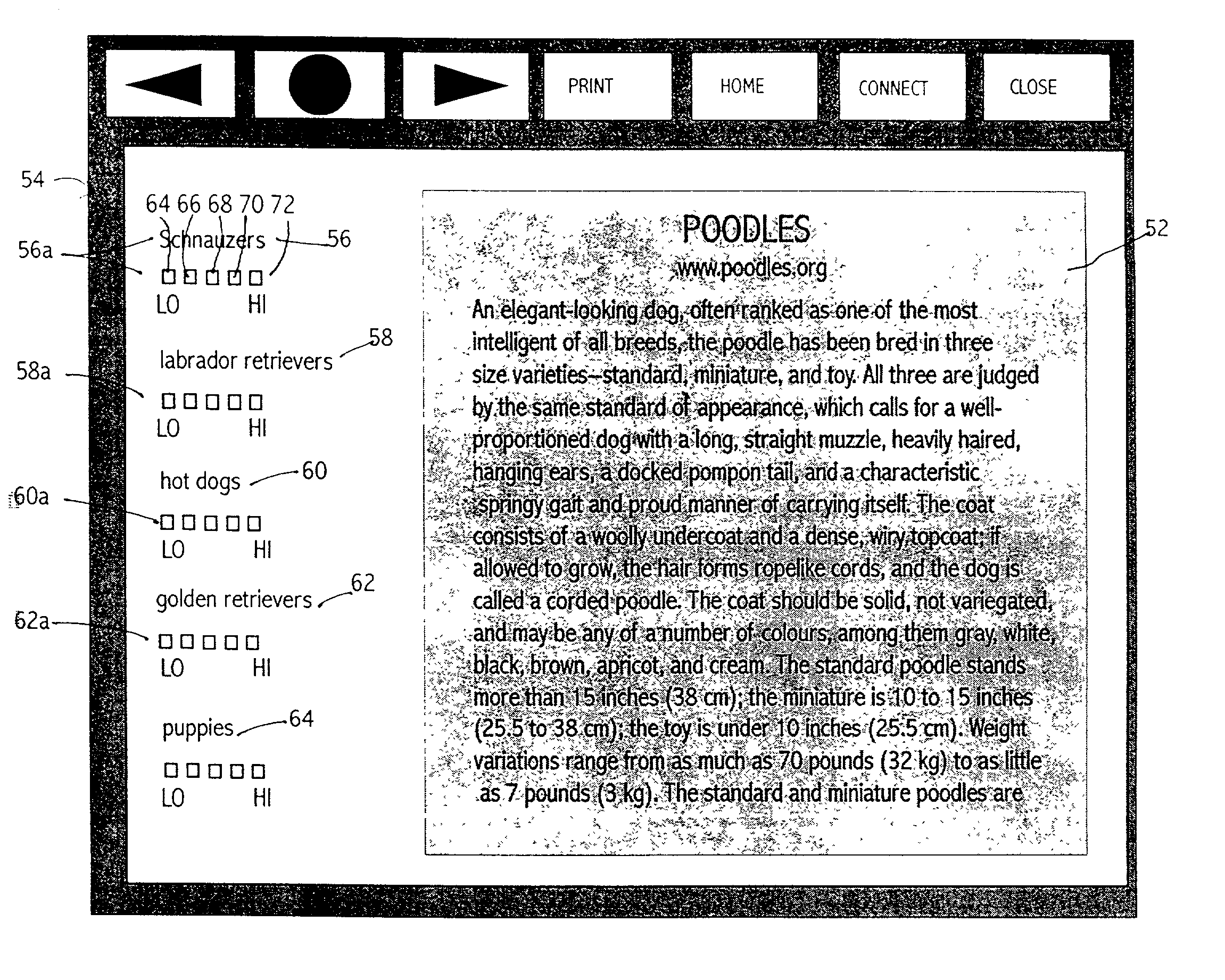
[0009] In specific implementations the invention allows a user to quickly move between search results with a minimum of effort and with improved speed. The invention allows a search result (such as an Internet page) and a
list of search results to be simultaneously displayed. A user can access a specific search result, and investigate links associated from the search result, yet quickly move to other search results by selecting another search result from the
list. In this regard, the invention allows a user to move directly from one search result to another without returning to a previously displayed
list or to previously displayed results. A user is able to conserve a significant amount of time because he or she does not have to page back through a series of viewed screens in order to get back to the original search results. This ability to examine a search result, including links to other pages within the search result, without having to back up to earlier results is a significant time and effort saver.
[0010] Another aspect of the invention is directed to an improved
user interface permitting advantageous searching and review of search results. The interface is part of a computer system, and permits a user to conduct a search of multiple records within a
database, and to then review these records in a manner such that the user provides immediate feedback on each reviewed
record. In response to this feedback, the system evaluates the search and provides an updated list of search results. Thus, the system provides a first set of search results to a user, and then as the user sequentially reviews the results the system modifies the search in order to reflect the user's opinions of the results. In this manner, the quality of the search results actually improves while it is being reviewed, because the search results change to reflect the user's satisfaction.
[0012] In addition to providing an immediately improved search result, the interface allows for the collection of ratings about specific search results, such as web pages. Thus, the user is able to rate every
web page they view, which is useful for subsequent searches by that same user or other users with similar characteristics. In certain implementations the rating data from the users is also made available to
web page providers and allows those providers to improve upon their service by responding to these ratings.
[0014] The
user profile typically changes over time in order to reflect changes in the user or in the user's preferences. Thus, if a user acquires a new job or becomes active in a new recreational activity, then the user can modify their
user profile in order to reflect these changes. Similarly, if a user discontinues an activity, or loses interest in an activity, then the
user profile may be adjusted for this change. For example, a user who is a student at a specific university may choose to modify their profile to reflect that they have graduated from the university and moved to another town. In this manner, the user may receive less information from searches geared toward students (such as local entertainment activities) and more information geared toward graduates (such as reunion activities).
[0019] Yet another aspect of the invention is its use in creating specialized search results based upon a specific search criteria. The specialized search results provide for compiled results of specific information gathered from within web sites. In certain implementations the invention provides for
assembly of a set of search results that link beyond a
home page and into the specific content of
a site. In doing so, the invention provides for creation of results that allow a user access to the most desired information easily and efficiently. These specialized search results may be used to create shopping catalogs, specialized information collections, on-line magazines with content from numerous Internet sites, and other specialized results.


 Login to View More
  Login to View More