
Method and system for dynamic soft handoff resource allocation in a wireless network
a wireless network and resource allocation technology, applied in the field of wireless communication, can solve the problems of data traffic on the system, dissimilar quality of service requirements and data application treatment, and reducing the quality of voice links, so as to minimize interference, minimize air-link congestion, and maximize resource efficiency
- Summary
- Abstract
- Description
- Claims
- Application Information
AI Technical Summary
Benefits of technology
Problems solved by technology
Method used
Image

Examples
Embodiment Construction
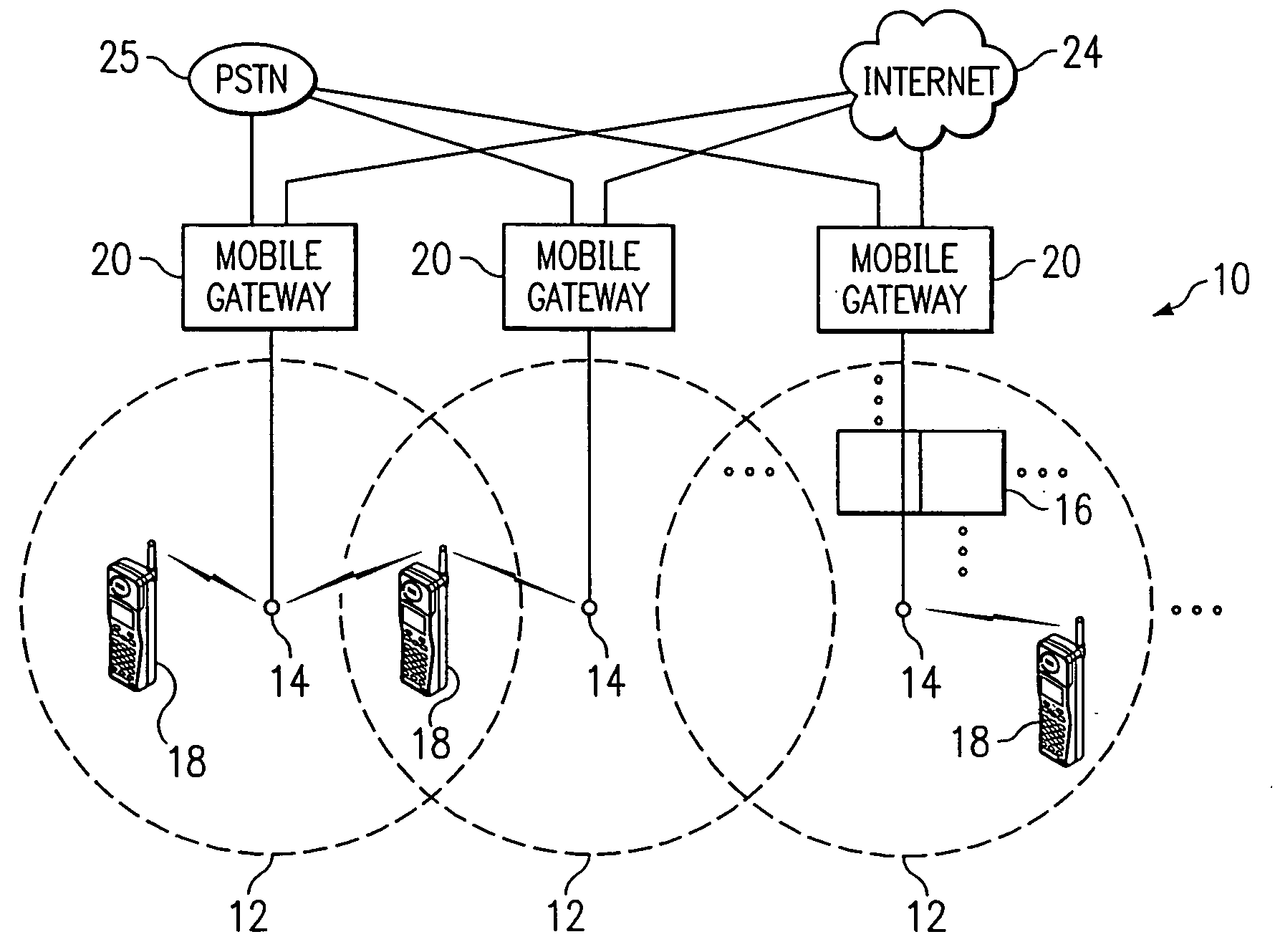
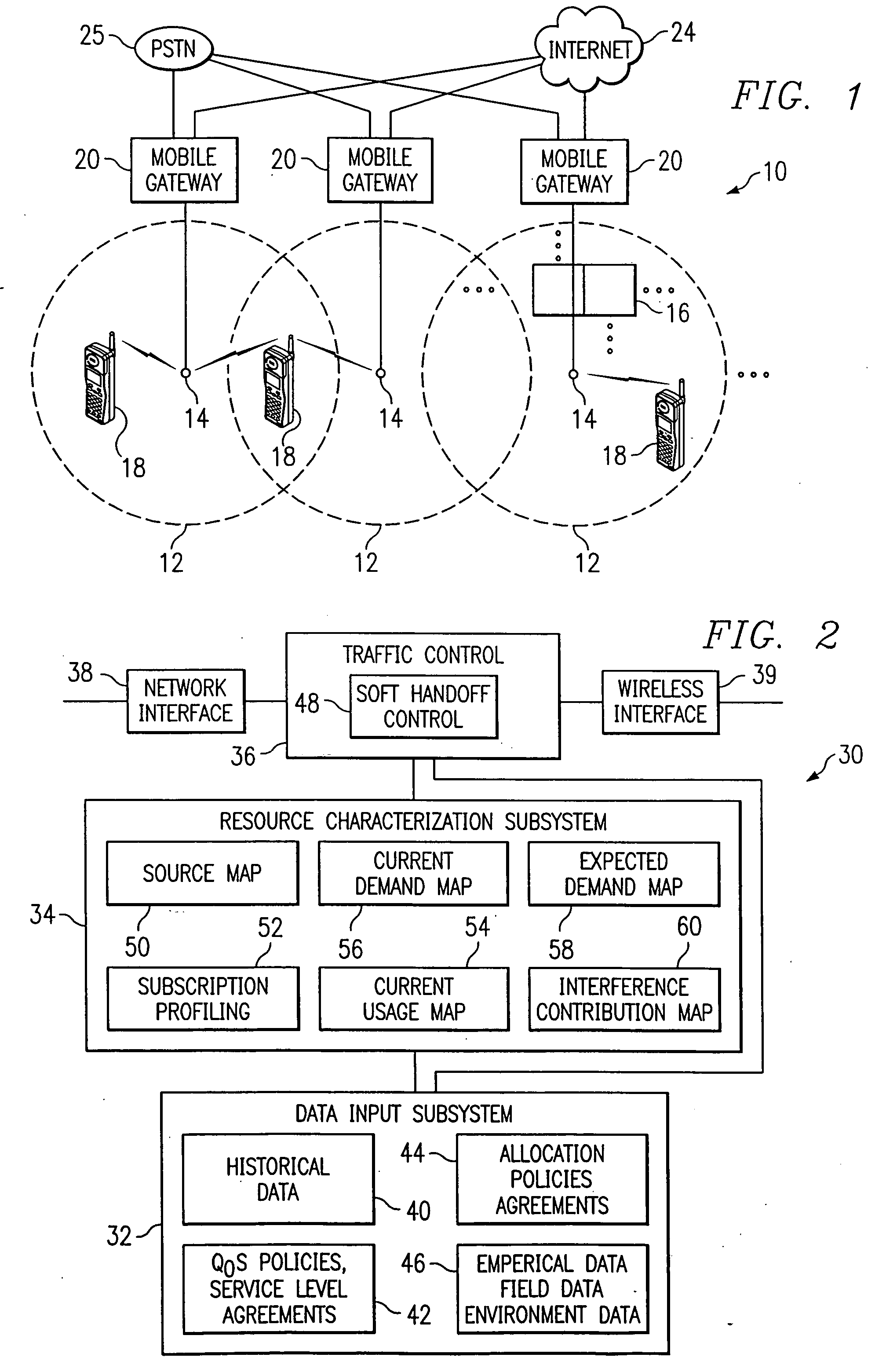
[0031]FIG. 1 illustrates a wireless network 10 in accordance with one embodiment of the present invention. In this embodiment, the wireless network 10 is a cellular network in which terrestrial wireless transmission originates in geographically delimited cells. It will be understood that the present invention may be used in connection with satellite and other suitable wireless and other dynamic bandwidth networks.
[0032] Referring to FIG. 1, the wireless network 10 covers a contiguous area that is broken down into a series of overlapping wireless sites such as cells 12. Each cell 12 has a base station, or server, 14 and may be subdivided into a plurality of geographic location (geo-location) areas 16. The geo-location areas 16 are each a defined area in which bandwidth may be allocated to mobile devices. The geo-location areas 16 may have a resolution greater than, less than, or equal to cell size. In a particular embodiment, the geo-location areas 16 are substantially square in sha...
PUM
 Login to View More
 Abstract
Description
Claims
Application Information
 Login to View More