
Encoder based error resilience method in a video codec
- Summary
- Abstract
- Description
- Claims
- Application Information
AI Technical Summary
Benefits of technology
Problems solved by technology
Method used
Image

Examples
Embodiment Construction
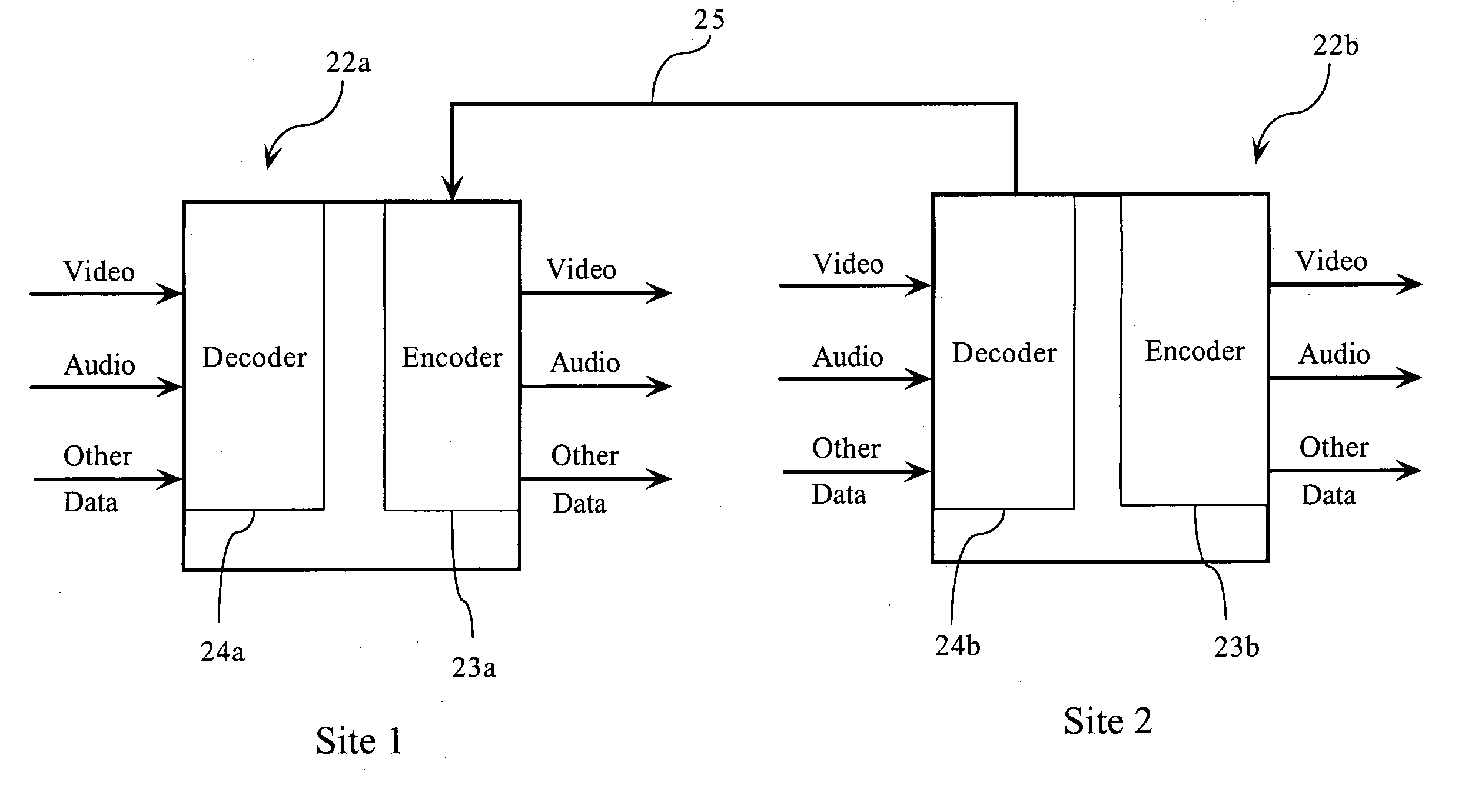
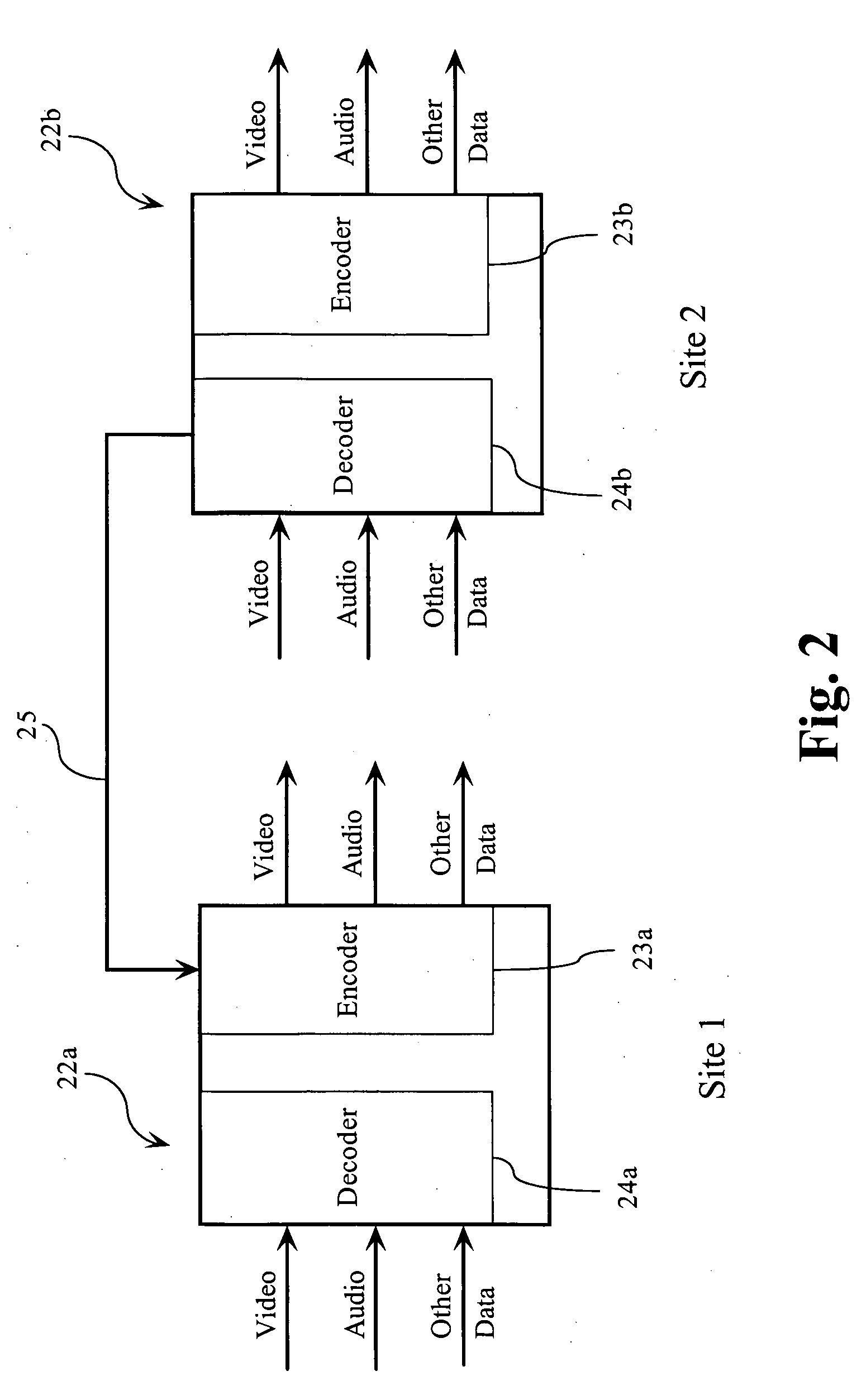
[0022] The present invention significantly improves the error resiliency of an encoding device, such as a video codec or encoder, conforming to the H.263 or H.264 standards, and operating in a compressed data transmission system. The invention generally involves a “shadowing” scheme, in which the error conditions of a decoding device that receives and decodes compressed data sent by an encoding device is mimicked in the encoding device. More specifically, the encoding device is made aware of the specific error concealment scheme that the decoding device employs to reconstruct video frame data from a bit stream that contains bit or packet errors, and is also made aware of the location(s) in the frame to which the erroneous data corresponds and the particular manner in which the erroneous data was handled. The error-concealed data then can be used not only for the present encoding, but for subsequent encodings as well, to achieve synchronization between the encoder and decoder. Advant...
PUM
 Login to View More
 Abstract
Description
Claims
Application Information
 Login to View More