Systems and methods for automatically configuring and managing network devices and virtual private networks

US20060236095A1Active Publication Date: 2006-10-19ANXEBUSINESS
12 Cites 343 Cited by

Patent Information

Authority / Receiving Office
US · United States
Current Assignee / Owner
Publication Date
2006-10-19

Smart Images

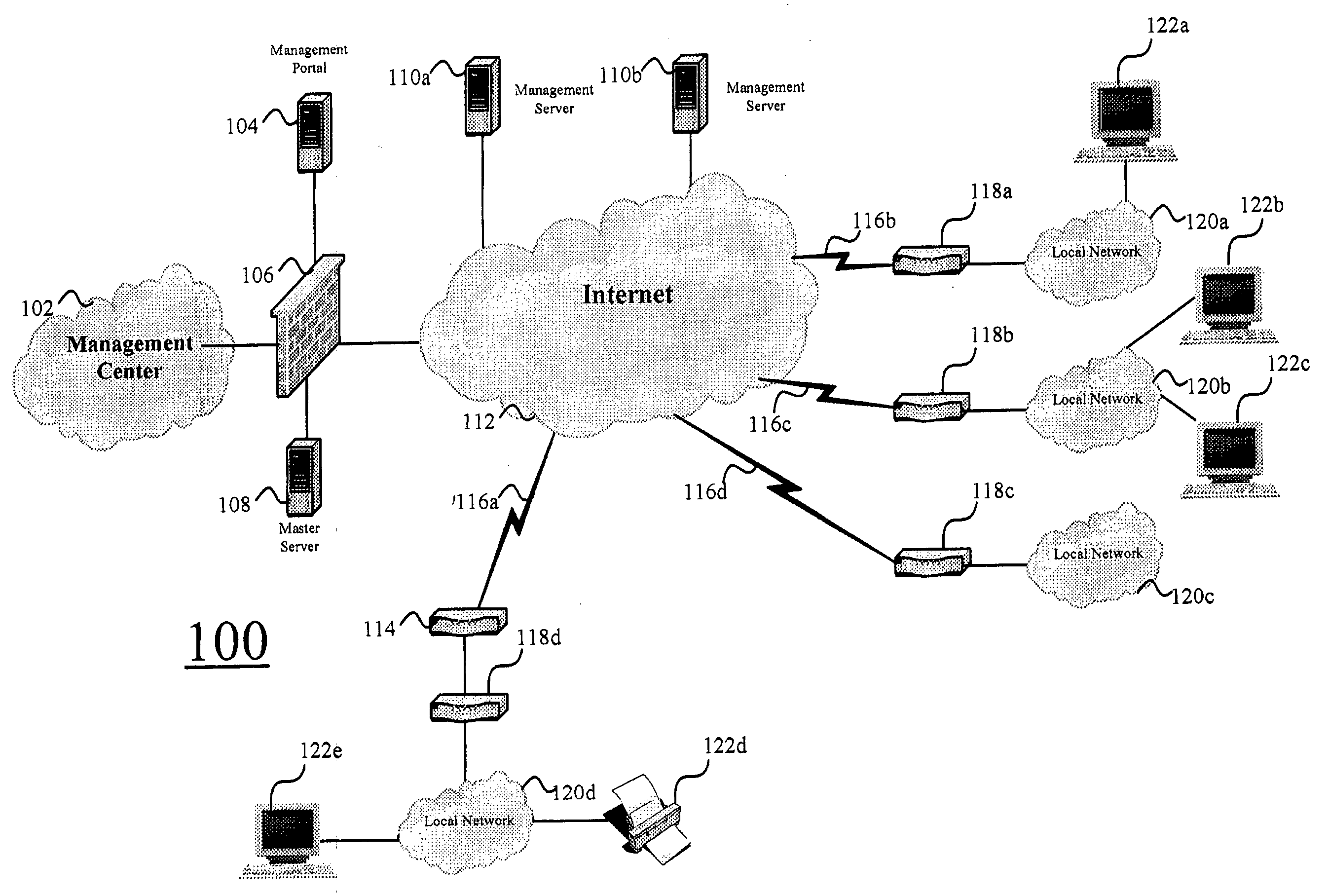
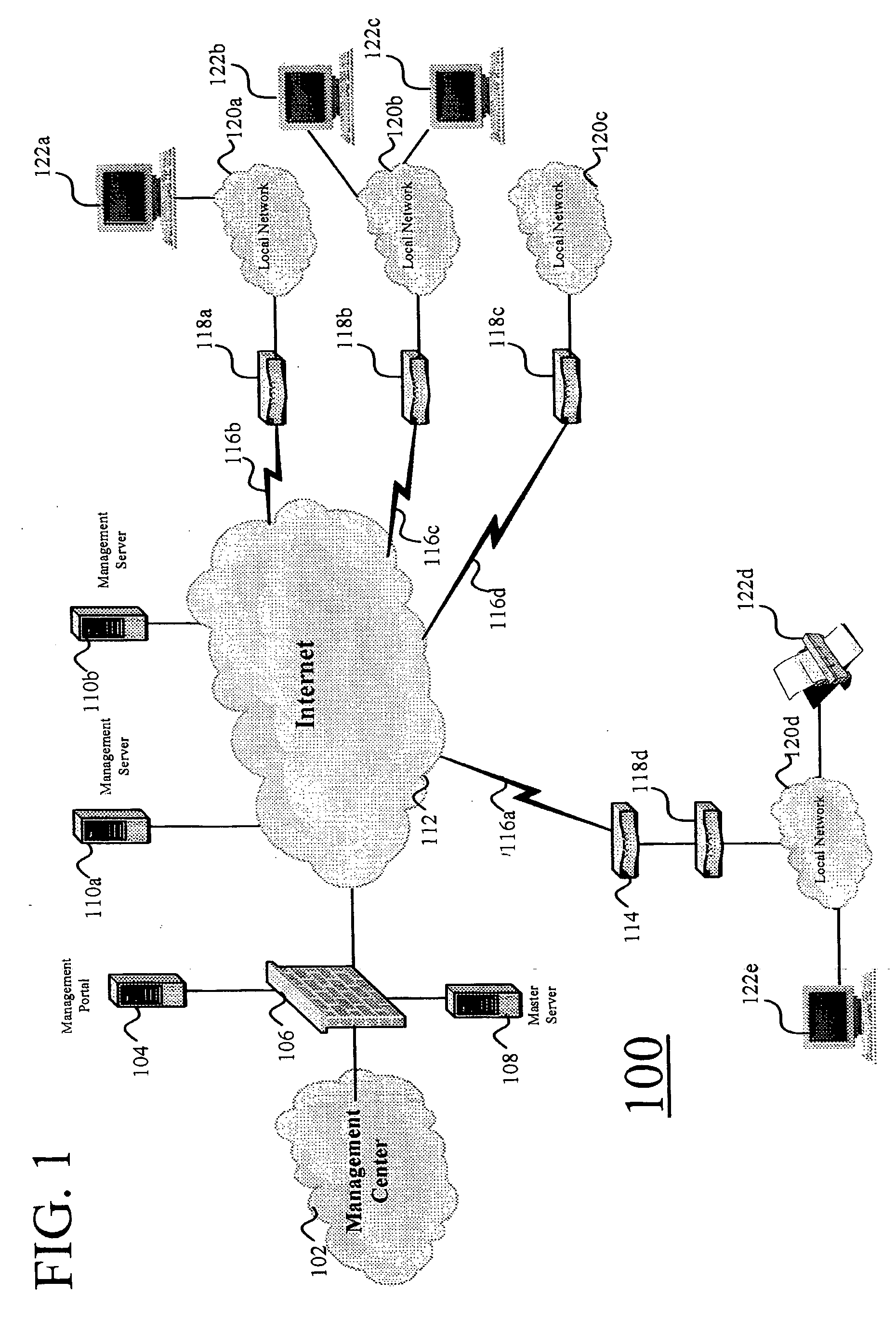
  • Figure 1
    Figure 1
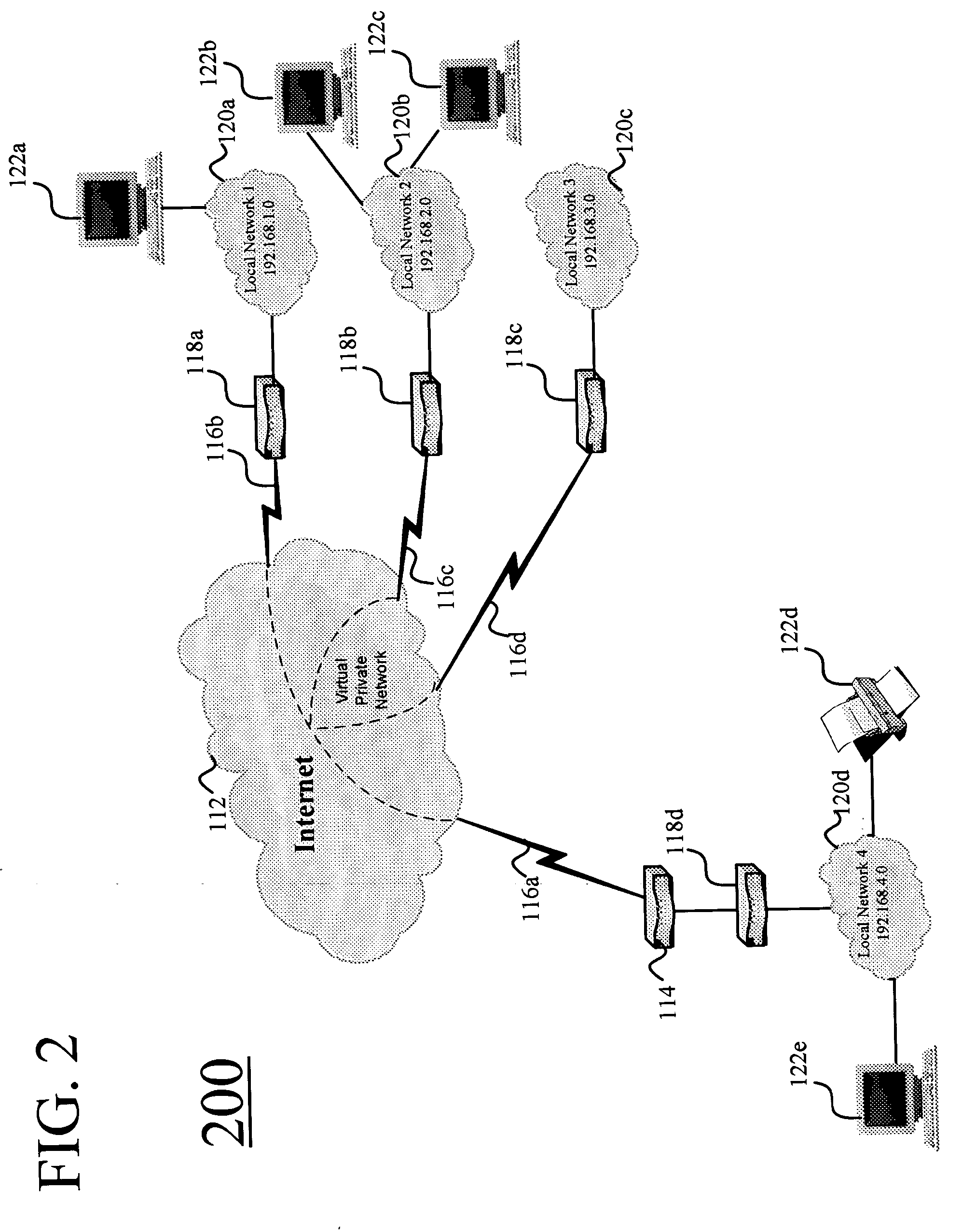
  • Figure 2
    Figure 2
  • Figure 3
    Figure 3
Patent Text Reader

Abstract

Systems and methods are disclosed for automatically configuring, managing, and maintaining a network device or VPN using a public network such as the Internet. Initial configuration of a network device or VPN occurs upon a user entering minimal information via a simple HTML page. After receipt of this minimal information, the present invention automatically configures the network device or VPN without user intervention. Thereafter, a user may modify the network device or VPN configuration via an easy-to-use and easy-to-understand graphical user interface. Parameters are presented such that a user simply checks and unchecks boxes, or clicks on radio buttons, to configure network device parameters. Upon completion of the selection, the user clicks on save, and the configuration is automatically modified. In addition, upon a significant change to any network device, the changed network device automatically initiates reconfiguration of the network device or VPN with zero input from a user.
Need to check novelty before this filing date? Find Prior Art

Description

BACKGROUND OF THE INVENTION

[0001] Embodiments of the present invention relate to the field of network devices. More specifically, the present invention relates to systems and methods for automatically configuring and managing network devices such as broadband routers and virtual private networks.

[0002] Many systems and methods have been created to provide communication between individual computers of a centralized, single site organization through a private network. Computers may be interconnected through telephone lines, coaxial cables, optical fibers, radio or microwave communication links, earth-orbiting satellites, or other means. Such communications can include electronic mail, file sharing and transferring, and database sharing.

[0003] The most commonly used network is the local area network (“LAN”). LANs consist of interconnected computers that provide different functions such as a host or server. A host computer sends and receives information of the network in forms of pac...

Examples

Embodiment Construction

[0048] Referring first to FIG. 1, depicted is network environment 100 in accordance with one embodiment of the present invention. In this embodiment, network environment 100 includes management center 102, management portal 104, firewall 106, master server 108, management servers 110, Internet 112, router 114, network connections 116, network devices 118, local networks 120, and local network devices 122.

[0049] In one embodiment of the present invention, network device 118 is a broadband device such as a cable or Digital Subscriber Line (“DSL”) modem having one or more features such as wireless gateways (e.g., an 802.11 gateway, a Bluetooth® gateway, an Infrared Data Association (“IrDA”) gateway, etc.), voice over Internet Protocol (“VoIP”), multi-port switching, VPN, firewalls, anti-virus protection, spam control, content filtering, etc. However, the present invention is not so limited. Network device may be virtually any device having a network connection to at least one other ne...