
Methods and apparatus for optimizing a TCP session for a wireless network
a wireless network and wireless network technology, applied in the field of reliable end-to-end communications, can solve the problems of insufficient functionality of ip, inability to provide reliable end-to-end connection or flow control, and inability to ensure that a segment passed to a network layer using ip will ever get to its final destination
- Summary
- Abstract
- Description
- Claims
- Application Information
AI Technical Summary
Benefits of technology
Problems solved by technology
Method used
Image

Examples
Embodiment Construction
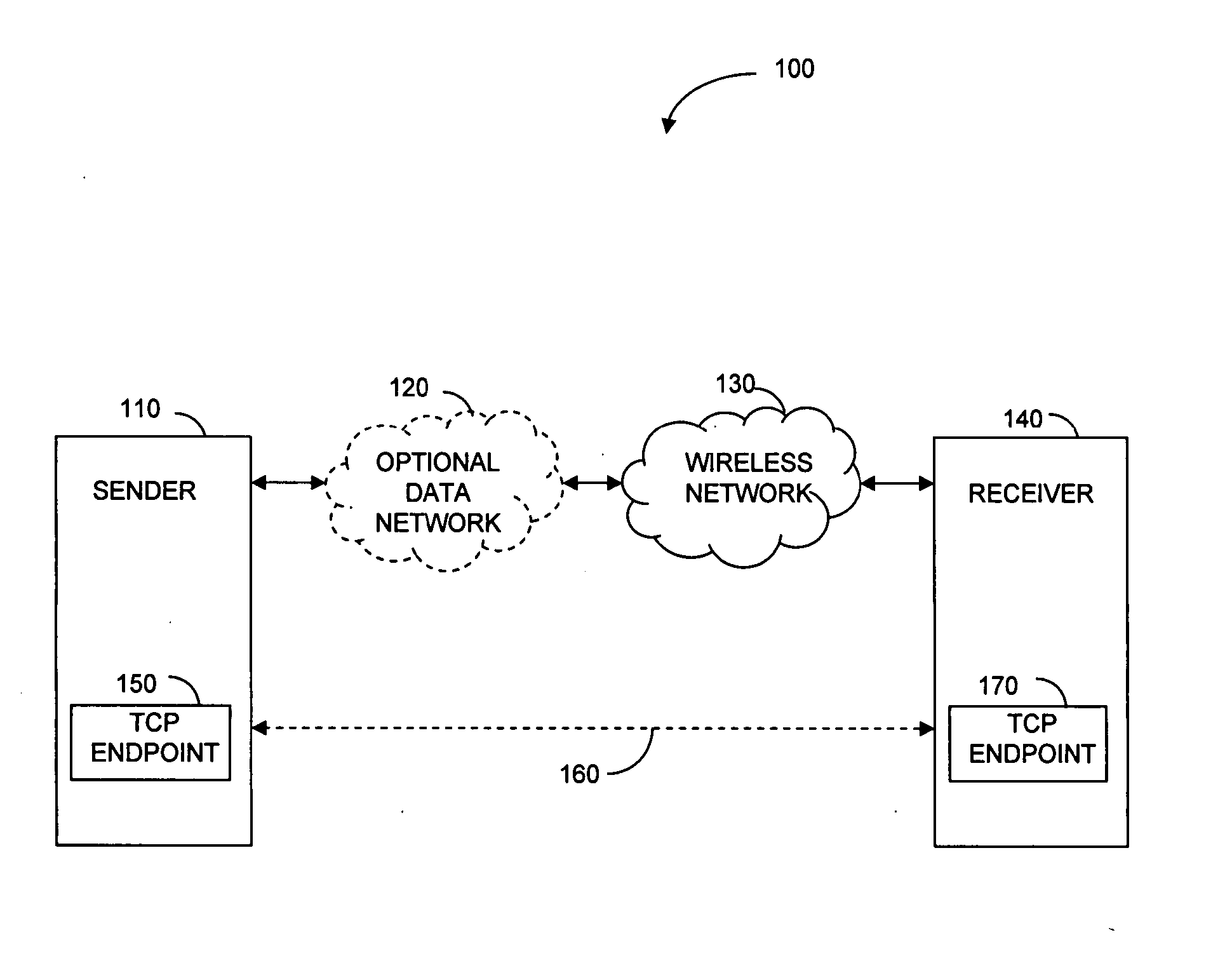
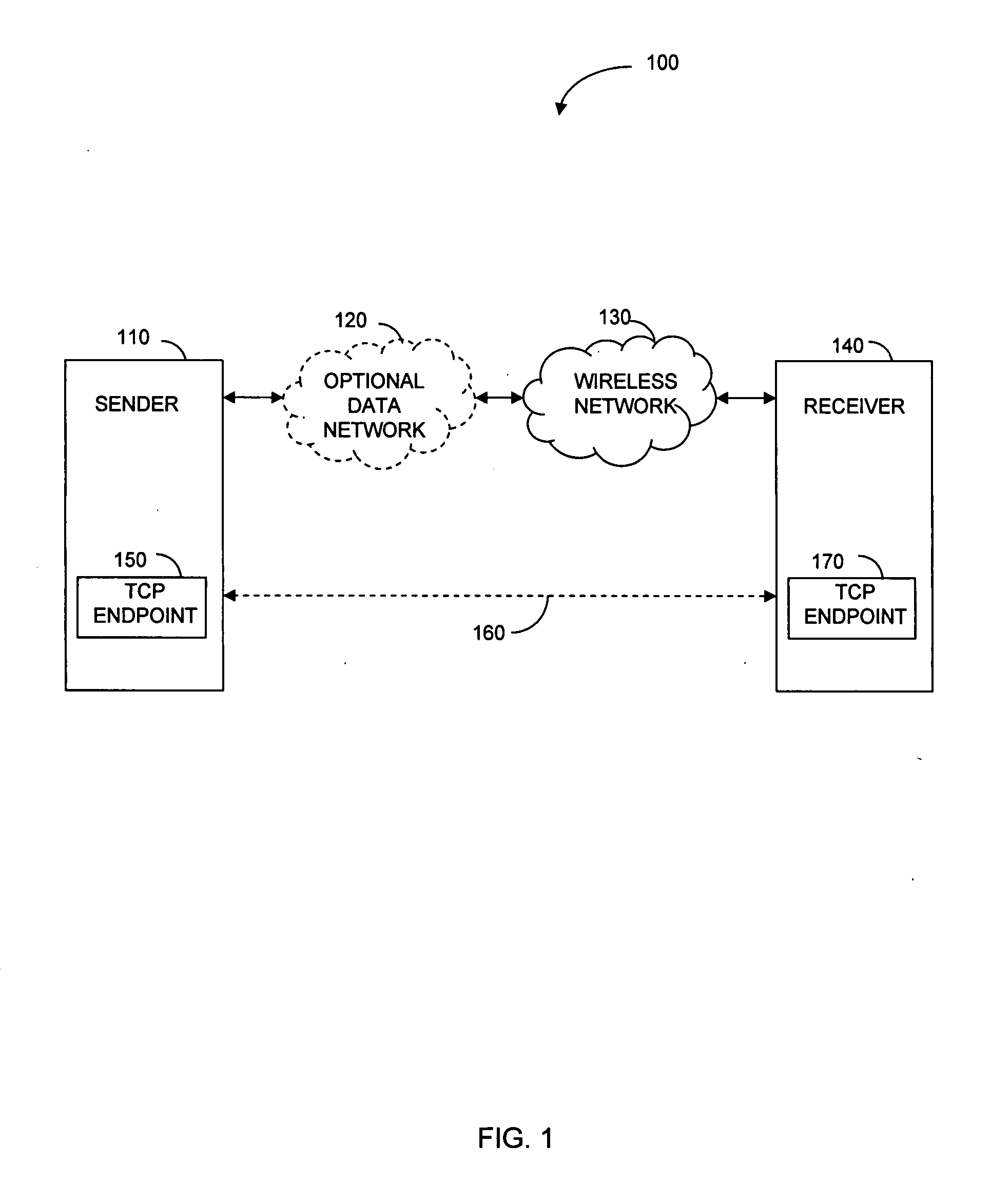
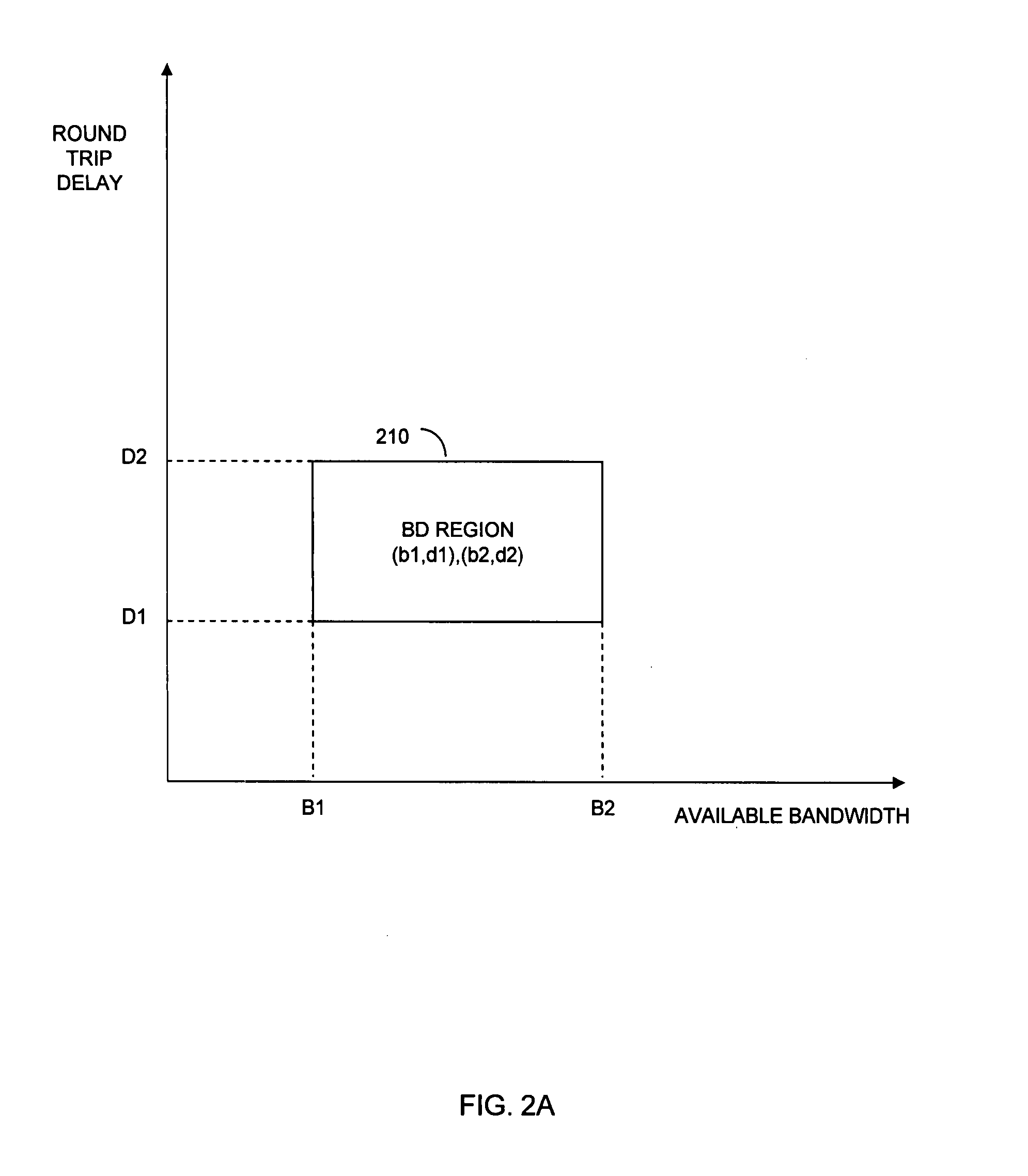
[0025] A method and apparatus for optimizing a Transmission Control Protocol (TCP) session for a network node in communication with a wireless network are disclosed. One aspect of the invention is to determined the network characteristics of a wireless network. In one embodiment, the network characteristics may be determined by comparing an estimated bandwidth and estimated propagation delay of the wireless network to one or more sets of pre-stored network characteristics.
[0026] Another aspect of the invention is to provide a flexible method for updating one or more TCP session parameters based at least in part on the network characteristics. In one embodiment, one or more TCP session parameters may be updated with one or more corresponding pre-stored session parameters associated with the network characteristics.
[0027] Still another aspect of the invention is to limit a congestion window and slow start threshold to a range defined by a minimum congestion window and a maximum cong...
PUM
 Login to View More
 Abstract
Description
Claims
Application Information
 Login to View More