Synchronization of vagus nerve stimulation with the cardiac cycle of a patient

a vagus nerve and patient technology, applied in the field of medical device systems, can solve the problems that the patent does not disclose the initiating or synchronizing the therapeutic electrical signal with the patient's heart rhythm, and achieve the effect of increasing heart rate variability and increasing afferent conduction

US20070233194A1Active Publication Date: 2007-10-04CATHOLIC HEALTHCARE WEST ST JOSEPHS HOSPITAL
99 Cites 125 Cited by

Patent Information

Authority / Receiving Office
US · United States
Patent Type
Applications(United States)
Current Assignee / Owner
Publication Date
2007-10-04

Smart Images

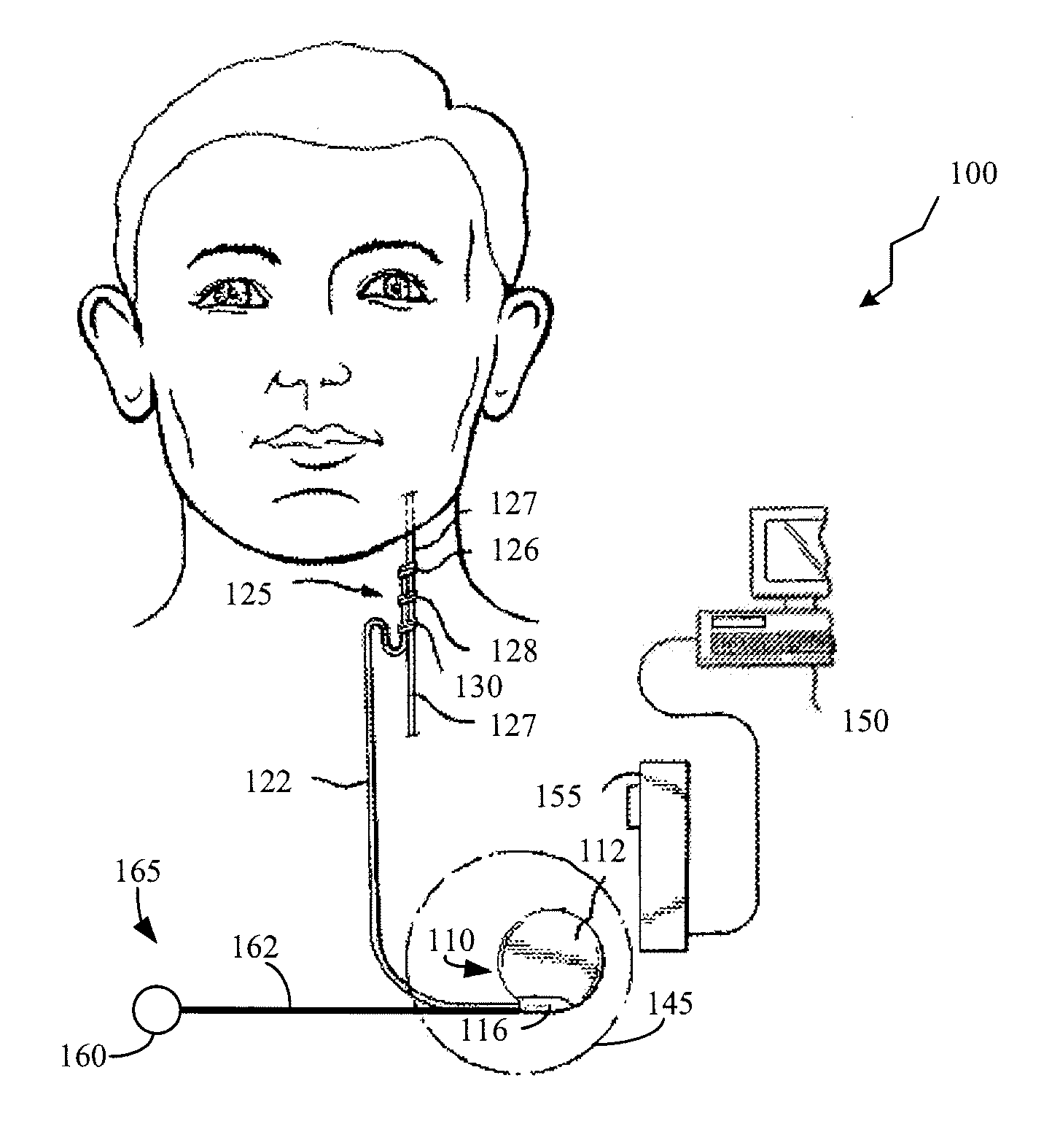
  • Figure 1
    Figure 1
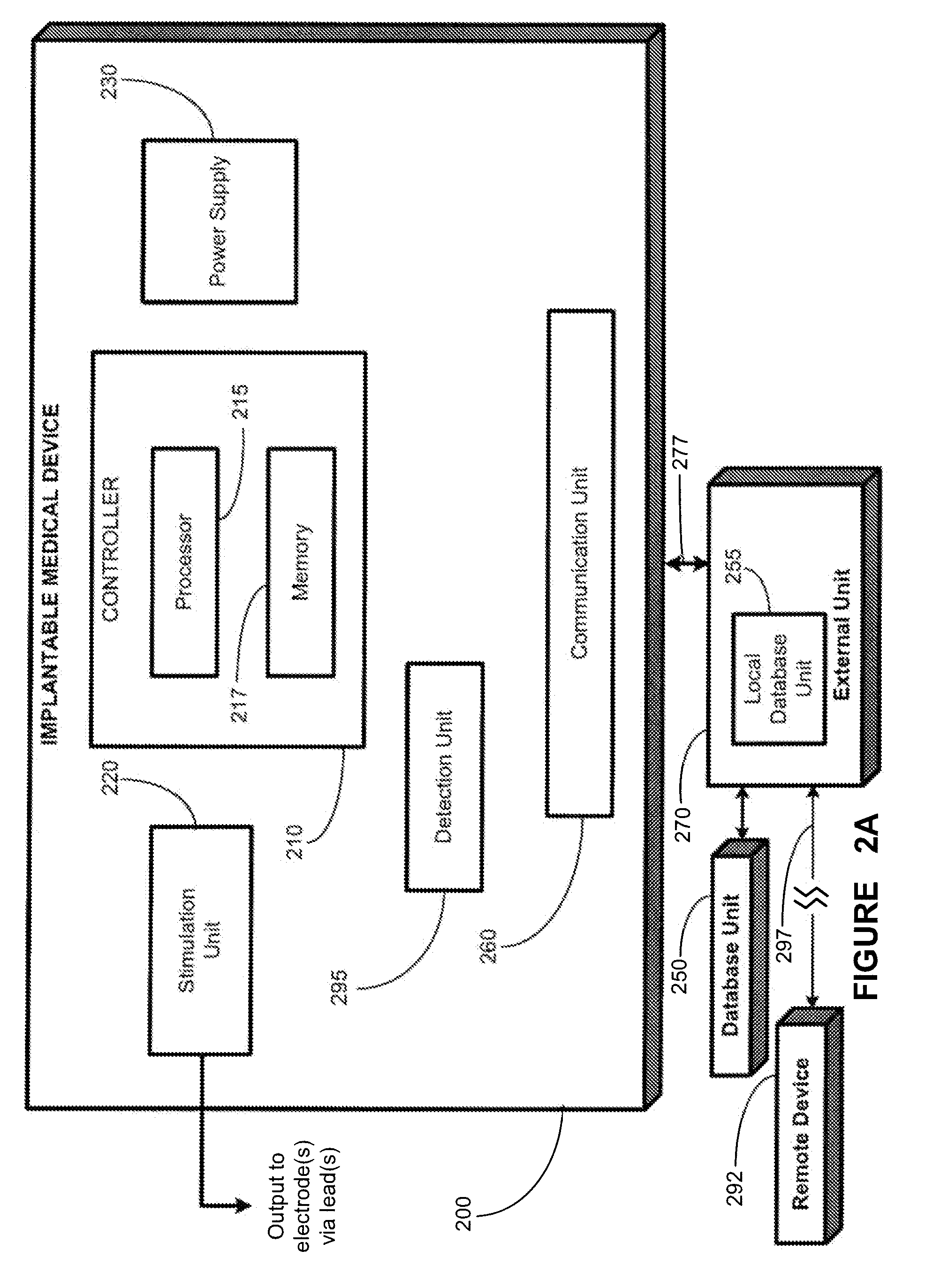
  • Figure 2
    Figure 2
  • Figure 3
    Figure 3
Patent Text Reader

Abstract

Disclosed herein are methods, systems, and apparatus for treating a medical condition of a patient, involving detecting a physiological cycle or cycles of the patient and applying an electrical signal to a portion of the patient's vagus nerve through an electrode at a selected point in the physiological cycle(s). The physiological cycle can be the cardiac and / or respiratory cycle. The selected point can be a point in the cardiac cycle correlated with increased afferent conduction on the vagus nerve, such as a point from about 10 msec to about 800 msec after an R-wave of the patient's ECG, optionally during inspiration by the patient. The selected point can be a point in the cardiac cycle when said applying increases heart rate variability, such as a point from about 10 msec to about 800 msec after an R-wave of the patient's ECG, optionally during expiration by the patient.
Need to check novelty before this filing date? Find Prior Art

Description

[0001] The present application claims priority from prior copending U.S. patent application 60 / 787,680, filed Mar. 29, 2006, entitled “Synchronized and Optimized Vagus Nerve Stimulation Method.”

[0002] The United States patent application entitled “Microburst Electrical Stimulation Of Cranial Nerves For The Treatment Of Medical Conditions,” by Arthur D. Craig and filed concurrently herewith is hereby incorporated herein by reference.

[0003] The PCT patent application entitled “Vagus Nerve Stimulation Method” by Arthur D. Craig and filed concurrently herewith is hereby incorporated herein by reference.BACKGROUND OF THE INVENTION

[0004] 1. Field of the Invention

[0005] This invention relates generally to medical device systems and, more particularly, to medical device systems for applying electrical signals to a cranial nerve for the treatment of medical conditions, and for improved electrical signals in such systems.

[0006] 2. Description of the Related Art

[0007] Many advancements have been made...

Examples

Embodiment Construction

[0037]Illustrative embodiments of the invention are described herein. In the interest of clarity, not all features of an actual implementation are described in this specification. In the development of any such actual embodiment, numerous implementation-specific decisions must be made to achieve the design-specific goals, which will vary from one implementation to another. It will be appreciated that such a development effort, while possibly complex and time-consuming, would nevertheless be a routine undertaking for persons of ordinary skill in the art having the benefit of this disclosure.

[0038]This document does not intend to distinguish between components that differ in name but not function. In the following discussion and in the claims, the terms “including” and “includes” are used in an open-ended fashion, and thus should be interpreted to mean “including, but not limited to.” Also, the term “couple” or “couples” is intended to mean either a direct or an indirect electrical co...